Off-Duty Pilot Pleads Guilty to 83 Counts of Endangerment
In a dramatic conclusion to a terrifying mid-air incident, an Alaska Airlines off-duty pilot has pleaded guilty to 83 counts of reckless endangerment. The pilot, Joseph Emerson, was traveling in the cockpit jump seat when he attempted to shut down the engines of a commercial flight, jeopardizing the lives of everyone on board. This case has sent shockwaves through the aviation industry, raising critical questions about pilot mental health and cockpit security protocols.
The guilty plea resolves the state-level charges against Emerson, avoiding a trial for the more severe charges of attempted murder that were initially filed. This article breaks down the incident, the legal proceedings, and the broader implications for air travel safety.
In This Article:
The Terrifying Mid-Air Incident Unpacked
On October 22, 2023, Horizon Air Flight 2059, operating for Alaska Airlines, was en route from Everett, Washington, to San Francisco, California. On board were 80 passengers, two pilots, and two flight attendants. Also in the cockpit, sitting in the authorized jump seat, was 44-year-old Captain Joseph David Emerson, an off-duty pilot who was commuting home.
According to court documents and statements from the flight crew, approximately midway through the flight, Emerson engaged in a casual conversation with the operating pilots before suddenly declaring, “I’m not okay.” He then reached up and attempted to pull the two red handles that activate the aircraft’s engine fire suppression system. This action, if completed, would have cut off fuel to both engines, effectively turning the Embraer 175 jet into a glider and creating a catastrophic emergency.
The flight crew acted swiftly. One pilot physically wrestled with Emerson’s hands to prevent him from fully engaging the system while the other maintained control of the aircraft. They managed to subdue Emerson and remove him from the cockpit. He was restrained by flight attendants in the main cabin for the remainder of the flight, which was immediately diverted to Portland, Oregon.
During his restraint, Emerson allegedly told a flight attendant, “You need to cuff me right now or it’s going to be bad.” He also reportedly admitted to the crew that he had “messed everything up” and had “tried to kill everybody.” His actions were calm and deliberate, which made the incident all the more chilling for the crew and passengers who were unaware of the cockpit struggle until later.
Legal Ramifications for the Off-Duty Pilot
Following the emergency landing in Portland, Joseph Emerson was immediately arrested. He initially faced a staggering 83 counts of attempted murder at the state level in Oregon, one for each person on the plane excluding himself, along with a federal charge of interfering with a flight crew.
However, the legal landscape has since shifted. In a significant development, a Multnomah County grand jury declined to indict Emerson on the attempted murder charges. Instead, he was indicted on 83 counts of reckless endangerment and one count of endangering an aircraft. The decision not to pursue attempted murder charges suggests prosecutors may have struggled to prove clear intent to kill, especially in light of emerging details about Emerson’s mental state. You can learn more about the differences in our guide on legal definitions and burdens of proof.
Emerson has now formally pleaded guilty to the 83 counts of reckless endangerment. As part of the plea agreement, he will enter a diversion program for mental health treatment. Should he successfully complete the program, which includes remaining crime-free and adhering to treatment, the felony charge of endangering an aircraft could be dismissed. This plea allows him to avoid prison time, a starkly different outcome than what was initially expected.
The separate federal charge of interfering with a flight crew is still pending. The resolution of the state charges will likely have a significant impact on how federal prosecutors proceed. For now, the plea marks a crucial turning point in this high-profile case involving an off-duty pilot.

A Spotlight on Pilot Mental Health
Perhaps the most critical aspect of this case is the intense focus it has placed on the mental health of aviation professionals. During interviews with law enforcement, Emerson revealed a long-standing battle with depression. He told officers that he believed he was having a nervous breakdown and had not slept in over 40 hours.
Most alarmingly, he admitted to taking psychedelic mushrooms for the first time approximately 48 hours before the flight as a form of self-medication for his depression. He stated that he did not feel he was still under the influence of the mushrooms but felt the incident was a “dream” and wanted to “wake up.”
This revelation has ignited a fierce debate within the aviation community. Pilots are subjected to rigorous and regular medical examinations, but mental health can be a more challenging and subjective area to assess. There is a deeply ingrained cultural fear among pilots that admitting to mental health struggles could lead to the immediate loss of their medical certificate and, consequently, their career. This creates a powerful disincentive to seek help.
Advocacy groups and some industry leaders are now calling for a complete overhaul of the system. They argue for creating safer, confidential pathways for pilots to report mental health issues without automatic fear of professional reprisal. The goal is to foster an environment where seeking help is seen as a strength, not a career-ending liability.
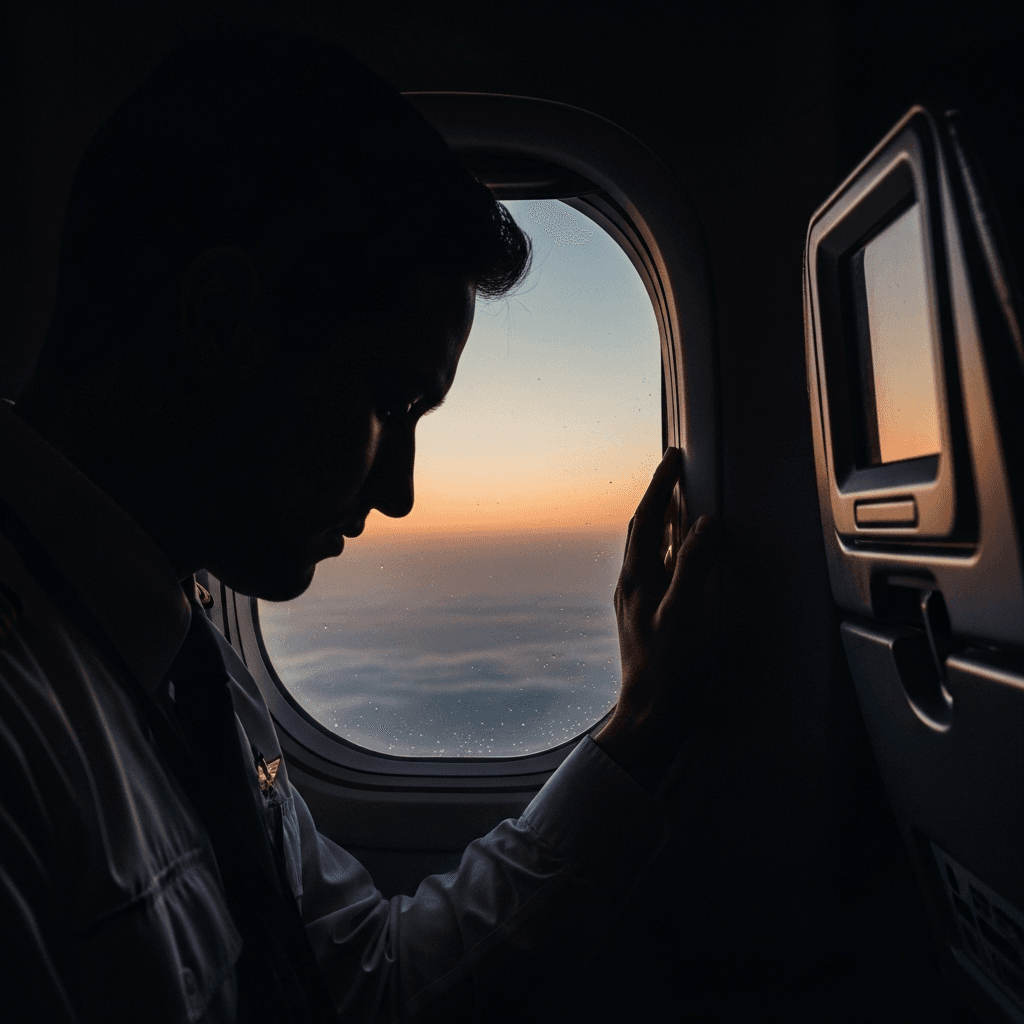
The Aviation Industry’s Response and Future Safeguards
The Emerson incident served as a stark reminder of the potential vulnerabilities that exist, even with post-9/11 security enhancements. The fact that a trusted, authorized individual could allegedly attempt such a catastrophic act from within the cockpit has prompted an immediate review of procedures.
Airlines are re-examining their policies regarding jump seat occupants, though the practice of allowing off-duty pilots to commute in the cockpit is a long-standing and essential part of airline logistics. The focus is less on banning the practice and more on reinforcing the “two-person cockpit” rule and ensuring flight crews are trained for scenarios involving an insider threat.
The Federal Aviation Administration (FAA) has also been closely involved, issuing a safety alert to airlines reminding them of their responsibility to ensure the fitness of their crews. The FAA has long-established protocols for pilot medical certification, and this event has accelerated discussions on how to better integrate robust mental health evaluations. For more information on pilot certification, you can visit the official FAA website for pilots.
Ultimately, the solution will likely be a multi-faceted approach: improving mental health support systems, destigmatizing treatment, and refining cockpit protocols to ensure that checks and balances are effective even in the most unexpected circumstances. The safety of millions of passengers daily depends on getting this balance right.
In conclusion, the guilty plea of the off-duty pilot Joseph Emerson closes one chapter of this disturbing event but opens a much larger and more important conversation. It highlights the human element in aviation safety and the urgent need for a supportive infrastructure that protects the well-being of pilots, which in turn protects us all.