
UK Police Arrest Nearly 900 at Pro-Palestine Rally
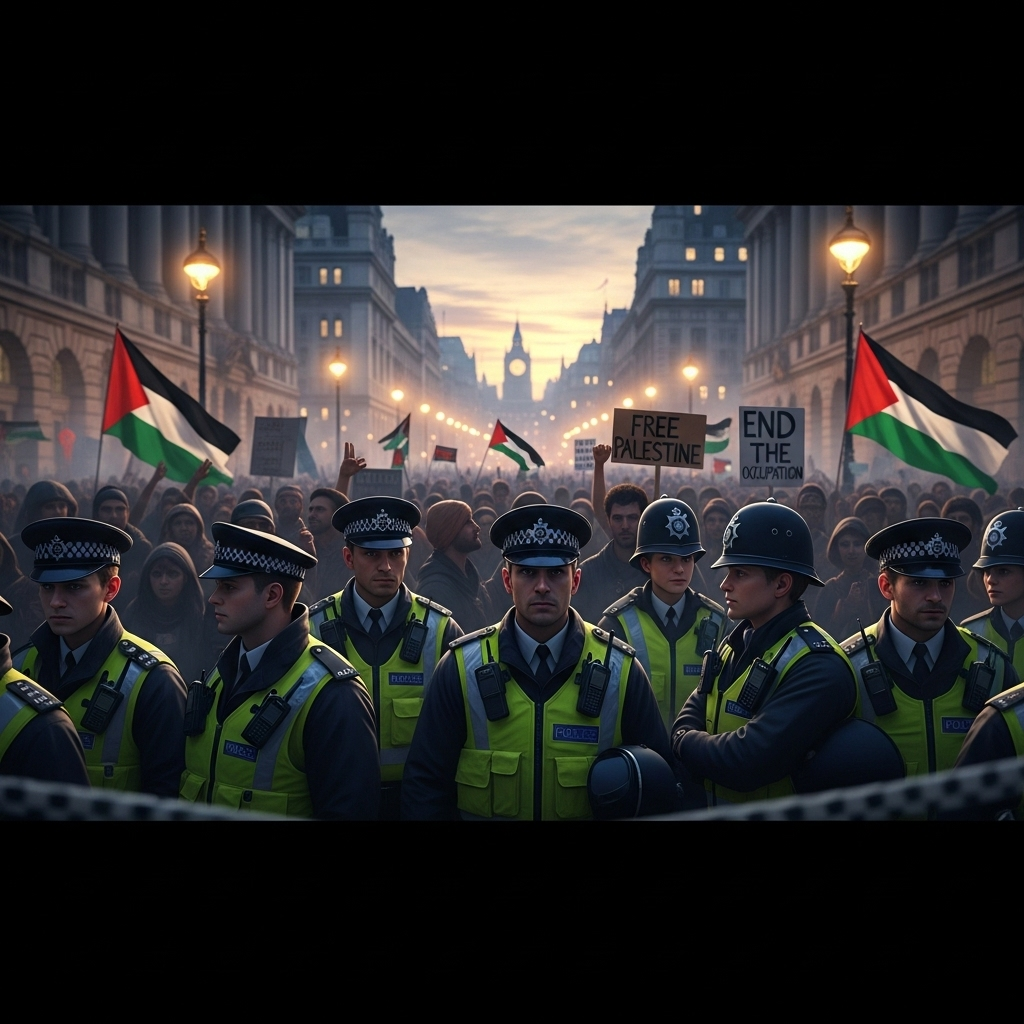
In one of the largest mass arrests at a demonstration in recent memory, UK police took nearly 900 individuals into custody during a large-scale pro-Palestine rally in central London on Saturday. The demonstration, which drew tens of thousands of participants, saw tensions escalate throughout the day, culminating in significant clashes between protesters and law enforcement.
The Metropolitan Police Service reported that the arrests were made for a variety of alleged offenses, including public order violations, failure to disperse, and assault on emergency workers. The event has reignited a fierce national debate about the right to protest versus the maintenance of public order.
Article Contents
How the Protest Escalated
The march began peacefully on Saturday morning, with protesters gathering at Hyde Park before proceeding towards the parliamentary district of Westminster. Organizers from the Palestine Solidarity Campaign (PSC) had called for a peaceful demonstration to demand an end to the ongoing conflict and to call for a stronger governmental response from the UK.
Witnesses described the initial atmosphere as passionate but orderly, with families and individuals of all ages participating. However, as the main procession reached Whitehall, a smaller, more volatile group reportedly broke away from the designated route. It was at this point that the first major confrontations with officers began.
According to reports, objects such as bottles, flares, and placards were thrown at police lines. In response, riot-gear-clad officers, who had been deployed in substantial numbers, moved to contain the crowds. The UK police used kettling tactics—a controversial crowd control method involving the formation of large cordons to confine protesters to a limited area—to manage the escalating situation.
One attendee, Sarah Jenkins, described the scene as chaotic. “It was peaceful for hours, and then suddenly there was shouting and a surge in the crowd. Police lines advanced very quickly, and people were panicking. It felt like the situation deteriorated in a matter of minutes.”
The Official UK Police Response and Justification
In a statement released late Saturday evening, the Metropolitan Police defended its actions, emphasizing that the primary goal was to ensure public safety. Assistant Commissioner Matt Twist stated that while the force respects the right to lawful protest, it will not tolerate “unacceptable violence and criminal behavior.”
The statement detailed that intelligence gathered ahead of the march indicated a “high risk of serious disorder.” This prompted a significant security operation, involving thousands of officers from the Met and other forces. “Our officers were met with determined aggression and hostility from a significant minority of protesters,” Twist said. “Arrests were not made lightly but were a necessary response to the violence we witnessed.”
Authorities confirmed that over 30 officers sustained minor injuries, ranging from cuts and bruises to one officer being treated for a suspected concussion. The force has released images of some of the items confiscated, which included fireworks and makeshift weapons. Further information is available on the Metropolitan Police website, which is being updated as the investigation continues.
The sheer number of arrests—totaling 884 by Sunday morning—has overwhelmed local custody suites, with some detainees being transported to police stations in neighboring counties. This logistical challenge highlights the unprecedented scale of the police operation.
Organizers and Activists Condemn Police Tactics
The response from protest organizers and civil liberties groups was one of outrage. The Palestine Solidarity Campaign issued a statement condemning what they called a “disproportionate and heavy-handed” response from the UK police. They argue that the actions of a small minority were used as a pretext to suppress a legitimate and overwhelmingly peaceful protest.
Ben Jamal, Director of the PSC, stated, “We are appalled by the aggressive tactics employed by the Met Police. They created an environment of fear and confrontation that was completely unnecessary. Thousands of people, including children and the elderly, were kettled for hours. This is not democratic policing; it is the suppression of dissent.”
Civil liberties organization Liberty echoed these concerns, warning that such policing tactics have a chilling effect on free speech. “The right to protest is a cornerstone of our democracy,” a spokesperson for Liberty said. “The police must facilitate peaceful protest, not seek to crush it. The scale of these arrests raises serious questions about the strategy and judgment of police leadership.” Many activists are now comparing these events to the stricter measures outlined in our previous analysis of UK protest laws.
Public and Political Fallout
The events have triggered a polarized reaction across the political spectrum and among the general public. On social media, #LondonProtest and #UKPolice were trending, with videos and firsthand accounts flooding platforms. Supporters of the police action praised officers for maintaining order, while critics shared footage of alleged police brutality and accused the media of focusing only on protester violence.
Home Secretary Yvette Cooper has called for a full report from the Metropolitan Police Commissioner, stating, “It is vital that the police maintain order and protect the public, but it is also important that the right to peaceful protest is upheld. I will be seeking urgent clarification on the circumstances that led to such a high number of arrests.”
Conversely, some backbench Conservative MPs have called for an outright ban on such marches, arguing they consistently drain police resources and lead to public disorder. The debate over the policing of protests has been a contentious issue for years, but Saturday’s events have brought it to a critical juncture.
As the legal process for the nearly 900 arrested individuals begins, the fallout is far from over. The incident is set to become a major case study in the ongoing struggle to balance civil liberties with state security. With more demonstrations planned for the coming weeks, the UK police and protest movements are on a collision course that will continue to test the limits of public expression in Britain.
“`


