
Long Throws: 1 Key Tactic Tuchel Wants England to Use
In the world of modern football, obsessed with intricate passing patterns and high-tech analytics, one of the game’s most rudimentary plays is often overlooked. But according to tactical mastermind Thomas Tuchel, England is ignoring a potent weapon in their arsenal: long throws. The former Chelsea and Bayern Munich manager recently highlighted this simple yet devastating tactic as a key area where the Three Lions could gain a significant edge over their opponents.
While some purists might scoff at the idea, the strategic value of a well-executed long throw-in is undeniable. It’s more than just heaving the ball into the box; it’s about creating structured chaos, exploiting aerial mismatches, and generating high-quality scoring chances from a situation that most teams treat as a simple restart. So, why does Tuchel believe this is the secret ingredient for England? Let’s break it down.
Tuchel’s Tactical Masterstroke: Why Long Throws?
Thomas Tuchel’s analysis didn’t come out of nowhere. During his punditry, he pointed out that international tournaments are often decided by fine margins and set-piece prowess. While England has become formidable from corners and free-kicks, they have yet to fully weaponize their throw-ins in the final third. Tuchel argues that integrating long throws into their game plan would add a new, unpredictable dimension to their attack.
His reasoning is threefold:
- The Element of Surprise: Top-tier defenders are drilled to defend crosses from open play and corners. A flat, fast, and long throw-in arrives from a different angle and trajectory, making it incredibly difficult to judge. It’s essentially a “corner from hand” that you can’t be offside from.
- Creating Mismatches: England boasts a squad filled with powerful, aerially dominant players like Harry Maguire, John Stones, and Declan Rice. A long throw allows these players to attack the ball in the penalty area, putting immense pressure on defenses not accustomed to defending this type of delivery.
- Sustained Pressure: Even if the initial throw doesn’t lead to a goal, it often results in a frantic scramble, a blocked shot, or a corner. This keeps the defending team pinned deep in their own half, allowing England to sustain attacking pressure without needing to build from the back. It’s a low-risk, high-reward strategy.
For a team that sometimes struggles to break down deep-lying, organized defenses, this direct approach could be the key to unlocking stubborn backlines. It’s less about philosophy and more about pragmatism—a quality that wins knockout tournaments.
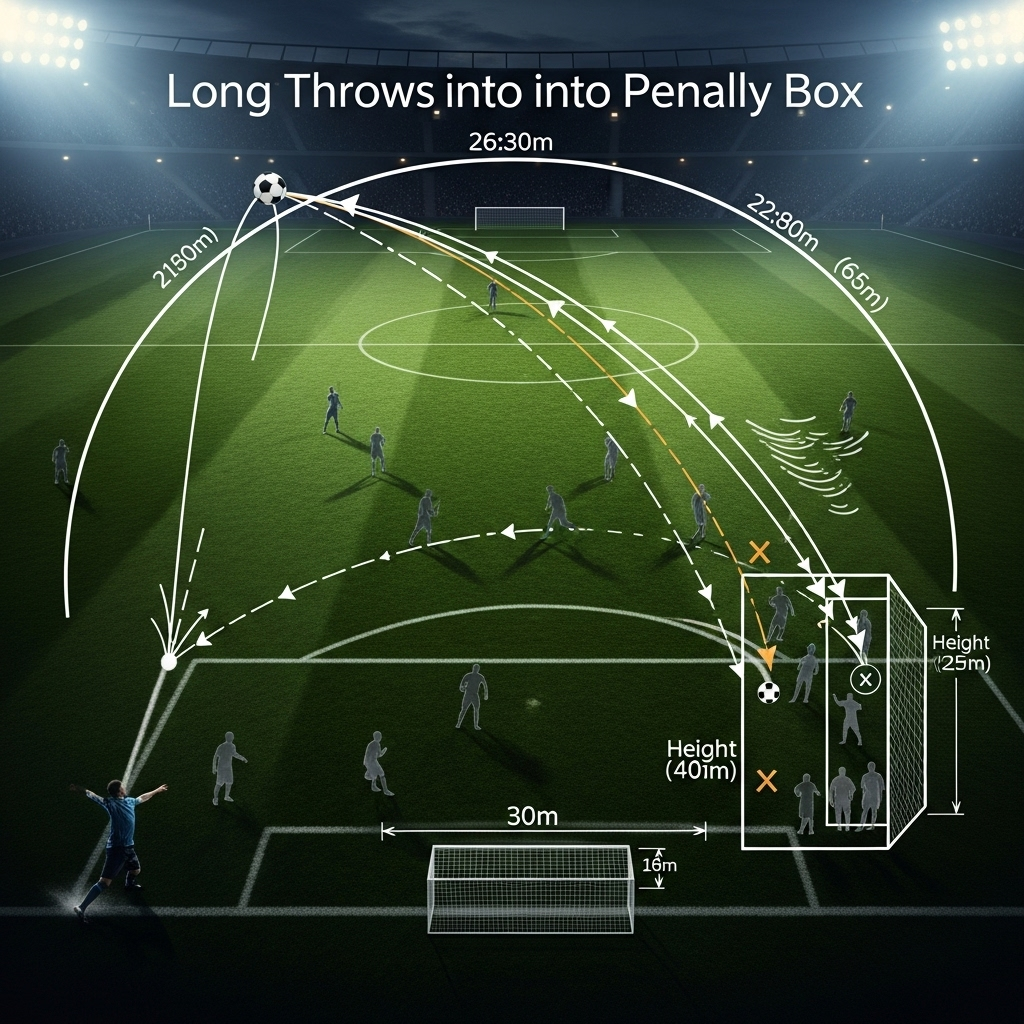
The Science Behind Effective Long Throws
A successful long throw isn’t just about raw strength; it’s a highly technical skill. The best practitioners, like Iceland’s Aron Gunnarsson or Stoke City’s legendary Rory Delap, generated incredible power and distance through flawless technique. The key is to use the entire body to create momentum, culminating in a whip-like release of the ball.
The flat, hard trajectory is crucial. Unlike a looping corner, a “bullet” throw travels at a speed that gives defenders minimal time to react. This is why many analysts compare it to a driven cross. As noted by sports analysts at The Athletic, this delivery forces defenders into making split-second decisions, often leading to errors, flick-ons, and clear-cut chances for attackers lurking at the back post.
Furthermore, because the offside rule does not apply to a throw-in, attackers can position themselves in otherwise illegal positions, ready to pounce on any second ball. This legal loophole is arguably the biggest advantage of weaponizing long throws.
England’s Potential Specialists: Who Can Deliver?
The most pressing question is: who in the current England setup could perform this role? The Three Lions aren’t short of powerful athletes. The most obvious candidate is Liverpool’s Joe Gomez. He has demonstrated the ability to launch long throws for his club, possessing the technique and upper-body strength required to turn a throw-in into a dangerous attacking opportunity.
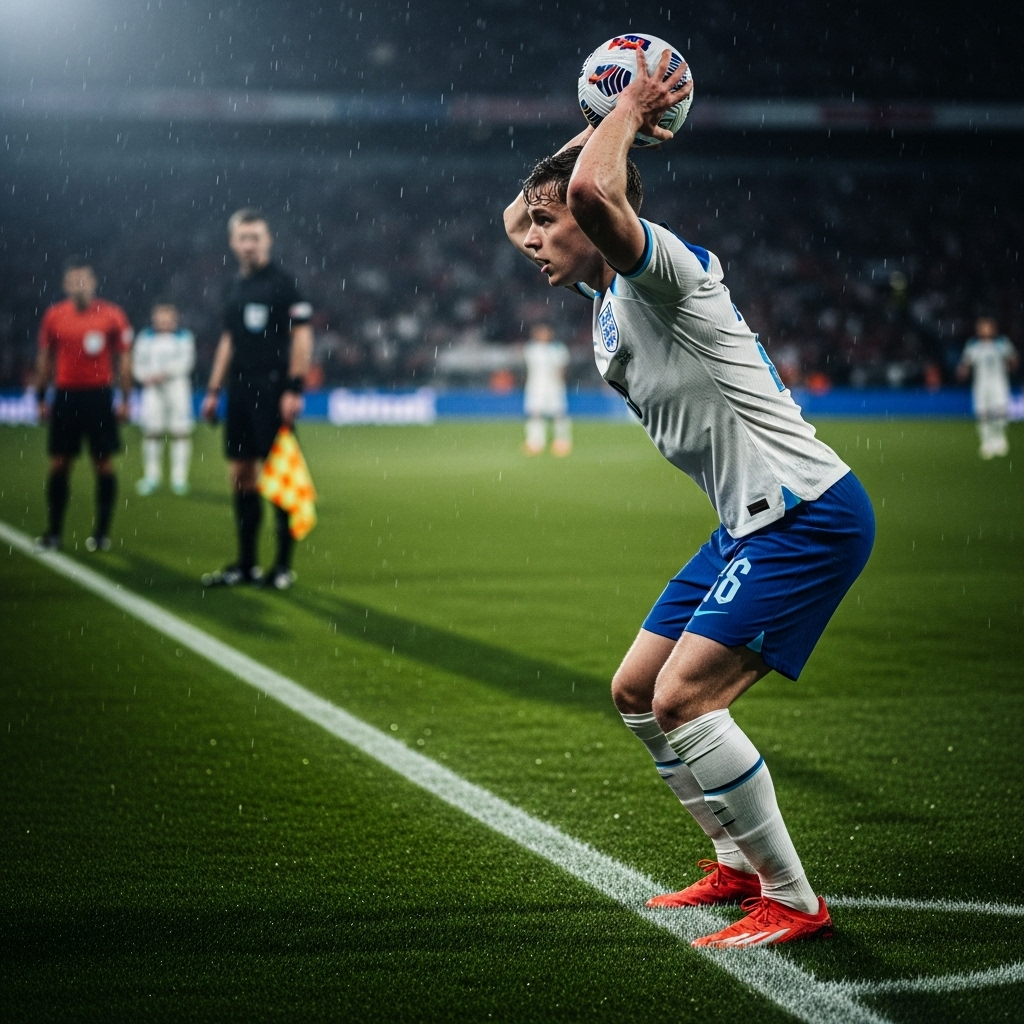
Another strong contender is Kyle Walker. Known for his explosive pace and power, Walker has the physical attributes to become a long-throw specialist with dedicated training. His experience as a full-back means he’s already accustomed to taking throw-ins in advanced areas of the pitch.
Even players like Ben White or Ezri Konsa could be developed for this specific role. It doesn’t require the team’s best player to do it, just a dedicated specialist who can consistently deliver the ball into a dangerous area. This is a skill that can be honed on the training ground, much like a free-kick or a penalty. For more on the current squad, you can review our detailed analysis of England’s players.
The Delap Effect: A Proven Game-Changer
You can’t discuss long throws without mentioning Rory Delap. During his time at Stoke City, Delap’s throws were so effective they became the team’s primary offensive strategy. Teams, including Arsène Wenger’s sophisticated Arsenal, openly admitted they had no answer for it. Stoke scored a remarkable number of goals directly or indirectly from Delap’s deliveries.
This “Delap Effect” proved that a seemingly basic tactic could level the playing field against technically superior opponents. It created an atmosphere of intimidation and panic at the Britannia Stadium. While England wouldn’t rely on it as their sole strategy, having it as an option for late-game situations or against specific opponents would be a massive tactical advantage.
Internationally, Iceland’s success at Euro 2016 was built partly on the foundation of Aron Gunnarsson’s mammoth throws, which led to their famous goal against England. It’s a proven concept on the biggest stage.

Will England Embrace the Chaos?
The primary argument against focusing on long throws is one of aesthetics. Some critics label it as “anti-football” or overly simplistic for a team brimming with creative talent like Phil Foden, Jude Bellingham, and Bukayo Saka. The concern is that it could detract from developing a more fluid, possession-based style of play.
However, Tuchel’s point is that the best teams are adaptable. They can play beautiful football but can also win ugly when required. International tournaments are not leagues; they are a series of high-stakes knockout matches where a single moment can decide everything. Why not have another tool in the toolbox?
Ultimately, incorporating long throws doesn’t mean abandoning a sophisticated attacking structure. It means adding another layer to it. It provides an alternative route to goal when Plan A isn’t working. For a nation desperate to end its long wait for a major trophy, listening to a two-time Champions League-winning manager might not be such a bad idea. The humble long throw could be the unlikely key that finally unlocks glory for England.


