
Yemen’s Houthis: 1 New Drone Attack on Israeli Airport
In a significant escalation of their long-range attacks, Yemen’s Houthis have claimed responsibility for a new drone strike targeting an airport in southern Israel. The announcement, made through their military spokesperson, marks the latest attempt by the Iran-aligned group to directly impact the Israeli-Palestinian conflict from hundreds of miles away. This incident underscores the group’s expanding military capabilities and their persistent role as a disruptive force in Middle Eastern geopolitics.
While Israeli officials have yet to formally confirm the impact or issue a detailed response, the claim itself has reignited concerns over regional stability. The attack highlights the strategic threat posed by the Houthis, not just to commercial shipping in the Red Sea, but directly to Israeli territory. This article will delve into the details of the attack, the broader context of Houthi actions, and the potential implications for the volatile region.
Contents
Details of the Claimed Drone Attack
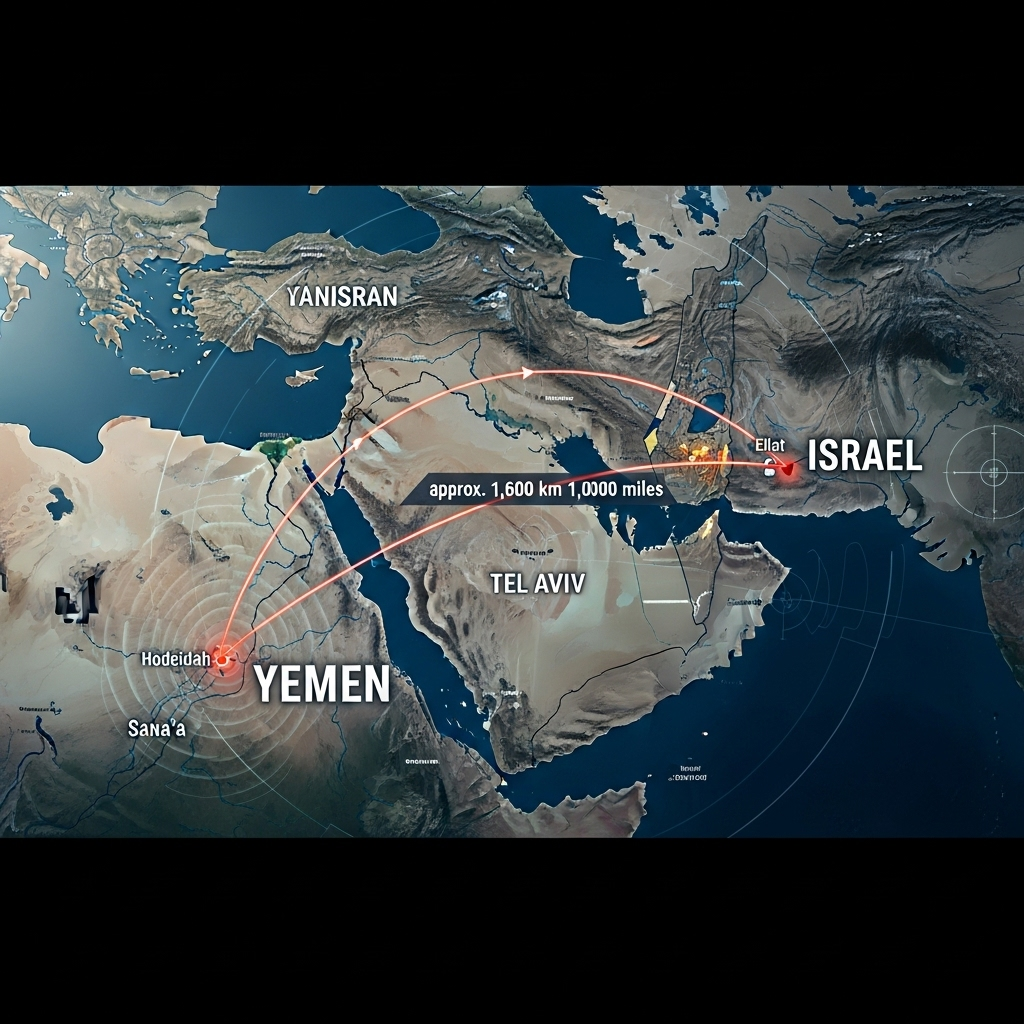
According to a televised statement by Houthi military spokesman Yahya Saree, the group’s forces launched a “batch of drones” at Ramon Airport, a key international and military airfield located in Israel’s Negev desert. Saree asserted that the drones “accurately hit their targets,” a claim that remains unverified by independent sources. The Israel Defense Forces (IDF) have only stated they are investigating reports of an aerial intrusion in the Eilat area, near the airport.
This is not the first time Yemen’s Houthis have targeted southern Israel. Since the outbreak of the Gaza war, the group, officially known as Ansar Allah (“Supporters of God”), has launched a series of missile and drone attacks. Most of these have been intercepted by Israeli air defenses, including the Arrow system, or by allied naval forces in the Red Sea. However, the persistence of these attempts demonstrates a clear strategic objective.
The choice of Ramon Airport is significant. It serves as a civilian airport but also has a substantial military role, making it a high-value strategic target. A successful strike, even one causing minimal damage, would represent a major propaganda victory for the Houthis and their backers in Tehran.
The Broader Context of Houthi Aggression
Today’s claimed attack cannot be viewed in isolation. It is part of a wider campaign that Yemen’s Houthis initiated in late 2023 in what they describe as a show of solidarity with Palestinians in Gaza. This campaign has primarily focused on disrupting one of the world’s most critical maritime trade routes.
The group’s actions have included:
- Attacks on Commercial Shipping: Using anti-ship ballistic missiles, drones, and naval commandos, the Houthis have targeted dozens of vessels in the Red Sea and the Gulf of Aden. They initially claimed to only target ships linked to Israel, the US, or the UK, but their attacks have become increasingly indiscriminate.
- Long-Range Strikes: Missiles and drones have been launched toward Israel, forcing the country to bolster its multi-layered air defense systems.
- Propaganda and Recruitment: The conflict has served as a powerful recruitment tool for the Houthis within Yemen, framing their fight as part of a larger, noble cause against Western and Israeli influence.
This strategy has effectively internationalized the Yemeni conflict, drawing in naval forces from the United States, the United Kingdom, and the European Union to protect commercial shipping. For more information on the ongoing tensions, you can read our overview of the Red Sea crisis. Despite retaliatory airstrikes on Houthi targets in Yemen, the group has proven resilient, maintaining its ability to launch sophisticated attacks.
Understanding the Rise of Yemen’s Houthis
To comprehend the current situation, it’s essential to understand who Yemen’s Houthis are. The movement began in the 1990s as a theological revival movement for Zaydi Shia Islam in northern Yemen. Over time, it morphed into a powerful political and military organization fueled by grievances against the central government, which it accused of corruption and being too close to Saudi Arabia and the United States.
In 2014, the Houthis seized control of Yemen’s capital, Sanaa, ousting the internationally recognized government and plunging the country into a devastating civil war. A Saudi-led coalition intervened in 2015 to restore the government, but the conflict devolved into a protracted stalemate, causing one of the world’s worst humanitarian crises.
The group is a key component of the “Axis of Resistance,” an anti-Israel and anti-Western alliance led by Iran that also includes Hezbollah in Lebanon and various militia groups in Iraq and Syria. Iran provides the Houthis with funding, training, and increasingly sophisticated weaponry, including the long-range drones and missiles used in recent attacks. This support has enabled the Houthis to project power far beyond Yemen’s borders, transforming a local insurgency into a major regional player. For an in-depth analysis of their structure, see this report from the Council on Foreign Relations.

Israel’s Response and Regional Implications
Israel’s primary response to the Houthi threat has been defensive. Its advanced air defense network, which includes Iron Dome, David’s Sling, and the Arrow missile system, has been highly effective at intercepting aerial threats. However, each interception is costly, and the constant threat drains military resources that are already stretched thin.
A direct Israeli military strike on Houthi targets in Yemen remains a possibility, but it is fraught with risk. Such an action could:
- Trigger a Wider War: A direct confrontation could draw in Iran and its other proxies, leading to a multi-front war that Israel is keen to avoid.
- Face Logistical Challenges: Yemen is over 1,000 miles from Israel, making a sustained air campaign difficult without logistical support from regional partners, some of whom are hesitant to be drawn into the conflict.
- Be of Limited Effectiveness: As the US and UK have discovered, Houthi missile and drone launchers are often mobile and difficult to locate and destroy.
The more likely path forward involves continued reliance on defensive measures, intelligence sharing with the US-led coalition in the Red Sea, and diplomatic pressure on Iran. However, the latest attack on an Israeli airport may shift the calculus in Tel Aviv, increasing pressure for a more forceful, preemptive response.
Looking Ahead: A New Phase of Conflict?
The drone attack claimed by Yemen’s Houthis on Ramon Airport signals a potential new phase in their long-distance war against Israel. It demonstrates not only their intent but also their evolving capability to bypass layers of defense and pose a direct threat to Israeli soil. Whether the attack was successful is, for now, secondary to the message it sends: the Houthis will remain a factor in any regional conflict involving Israel.
The international community faces a difficult challenge. Appeasing the Houthis is not an option, yet military action has so far failed to deter them. The path to de-escalation likely runs through a resolution of the Gaza conflict, which the Houthis use as their primary justification, and renewed diplomatic efforts to end the long-running war within Yemen itself.
Until then, southern Israel will remain on high alert, and the waters of the Red Sea will continue to be a theater of conflict. The actions of Yemen’s Houthis serve as a constant, volatile reminder of how interconnected and fragile the security of the Middle East truly is.


