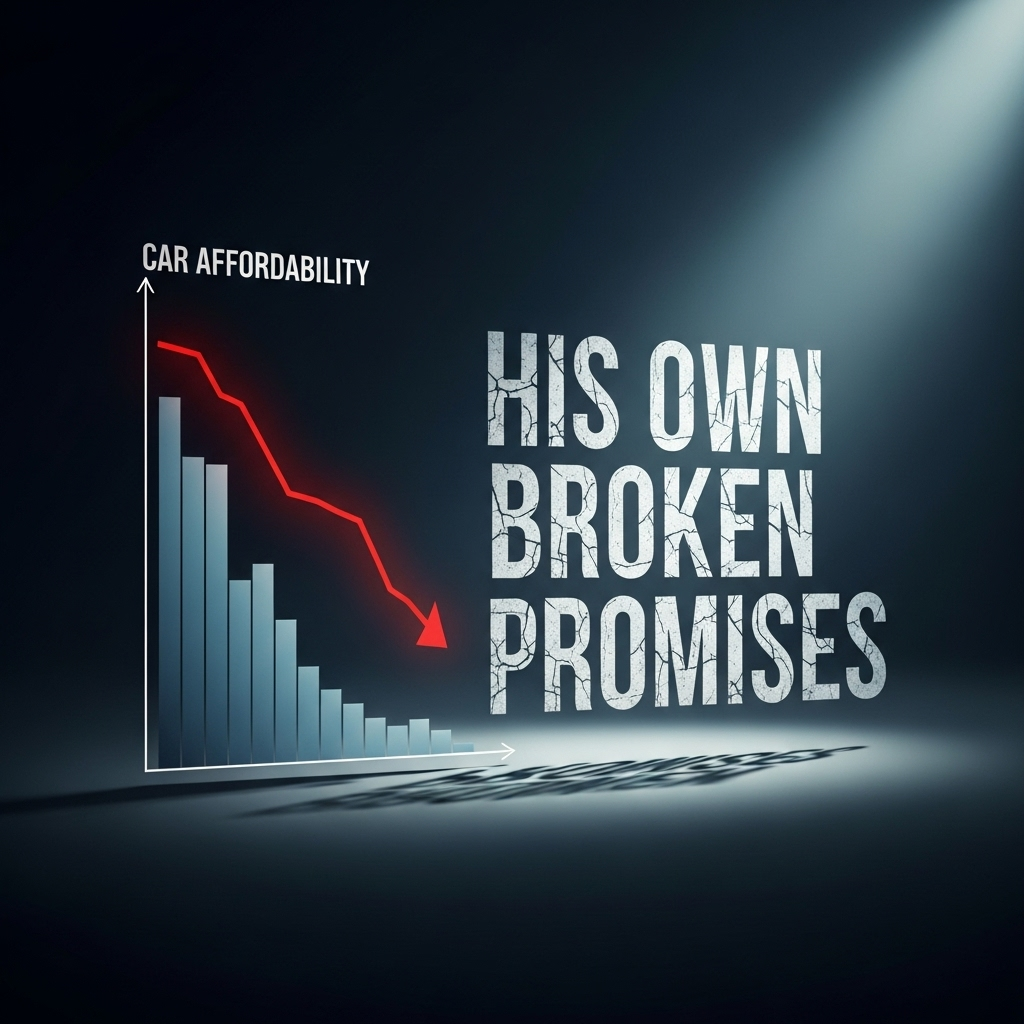
his own broken promises: 5 ways Musk’s $1T pay fails
Elon Musk’s staggering compensation package, once valued at over $50 billion and potentially reaching a trillion-dollar valuation in a theoretical future, has been a lightning rod for controversy. While defenders point to Tesla’s meteoric rise in market capitalization as justification, a closer look reveals a narrative built on a foundation of his own broken promises. The valuation targets, while met, were fueled by a hype cycle that consistently outpaced reality, leaving shareholders to question the substance behind the spectacle.
The core of the issue isn’t just the unprecedented size of the payout; it’s about the gap between the vision sold to investors and the products and services actually delivered. This article unpacks five key areas where the justification for this monumental reward crumbles under the weight of unfulfilled commitments.
In This Article:
1. The Full Self-Driving (FSD) Mirage
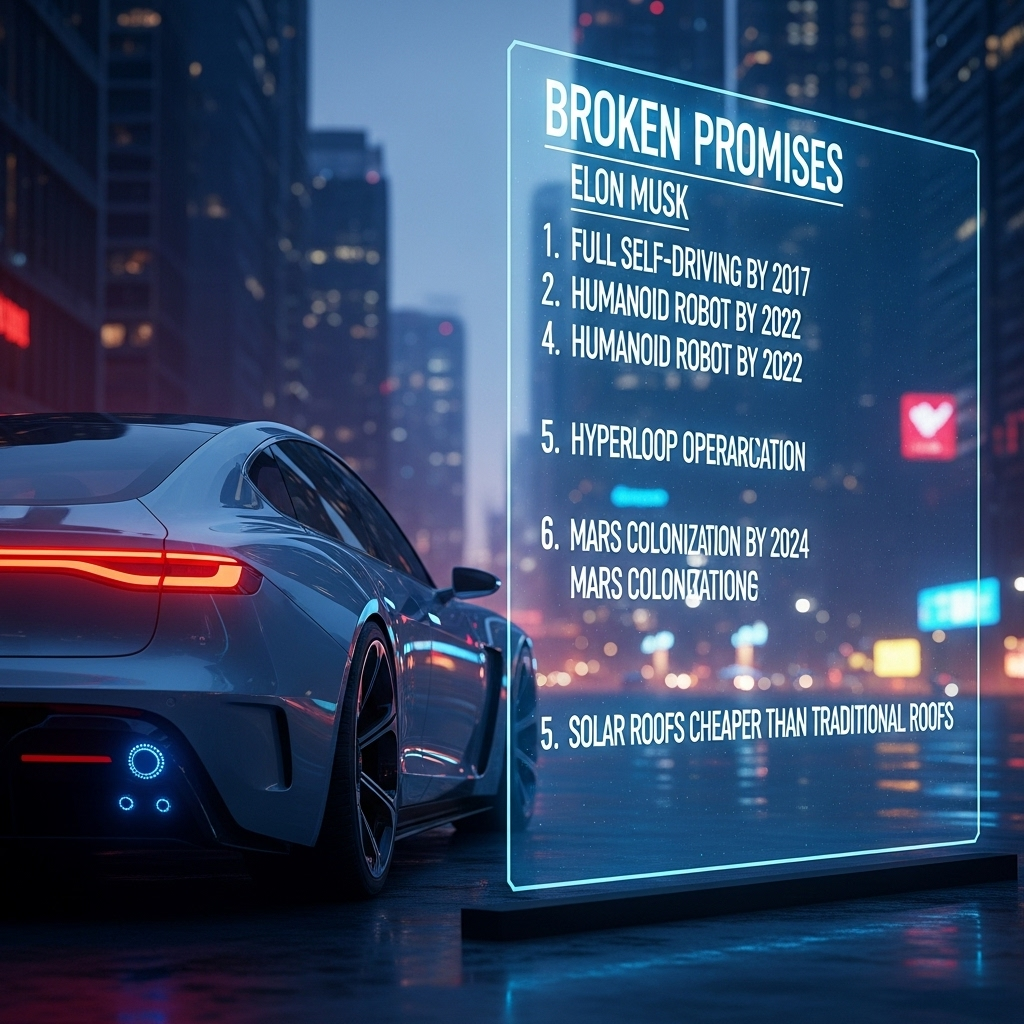
Perhaps the most significant promise used to inflate Tesla’s valuation has been the imminent arrival of “Full Self-Driving” (FSD) capability. For years, Musk has claimed that true, Level 5 autonomy was just around the corner. In 2019, he boldly predicted that by 2020, Tesla would have over a million cars on the road with full self-driving hardware, capable of operating as robotaxis.
This single promise was a cornerstone of the bull case for Tesla, suggesting a future where every car sold could generate ongoing revenue as an autonomous vehicle. This justified a valuation far beyond that of a traditional automaker. Yet, here we are, years later, and FSD remains a “beta” product—a sophisticated driver-assist system (Level 2) that requires constant driver supervision. The goalposts have been moved repeatedly, but the fundamental promise of a car that drives itself remains unfulfilled.
The compensation package was awarded based on a market cap that was undeniably inflated by this FSD hype. Investors bought into a future that has yet to materialize, making the reward feel premature and based on speculation rather than delivered technology. The chasm between the FSD promise and the reality on the ground is a glaring example of a broken one.
2. The Robotaxi Network That Never Arrived
Tied directly to the FSD mirage is the dream of the Tesla Network, a fleet of owner-operated robotaxis that would allow Tesla cars to earn money for their owners when not in use. Musk painted a vivid picture: your Tesla would drop you off at work and then spend the day ferrying passengers, generating passive income. He claimed this would make the cars an “appreciating asset.”
This vision was a powerful driver of both sales and stock valuation. The prospect of turning a depreciating vehicle into an income-generating machine was revolutionary. It positioned Tesla not just as a car company, but as a future-tech mobility platform with a nearly limitless addressable market. This was a key justification for the stock hitting the milestones required for Musk’s payout.
However, without true FSD, the robotaxi network is pure science fiction. No Tesla can legally or safely operate without a human driver, making the entire concept moot. The promise was instrumental in building the valuation that unlocked Musk’s pay tranches, but the underlying technology remains a distant dream. For more on the technical hurdles, you can review expert analysis on autonomous driving challenges from sources like Reuters.
3. The Mass-Market Affordability Failure
A core part of Tesla’s “Master Plan” was to use profits from premium vehicles (Model S/X) to develop a truly affordable, mass-market electric car. For years, the world waited for the “Model 2,” a rumored $25,000 EV that would bring electric mobility to the masses and solidify Tesla’s mission to accelerate the world’s transition to sustainable energy.
This promise was crucial for justifying Tesla’s long-term growth story. The potential to capture the largest segment of the automotive market was a key factor in its soaring stock price. Yet, the company’s focus shifted. Instead of the affordable compact, Tesla pivoted to the high-margin, polarizing Cybertruck—a vehicle that, despite its novelty, serves a niche market and arrived years late with a much higher price tag than initially announced.
While the company still produces the more accessible Model 3 and Model Y, the dream of a true “people’s EV” has been indefinitely postponed. The failure to deliver on this foundational promise demonstrates a shift in strategy from volume-based market penetration to high-margin profits, a move that benefits the CEO’s stock-based compensation but betrays an original pillar of the company’s mission. You can read our analysis of the Cybertruck’s market impact here.
4. The SolarCity Burden and How His Own Broken Promises Haunt Tesla
The 2016 acquisition of SolarCity, a struggling solar panel company founded and run by Musk’s cousins, was highly controversial at the time. Musk, who was chairman of both companies, pitched the deal as a visionary “no-brainer” to create a vertically integrated sustainable energy powerhouse. He promised massive synergies and a seamless customer experience for solar roofs and home batteries.
However, critics and shareholders argued it was little more than a bailout of SolarCity at Tesla shareholders’ expense. Following the acquisition, the promised growth and synergies failed to materialize as pitched. Tesla’s solar division has consistently underperformed, and the much-hyped “Solar Roof” has faced immense production and installation challenges, never reaching the scale Musk envisioned.
The deal loaded Tesla with debt and diverted resources, all based on a narrative of synergy that was, in itself, another of his own broken promises. The market largely forgave this misstep as the auto-related stock price soared, but it remains a foundational example of using an overly optimistic vision to justify a major financial decision that primarily benefited insiders.
5. The Twitter/X Distraction and Divided Attention
Finally, a CEO’s most valuable asset is their focus. When shareholders agreed to the 2018 pay package, they did so with the implicit understanding that Elon Musk would be singularly devoted to navigating Tesla through a period of intense competition and technological scaling. His acquisition of Twitter (now X) shattered that understanding.
The chaotic takeover and subsequent management of X has been a massive distraction of time, energy, and capital. More importantly, his increasingly erratic and controversial behavior on the platform has, by many accounts, damaged the Tesla brand. Potential EV buyers who are alienated by his public persona may now look to competitors like Ford, Hyundai, or Rivian.
This breaks the fundamental promise of stewardship. The CEO’s primary duty is to maximize shareholder value, and actions that actively tarnish the brand’s reputation run directly counter to that duty. The pay package was meant to incentivize focus and execution at Tesla, but it has instead funded a distracting and damaging side-quest, turning his leadership from an undisputed asset into a significant liability.
Conclusion: A Reward for Hype, Not Just Results
While no one can deny that Tesla’s market capitalization reached the ambitious targets set in the 2018 compensation plan, it’s crucial to examine how it got there. The valuation was built not just on impressive execution in car manufacturing, but on a thick layer of hype, speculation, and a narrative of a future that has been consistently delayed or abandoned.
The pay package rewarded the promise of FSD, robotaxis, and mass-market affordability—all things that remain undelivered. It was approved before the CEO’s attention became dangerously divided. When you peel back the layers, you find a reward built on his own broken promises, a testament more to Elon Musk’s power as a storyteller than his record of keeping his most audacious commitments.
“`