
Huge Drop: EU Asylum Applications Fall 23% in 2025
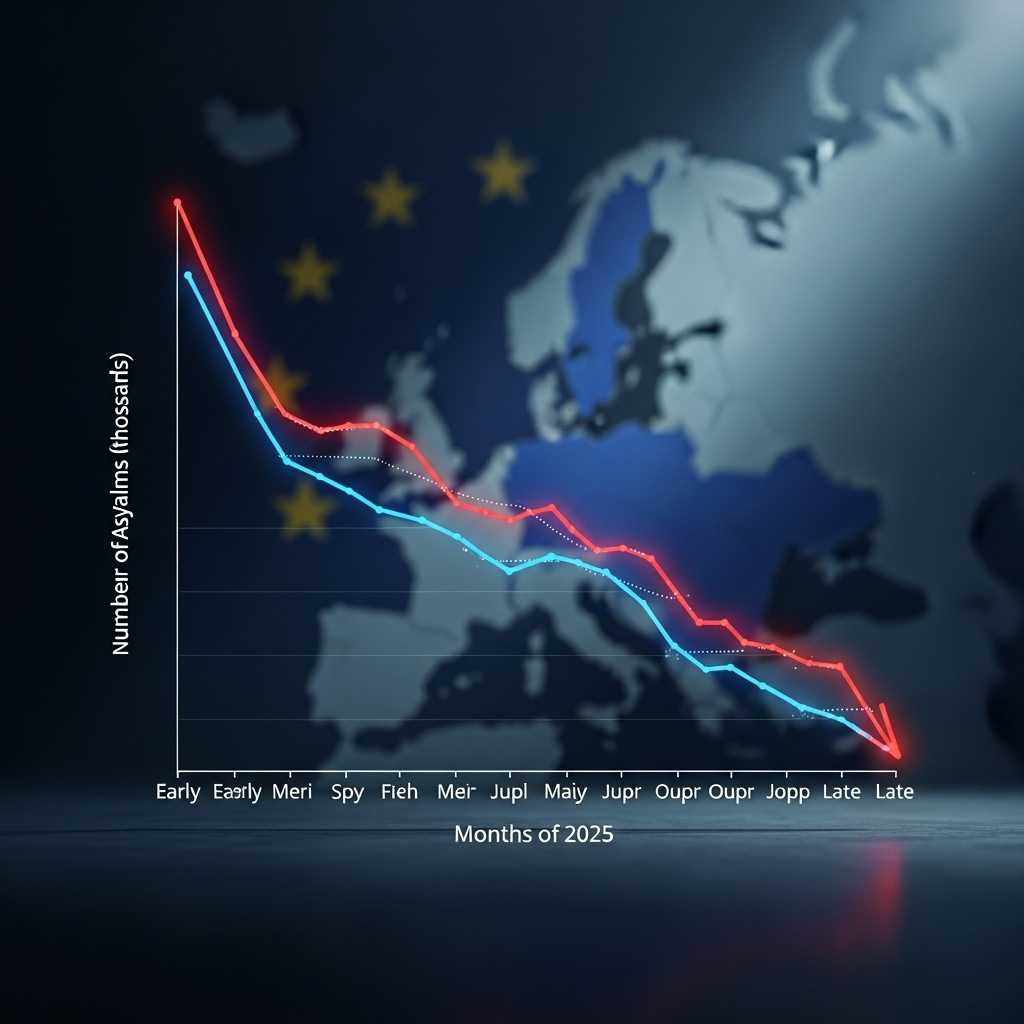
In a significant development for the European Union, official figures released today show a huge drop in the number of first-time asylum applications across the 27-member bloc. Data compiled by the European Union Agency for Asylum (EUAA) for the first three quarters of 2025 indicates a remarkable 23% decrease compared to the same period in the previous year, marking one of the most substantial declines in a decade. This trend suggests a major shift in migration dynamics affecting the continent.
The report, which has sent ripples through political and humanitarian circles, attributes the decline to a combination of factors, including the phased implementation of the new EU Asylum and Migration Pact, enhanced cooperation with third countries, and changing conditions in key regions of origin. While some leaders are hailing the figures as a policy success, rights groups are urging caution, questioning whether the drop reflects a decrease in need or an increase in barriers to protection.
Article Contents
Unpacking the Huge Drop: What the Numbers Say
According to the EUAA’s preliminary report, the total number of first-time asylum applications lodged in the EU from January to August 2025 stood at approximately 680,000. This is a sharp fall from the 883,000 applications recorded during the same timeframe in 2024. This huge drop represents a significant turning point after several years of post-pandemic increases that strained reception capacities in many member states.
The decline is not uniform across all nationalities. Applications from Syrian nationals, who have long constituted the largest group of asylum seekers, fell by nearly 30%. A similar trend was observed for applicants from Afghanistan, with a 25% decrease. Analysts suggest that tentative stabilization efforts and increased regional aid in countries neighboring conflict zones may be contributing factors. In contrast, the number of applications from certain Sub-Saharan African nations remained relatively stable, highlighting the complexity of global migration patterns.
Key statistics from the report include:
- Total first-time applications (Jan-Aug 2025): 680,000
- Percentage decrease from 2024: 23%
- Largest national group decrease: Syrians (-30%)
- Top receiving countries: Germany, France, and Spain all reported significant decreases in new applications.
These figures provide concrete evidence of a changing landscape, prompting a deeper analysis of the underlying causes. For more detailed statistics, you can refer to the official EUAA publications.
Key Factors Driving the Decline
Experts point to a convergence of policy initiatives and geopolitical shifts as the primary drivers behind this year’s substantial reduction in asylum claims. No single cause is responsible; rather, it is the interplay of several powerful factors.
1. The EU Asylum and Migration Pact: The phased implementation of the new Pact, finalized in late 2024, is having its first tangible effects. The legislation introduced streamlined, mandatory border procedures for applicants deemed to have a low chance of success. This “fast-track” screening at the EU’s external borders means many individuals are processed and, if their claim is unfounded, returned much more quickly, potentially deterring others from attempting the journey. You can read our previous analysis of the Pact here.
2. Enhanced Cooperation with Transit Countries: The EU has intensified its diplomatic and financial efforts to partner with key transit countries in North Africa and the Balkans. These agreements often involve providing funding and technical support for border management in exchange for increased efforts to curb irregular migration. While politically effective in reducing numbers, these deals are frequently criticized by human rights organizations for potentially trapping vulnerable people in unsafe conditions.
3. Shifting Global Dynamics: Beyond EU policy, conditions in some regions of origin have changed. While major conflicts persist, localized ceasefires and improved humanitarian access in parts of Syria and Iraq have, for some, reduced the immediate pressure to flee. Furthermore, targeted information campaigns funded by the EU and member states, which highlight the legal and physical dangers of irregular journeys to Europe, may be influencing decisions.

Country-by-Country Breakdown: A Varied Picture
While the overall EU trend is a huge drop, the situation varies considerably among member states. The impact of the new policies and migration routes has not been felt evenly across the continent.
Germany, which has historically received the highest number of asylum seekers, saw one of the most dramatic decreases, with new applications falling by nearly 35%. This is largely attributed to fewer arrivals via the Balkan route and the effectiveness of the new border procedures. Similarly, France reported a 28% drop, citing similar reasons.
In contrast, frontline Mediterranean countries like Italy and Spain saw more modest declines of around 15% and 12%, respectively. This suggests that the Central Mediterranean route, while less active than in peak years, remains a persistent channel for arrivals. These states continue to call for more solidarity from other EU members, arguing that the new Pact’s “compulsory solidarity” mechanism has not yet been fully effective in relocating asylum seekers from points of first arrival.
Meanwhile, Eastern European countries like Poland and Hungary, known for their hardline stance on migration, continued to report very low numbers of applications, a trend consistent with previous years. The data underscores that geography and national policy still play a crucial role in shaping where asylum seekers arrive and lodge their claims.
Implications and Reactions Across the Bloc
The news of the 23% drop has been met with a spectrum of reactions, reflecting the deep political and social divisions on migration within the EU.
Mainstream political leaders in Brussels and capitals like Berlin and Paris have cautiously welcomed the figures. They are portraying the trend as evidence that their comprehensive strategy—combining stricter border controls with international cooperation—is yielding results. An EU official, speaking anonymously, told Reuters, “This shows that a firm but fair European approach to migration is possible and effective.”
However, humanitarian organizations have raised alarms. The Director of the European Council on Refugees and Exiles (ECRE) stated, “We are deeply concerned that this huge drop is not because the world has become safer, but because Europe has become harder to reach. We are seeing the externalization of borders leading to human rights abuses outside the EU and the denial of the fundamental right to seek asylum.”
These groups argue that the focus should not be on raw numbers but on the individuals behind them. The decrease in official applications could mask a rise in the number of people stuck in precarious situations in transit countries or forced into even more dangerous, clandestine routes to avoid detection.

Ultimately, the 2025 figures represent a pivotal moment. The huge drop in asylum applications provides a respite for the EU’s overburdened reception systems, but it also raises fundamental questions about the future of asylum in Europe. As the EU continues to implement its new Pact, the world will be watching to see if this trend is sustainable and, more importantly, if it is being achieved without compromising the bloc’s commitment to international law and human rights.
“`


