Gout Drug from Atom Shows Phase 3 Win Over Rivals
In a significant development for millions suffering from a painful form of arthritis, Atom Bioscience has announced groundbreaking results from its Phase 3 clinical trial. Their new gout drug, currently codenamed ABP-671, has demonstrated superior efficacy in lowering uric acid levels and reducing painful gout flares when compared to the current standard of care. This milestone could herald a new era in gout management, offering a more effective and potentially safer option for patients worldwide.
Table of Contents
A New Era for Gout Treatment: Atom’s Breakthrough Drug
Gout is a condition characterized by sudden, severe attacks of pain, swelling, redness, and tenderness in the joints, often at the base of the big toe. It occurs when high levels of uric acid in the blood lead to the formation of sharp urate crystals in and around the joints. For decades, the primary treatment has been urate-lowering therapies (ULTs) like allopurinol, which aim to reduce uric acid production.
While effective for many, these existing treatments have limitations. Some patients do not respond adequately, while others experience side effects or must take additional medication to manage the painful flares that can occur when starting treatment. The announcement from Atom Bioscience suggests their investigational gout drug could overcome many of these challenges.
The successful completion of a Phase 3 trial is a critical step before a drug can be submitted to regulatory bodies like the U.S. Food and Drug Administration (FDA) for approval. It represents the final and most extensive stage of human testing, designed to confirm a drug’s effectiveness and monitor for long-term side effects in a large patient population.

How Does This New Gout Drug Work?
What sets ABP-671 apart is its innovative dual-action mechanism. Most existing therapies focus solely on lowering uric acid levels. Atom’s new gout drug is designed not only to help the kidneys excrete uric acid more efficiently (a uricosuric effect) but also to provide an independent anti-inflammatory effect.
This is a game-changer. One of the biggest hurdles in starting traditional gout therapy is the risk of “mobilization flares.” As uric acid levels drop, existing urate crystals can become dislodged, triggering an intensely painful inflammatory response. To counter this, doctors often prescribe a separate anti-inflammatory medication, like colchicine or an NSAID, for the first several months of treatment.
By integrating anti-inflammatory properties directly into the drug, ABP-671 aims to simplify treatment and prevent these initial flares. This could lead to better patient adherence and a smoother, less painful start to long-term gout management. The goal is a single-pill solution that both treats the underlying cause and preemptively manages the painful symptoms.
Phase 3 Trial Results: A Head-to-Head Comparison
The recent multi-center, randomized Phase 3 trial, named “VICTOR-1,” enrolled over 1,200 patients with chronic gout. The study directly compared the efficacy and safety of ABP-671 against febuxostat, another commonly prescribed urate-lowering drug.
The results were statistically significant and clinically meaningful:
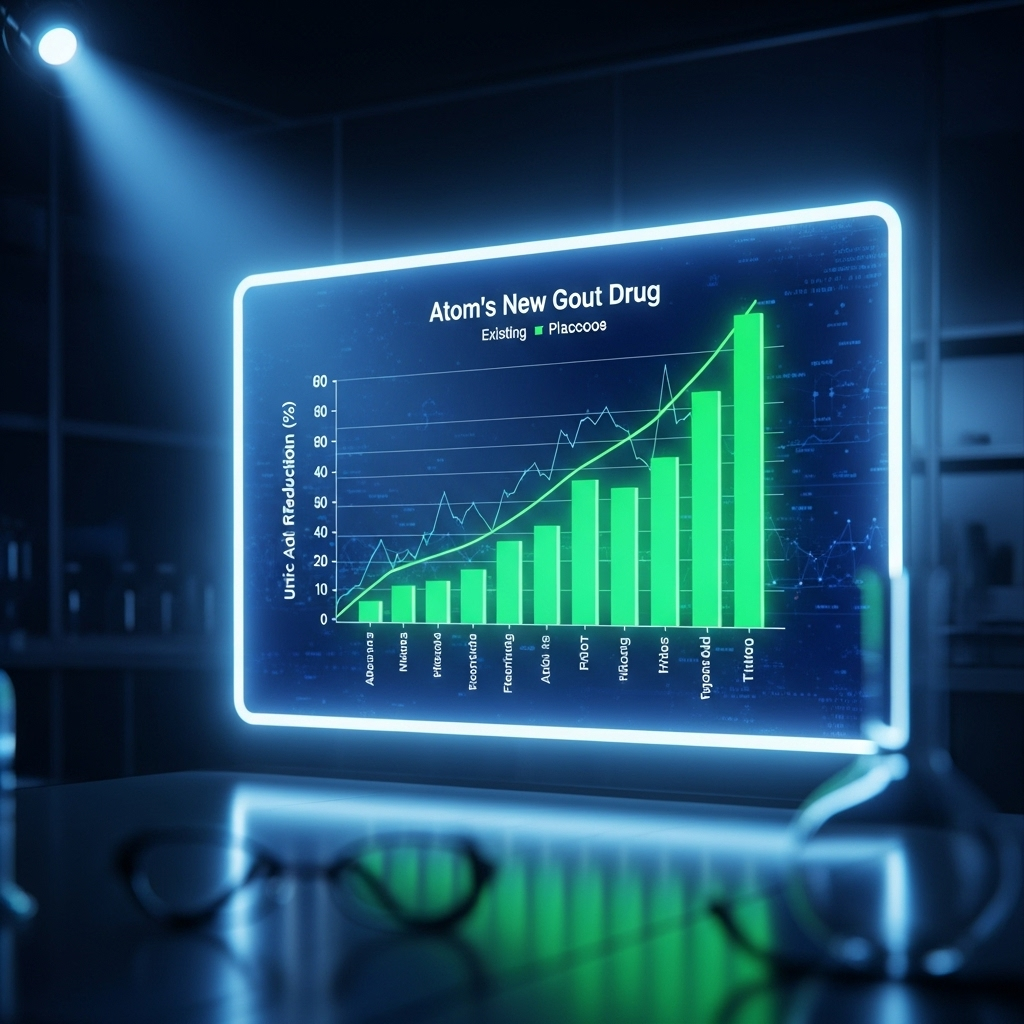
- Superior Uric Acid Reduction: Patients taking ABP-671 achieved the target serum uric acid (sUA) level of <6 mg/dL more effectively than the control group. After 24 weeks, 88% of patients on ABP-671 reached the target, compared to 65% on febuxostat.
- Significant Flare Reduction: The integrated anti-inflammatory action proved effective. The ABP-671 group experienced 75% fewer gout flares during the first three months of the trial compared to the febuxostat group, who were not given a prophylactic anti-inflammatory.
- Favorable Safety Profile: Preliminary safety data indicates that ABP-671 was well-tolerated, with a side effect profile comparable or favorable to existing treatments. Full safety data will be submitted as part of the regulatory filing.
These compelling results position ABP-671 as a potentially best-in-class gout drug, offering a clear advantage over established rivals. You can learn more about understanding the signs of gout on our health portal.
What This Means for Patients with Gout
For the more than 9 million adults in the U.S. living with gout, this news offers substantial hope. Living with gout is more than just enduring occasional pain; it’s a chronic condition that can severely impact mobility, daily activities, and overall quality of life. The unpredictability of flares can lead to missed work, social isolation, and chronic anxiety.
A new gout drug that is more effective at reaching target uric acid levels and simultaneously reduces the risk of painful flares could transform the patient experience. The simplified treatment regimen—potentially one pill instead of two—may improve adherence, a common issue in chronic disease management. For patients who have not found success with current medications or who struggle with side effects, ABP-671 could be the long-awaited alternative.
According to the Arthritis Foundation, effective management is key to preventing the long-term complications of gout, which can include permanent joint damage and kidney problems. A more potent and easier-to-tolerate therapy would be a monumental step toward achieving that goal for a broader patient population.
The Road Ahead: FDA Approval and Market Availability
With these robust Phase 3 results in hand, Atom Bioscience is now preparing its New Drug Application (NDA) for submission to the FDA. The company has indicated it plans to file the NDA in the first quarter of 2026. Typically, the FDA review process for a new molecular entity takes between 10 to 12 months.
If the review goes smoothly, ABP-671 could potentially receive marketing approval and become available to patients by prescription as early as late 2026 or early 2027. The company is also expected to seek approval from other global regulatory agencies, including the European Medicines Agency (EMA).
The journey from laboratory discovery to pharmacy shelf is long and arduous, but Atom’s new gout drug has successfully cleared one of its final and most important hurdles. For more general information on this condition, the Centers for Disease Control and Prevention (CDC) provides a wealth of resources.

The medical community will be watching closely as Atom Bioscience moves forward with its regulatory submissions. For the millions of individuals whose lives are punctuated by the debilitating pain of gout, the potential arrival of a more effective, dual-action treatment represents a beacon of hope and the promise of a more active, pain-free future.
“`