IL-17 Drug Phase 3 Success for Junshi’s Psoriasis Med
In a significant development for dermatology, Shanghai Junshi Biosciences has announced positive top-line results from its Phase 3 clinical trial for JS005, a recombinant humanized monoclonal antibody targeting interleukin-17A. This promising il-17 drug has demonstrated significant efficacy and a favorable safety profile for the treatment of moderate-to-severe plaque psoriasis, marking a major step forward for patients and the company.
Contents
What is an IL-17 Drug and How Does It Work?
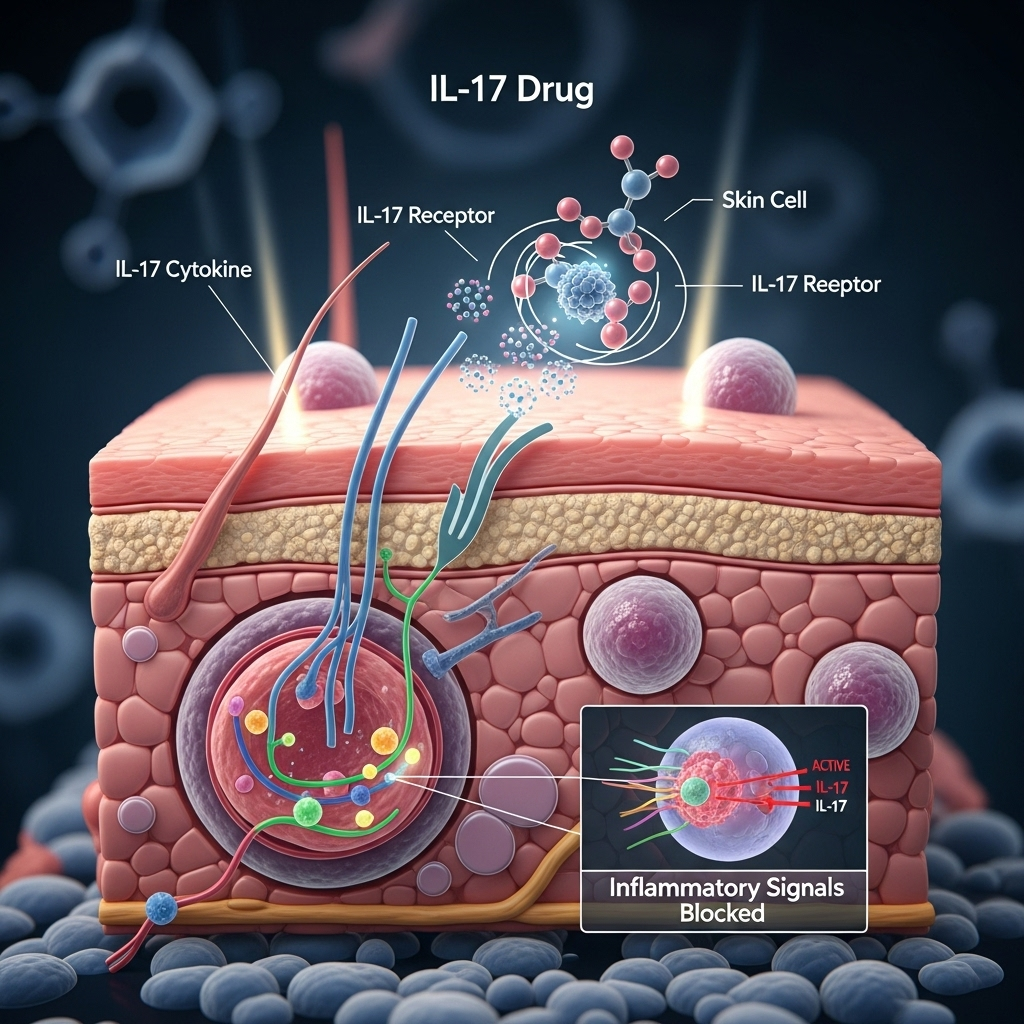
To understand the importance of this news, it’s crucial to know what an il-17 drug is. Psoriasis is a chronic autoimmune disease characterized by the rapid buildup of skin cells, leading to scaling, inflammation, and red, itchy patches. At the heart of this inflammatory process is a cytokine (a type of signaling protein) called Interleukin-17A (IL-17A).
IL-17A plays a pivotal role in driving the immune response that causes psoriasis symptoms. An IL-17 drug, like Junshi’s JS005, is a type of biologic medication known as a monoclonal antibody. It is specifically engineered to identify, target, and neutralize the IL-17A cytokine. By blocking its activity, the drug effectively interrupts the inflammatory cascade, reducing skin inflammation, thickness, and redness.
This targeted approach is a significant advancement over older, more systemic treatments that could suppress the entire immune system. By focusing on a key driver of the disease, these drugs offer a more precise and often more effective solution with potentially fewer side effects. This class of medication has revolutionized the treatment of moderate-to-severe psoriasis over the past decade.
Details of the JUNCTION-Ps Study Results
The Phase 3 clinical trial, codenamed JUNCTION-Ps, was a multicenter, randomized, double-blind, placebo-controlled study designed to evaluate the efficacy and safety of JS005 in adult patients with moderate-to-severe plaque psoriasis. The trial successfully met all of its primary and secondary endpoints.
The primary endpoint was the proportion of patients achieving a 90% or greater improvement in the Psoriasis Area and Severity Index (PASI 90) score from baseline at Week 16. The PASI score is a widely used tool to measure the severity and extent of psoriasis.
Key findings from the study include:
- Superior Efficacy: Patients treated with JS005 showed a statistically significant and clinically meaningful improvement in their PASI 90 scores compared to those receiving a placebo. While exact figures are pending publication in a peer-reviewed journal, the company has stated the results are robust.
- Rapid Onset of Action: A significant number of patients began to see improvements in their skin condition within the first few weeks of treatment, a crucial factor for those suffering from the discomfort and social stigma of psoriasis.
- Favorable Safety Profile: The il-17 drug was well-tolerated. The incidence of adverse events was comparable to other drugs in its class, with no new or unexpected safety signals identified. The most common side effects were mild to moderate, such as nasopharyngitis (common cold).
Dr. Jian-min Li, a lead investigator in the study, commented, “The JUNCTION-Ps results are highly encouraging. JS005 has demonstrated the potential to be a powerful new option for dermatologists and their patients, offering a high degree of skin clearance combined with a reassuring safety record.”
The Competitive Landscape of Psoriasis Treatments
Junshi Biosciences is entering a competitive but highly valuable market. The global psoriasis treatment market is worth billions of dollars and is currently dominated by several major pharmaceutical players. Specifically, the IL-17 inhibitor class already includes blockbuster drugs like:
- Secukinumab (Cosentyx) from Novartis
- Ixekizumab (Taltz) from Eli Lilly
- Brodalumab (Siliq) from Bausch Health
These established therapies have set a high bar for efficacy. For JS005 to succeed, it will need to compete on factors such as efficacy, safety, dosing convenience, and, critically, price. A competitive pricing strategy, particularly in the Chinese market and other emerging economies, could be a key differentiator for Junshi’s il-17 drug.
Beyond IL-17 inhibitors, the field also includes biologics targeting other pathways, such as TNF-alpha inhibitors (e.g., Humira) and IL-23 inhibitors (e.g., Skyrizi, Tremfya). The availability of multiple mechanisms of action allows physicians to tailor treatments to individual patient needs, and the addition of JS005 would provide another valuable tool in their arsenal. For more information on biologic treatments, you can explore resources from the National Psoriasis Foundation.

Implications for Patients and Junshi Biosciences
For the millions of people worldwide living with moderate-to-severe psoriasis, the success of a new treatment is always welcome news. The physical pain, itching, and cosmetic impact of psoriasis can severely affect quality of life, mental health, and social interactions. The potential arrival of a new, highly effective il-17 drug offers hope for better disease control and a return to normalcy.
More choice means better care. If one IL-17 inhibitor doesn’t work for a patient or causes intolerable side effects, having another option like JS005 could be life-changing. Increased competition can also lead to downward pressure on pricing, making these advanced biologic therapies more accessible to a wider patient population.
For Junshi Biosciences, this is a landmark achievement. Known primarily for its oncology portfolio, including the PD-1 inhibitor Tuoyi® (toripalimab), this success validates the company’s expansion into immunology. It diversifies its pipeline and positions it as a formidable player in the chronic inflammatory disease space. A successful launch of JS005 would create a significant new revenue stream and bolster its reputation as an innovative biopharmaceutical powerhouse.

Next Steps: Regulatory Approval and Market Launch
With positive Phase 3 data in hand, Junshi Biosciences’ next move is to compile the data into a comprehensive package for regulatory submission. The company has announced its intention to submit a New Drug Application (NDA) to China’s National Medical Products Administration (NMPA) in the near future.
Given the strong results and the unmet need for more treatment options, the drug could receive a priority review. If all goes smoothly, JS005 could receive approval in China within the next 12 to 18 months. Following a potential domestic launch, Junshi will likely explore partnerships or direct submissions to other regulatory bodies, such as the U.S. Food and Drug Administration (FDA) and the European Medicines Agency (EMA), to bring their innovative therapy to a global audience.
In conclusion, the successful Phase 3 trial of JS005 is a win-win situation. It represents a significant scientific achievement for Junshi Biosciences and, more importantly, a beacon of hope for psoriasis patients seeking clearer skin and a better quality of life. The journey of this new il-17 drug from the lab to the clinic is a testament to the relentless pursuit of better medicine.