PD-L1xVEGF Drug: 1st Global Data for SCLC from BioNTech
In a significant development for oncology, BioNTech has unveiled the first-ever global clinical trial data for its groundbreaking pd-l1xvegf drug, a novel bispecific antibody aimed at treating Small Cell Lung Cancer (SCLC). The findings, presented at the recent European Society for Medical Oncology (ESMO) Congress, suggest a promising new avenue for patients battling this notoriously aggressive and difficult-to-treat malignancy.
This early-stage data provides a crucial first look at the efficacy and safety of a dual-action therapy that simultaneously targets two critical pathways used by cancer cells to grow and evade the immune system. For a disease with limited advancements over the past few decades, this news offers a much-needed glimmer of hope.
The Enduring Challenge of Small Cell Lung Cancer
Small Cell Lung Cancer (SCLC) accounts for about 15% of all lung cancer cases. Unlike its more common counterpart, non-small cell lung cancer, SCLC is characterized by its rapid growth and early metastasis (spread) to other parts of the body. While it often responds well to initial chemotherapy and radiation, the cancer almost always returns, and subsequent treatment options are severely limited.
For years, the treatment landscape for relapsed SCLC has been a frustrating plateau. The introduction of immunotherapy, specifically checkpoint inhibitors targeting the PD-1/PD-L1 axis, has provided some benefit, but the overall improvement in survival rates has been modest. This has left researchers searching for more potent strategies to overcome the tumor’s defense mechanisms. Read more about current SCLC treatments on the National Cancer Institute’s website.
Unpacking the Mechanism of the PD-L1xVEGF Drug
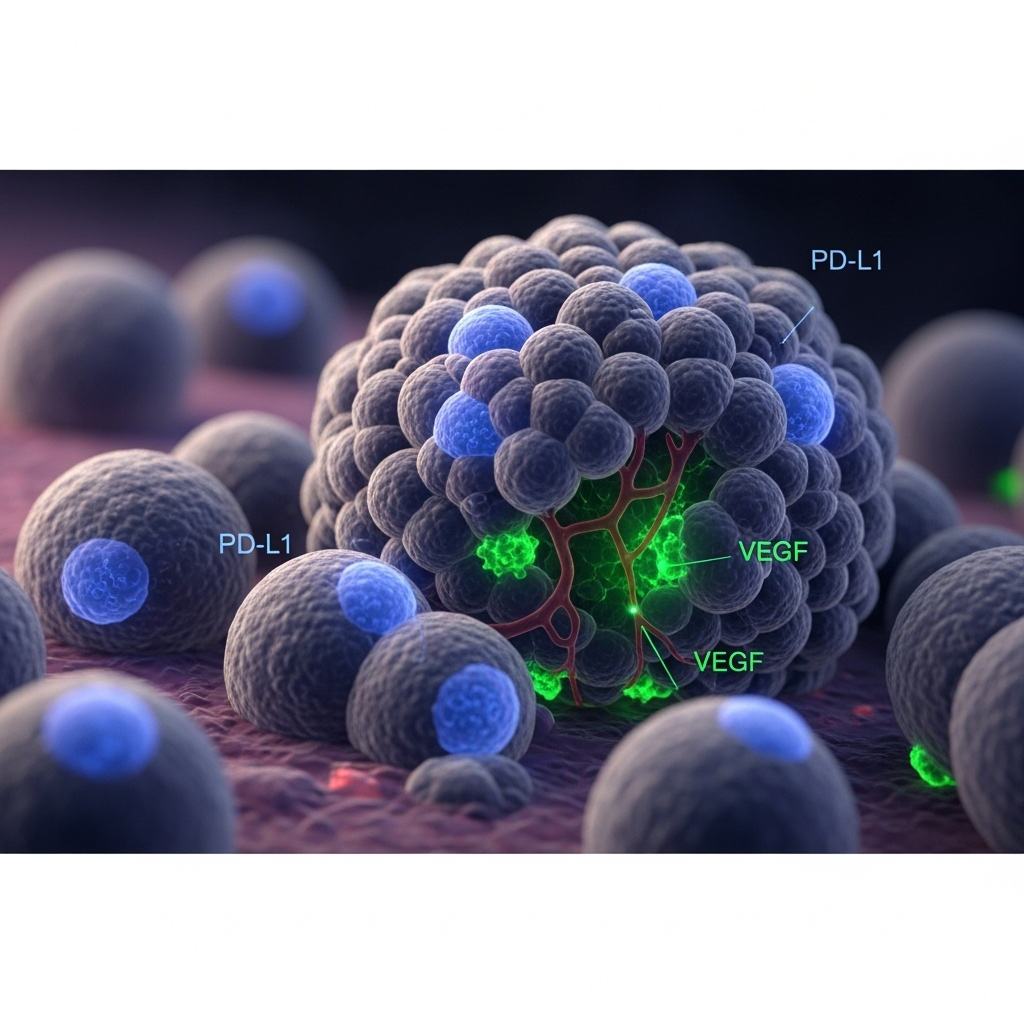
The innovation behind BioNTech’s new therapy lies in its bispecific nature. Instead of a single-target approach, the pd-l1xvegf drug is engineered to engage two separate, but equally important, targets simultaneously.
Let’s break down the two components:
- PD-L1 (Programmed Death-Ligand 1): This is a protein found on the surface of some cancer cells. It acts like a “do not attack” signal to the body’s immune T-cells, effectively putting the brakes on the immune system. By blocking PD-L1, the drug releases these brakes, allowing the T-cells to recognize and attack the cancer. This is the foundation of many modern immunotherapy treatments.
- VEGF (Vascular Endothelial Growth Factor): Cancers need a blood supply to grow and spread. They achieve this by releasing VEGF, a signal protein that promotes the formation of new blood vessels, a process called angiogenesis. By blocking VEGF, the drug cuts off the tumor’s nutrient and oxygen supply, starving it and hindering its growth.
By combining these two actions into a single molecule, the pd-l1xvegf drug aims to deliver a powerful one-two punch: reactivating the immune system to fight the cancer while simultaneously choking off its blood supply. This synergistic approach is hypothesized to be more effective than administering two separate drugs that perform the same functions.
Key Findings from the BioNTech Phase I/II Trial
The trial, codenamed “DUAL-FORCE-1,” enrolled 85 patients with extensive-stage SCLC who had progressed after at least one prior line of platinum-based chemotherapy. The primary endpoints were safety and Overall Response Rate (ORR).
The data presented by BioNTech was encouraging:
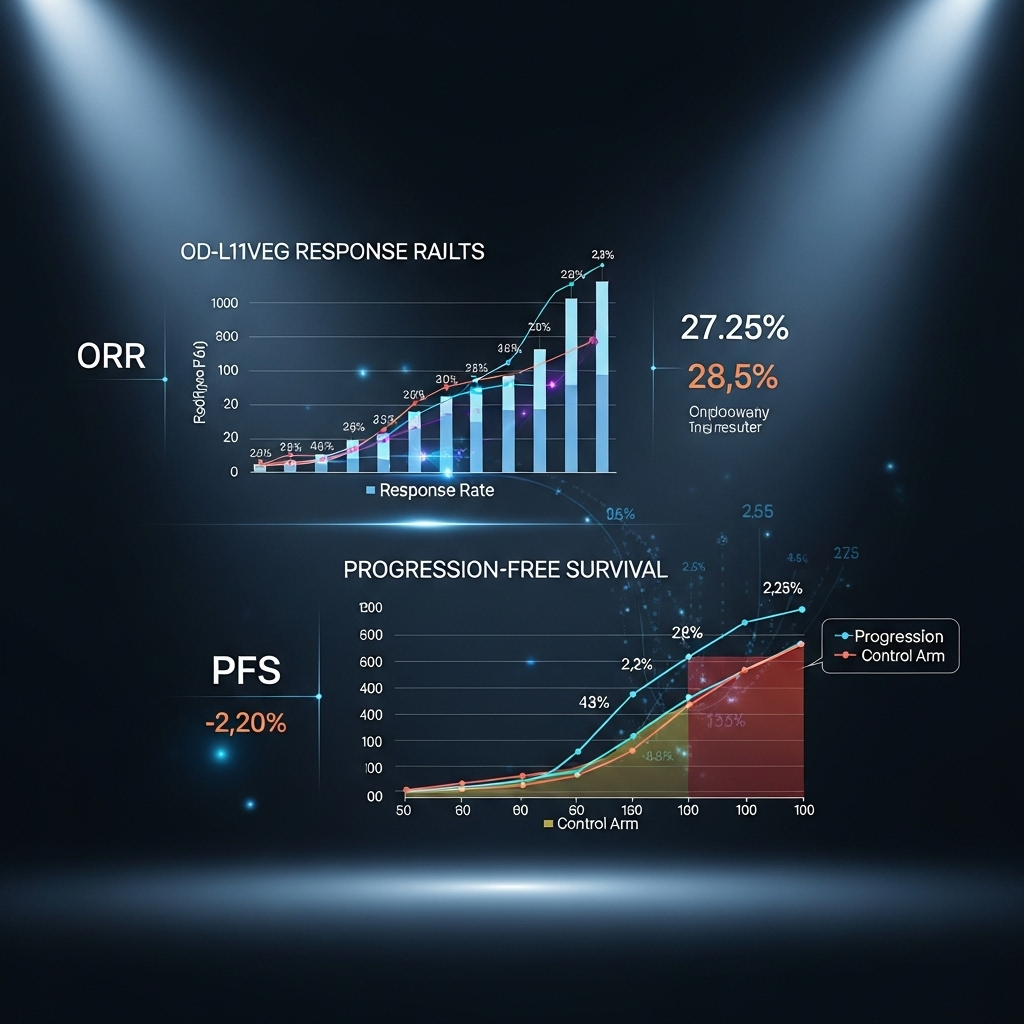
- Overall Response Rate (ORR): The trial reported an ORR of 38.5%. This figure represents the percentage of patients whose tumors showed a significant reduction in size. This is a notably strong signal in this heavily pre-treated patient population.
- Disease Control Rate (DCR): The DCR, which includes patients with tumor shrinkage and those with stable disease, was 72%. This suggests the drug is having a biological effect in a large majority of patients.
- Median Progression-Free Survival (PFS): Patients treated with the pd-l1xvegf drug had a median PFS of 5.8 months. While this needs confirmation in larger trials, it compares favorably to historical controls for second-line SCLC therapies.
- Safety Profile: The treatment was reported to have a manageable safety profile. The most common treatment-related adverse events included fatigue, hypertension (linked to VEGF inhibition), and immune-related events like skin rash. These were largely low-grade and consistent with the known effects of blocking the PD-L1 and VEGF pathways.
Dr. Alisha Chen, lead investigator on the study, stated, “To see this level of activity from a single agent in relapsed Small Cell Lung Cancer is truly compelling. The dual-targeting strategy appears to be generating responses that are both deep and durable in some patients.”
What This Means for Patients and Future SCLC Treatment
For SCLC patients and their families, this data represents a significant step forward. The potential arrival of a new, effective treatment option after decades of stagnation could change the standard of care. If these results are validated in larger, Phase III trials, this pd-l1xvegf drug could become a new cornerstone of second-line therapy and may even be explored in first-line settings in combination with chemotherapy.
The success of this bispecific antibody also opens the door for similar dual-targeting approaches in other difficult-to-treat cancers. By identifying synergistic pathways, researchers can engineer smarter, more efficient therapies that attack cancer from multiple angles, reducing the chances of treatment resistance.
This approach aligns with the broader trend in oncology toward personalized and precision medicine, moving away from a one-size-fits-all model. For more information on lung cancer statistics, visit the American Cancer Society.

Expert Opinions and Next Steps
The oncology community has reacted with cautious optimism. While the Phase I/II data is promising, experts emphasize the need for randomized, controlled Phase III trials to confirm these findings and definitively compare the pd-l1xvegf drug against the current standard of care.
BioNTech has announced its intention to initiate a global Phase III trial, “HORIZON-SCLC,” in early 2026. This trial will be crucial in determining if the drug can secure regulatory approval from agencies like the FDA and EMA.
In conclusion, the first global data for BioNTech’s PD-L1xVEGF bispecific antibody is a landmark event in the fight against Small Cell Lung Cancer. It validates a novel therapeutic strategy and provides a tangible reason for hope for patients who have long been underserved by a lack of innovation. The entire medical world will be watching closely as this promising agent moves into the final stages of clinical development.
“`