
Tennis Legends: How Alcaraz at 22 Ranks vs The Greats
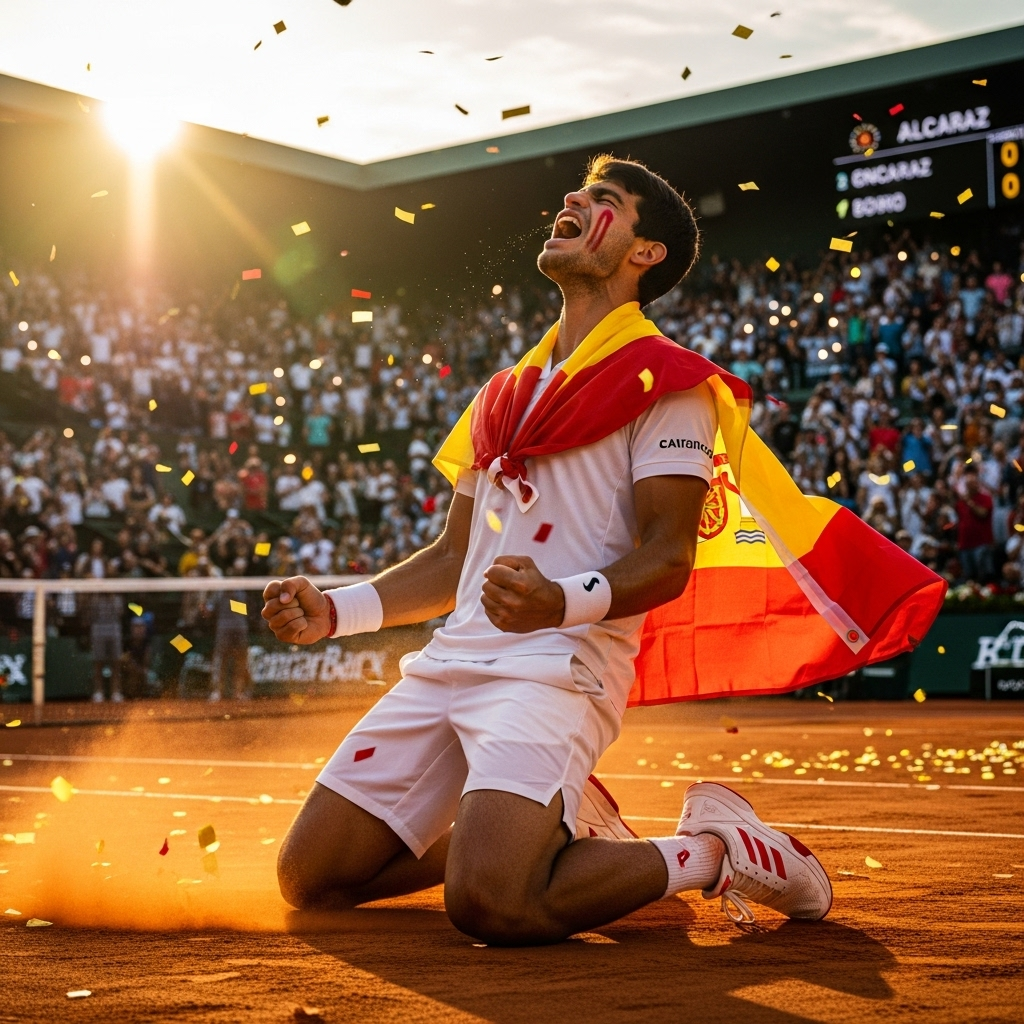
In the hallowed halls of tennis history, a new name is being whispered with increasing frequency. Carlos Alcaraz, the Spanish prodigy, has taken the tennis world by storm. As he turns 22, the conversation is no longer about his potential but about his place in history. How does his early career stack up against the very players who define the term tennis legends? We’re diving deep into the numbers, the style, and the sheer impact to see where Alcaraz stands in comparison to the “Big Three” at the same pivotal age.
Table of Contents
The Alcaraz Phenomenon: A Generational Talent
Before we can compare, we must first appreciate the subject. Carlos Alcaraz isn’t just winning; he’s redefining what’s possible for a young player. By the age of 22, he has already amassed a resume that would be the envy of most seasoned professionals.
His game is a breathtaking cocktail of explosive power, delicate touch, and a tactical mind that belies his years. The ferocious forehand, the signature drop shot, and the relentless court coverage make him a complete player. This isn’t just raw talent; it’s a finely-honed weapon.
By his 22nd birthday, Alcaraz’s trophy cabinet already includes:
- Multiple Grand Slam titles (including historic wins at the US Open and Wimbledon)
- Numerous ATP Masters 1000 crowns
- The distinction of being the youngest-ever ATP World No. 1
These aren’t just statistics; they are seismic shocks to the tennis establishment. He has proven he can win on all surfaces, defeating the best players in the world on the biggest stages. His fearless approach and infectious energy have captivated fans globally, marking him as the clear heir apparent to the throne of men’s tennis.
Measuring Against the Pantheon of Tennis Legends
Now for the ultimate test. How does Alcaraz’s early success compare to the very titans of the sport when they were his age? Let’s put his achievements side-by-side with Roger Federer, Rafael Nadal, and Novak Djokovic at age 22. This is the benchmark for all aspiring tennis legends.
Roger Federer at 22 (August 2003)
At 22, Roger Federer was a sublime talent on the cusp of true greatness. He had just won his first Grand Slam title at Wimbledon in 2003. While the world knew he was special, few could have predicted the sheer dominance that would follow. By this age, Federer had a handful of ATP titles and was a consistent top-10 player, but he had not yet become the unstoppable force we remember. His breakthrough was imminent, but Alcaraz’s overall trophy count at the same age is arguably more substantial.
Rafael Nadal at 22 (June 2008)
This is perhaps the most formidable comparison. By the time Rafael Nadal turned 22, he was already an absolute monster. He had already collected four French Open titles, establishing a reign of terror on clay that was unprecedented. He had also won his first Wimbledon in an epic 2008 final against Federer and was on the verge of claiming the No. 1 ranking. Nadal’s early specialization and dominance on a single surface gave him a staggering number of big titles by 22, putting him slightly ahead of Alcaraz in the Grand Slam count at the same age. For more analysis on their rivalry, check out our article on the Greatest Tennis Rivalries of All Time.
Novak Djokovic at 22 (May 2009)
Novak Djokovic’s journey was more of a slow burn. At 22, he was a fantastic player, already a Grand Slam champion after winning the 2008 Australian Open. He was firmly established as the No. 3 player in the world, a persistent threat to Federer and Nadal, but not yet their equal. He had several Masters titles but was still searching for the consistency and mental fortitude that would later make him an all-time great. In this comparison, Alcaraz’s achievements, including multiple Slams and a stint at No. 1, put him comfortably ahead of Djokovic’s pace at 22.

Beyond the Numbers: The Intangibles That Define Greatness
Statistics only tell part of the story. The status of a legend is also built on charisma, impact, and the ability to transcend the sport. Here, Alcaraz shines brightly.
Charisma and Marketability: Like Federer and Nadal before him, Alcaraz possesses an infectious smile and a humble yet confident personality. He connects with the crowd, celebrates with passion, and handles the media with grace. This makes him a global ambassador for the sport, a role the “Big Three” perfected.
Rivalries: Greatness is forged in the fire of rivalry. Federer had Nadal. McEnroe had Borg. Alcaraz is already developing a compelling rivalry with players like Jannik Sinner, producing matches that are instant classics. These budding rivalries are crucial for the sport’s narrative and will be central to Alcaraz’s own legend. You can see official statistics for these head-to-head matchups on the ATP Tour Official Site.
Impact on the Game: Alcaraz’s style is a hyper-modern blend of his three great predecessors. He has Djokovic’s flexibility, Nadal’s power and fight, and Federer’s all-court artistry with the drop shot. He is inspiring a new generation of players to be more complete and athletic, pushing the boundaries of what’s physically possible on a court.
The Verdict: Alcaraz’s Trajectory Among the Greats
So, where does Carlos Alcaraz rank at 22? The evidence is compelling. In terms of raw achievements—Grand Slams, Masters titles, and the World No. 1 ranking—he is firmly on par with, and in some aspects ahead of, the pace set by the greatest tennis legends in history.
He is ahead of where Federer and Djokovic were at the same age and is in the same rarefied air as the phenomenal young Rafa Nadal. While Nadal’s early clay-court dominance gives him a slight edge in pure Grand Slam numbers by 22, Alcaraz’s success across all surfaces suggests a more versatile foundation for long-term, all-encompassing greatness.
The journey to legendary status is a marathon, not a sprint. Longevity, adapting to injuries, and maintaining mental hunger for over a decade are the next great hurdles. However, if his first few years on tour are any indication, Carlos Alcaraz is not just following in the footsteps of giants. He is carving his own path, and it is a path that leads directly to the summit of tennis immortality.


