
Five ministers replaced by Prabowo after deadly protests
In a decisive move aimed at quelling widespread public anger, President Prabowo Subianto announced a major cabinet reshuffle on Tuesday, replacing five ministers following weeks of deadly protests that have rocked the nation. The shake-up targets key security and economic portfolios, signaling a significant strategy shift by the administration as it struggles to restore stability and public confidence.
The announcement came from the State Palace in Jakarta after an emergency cabinet meeting. The President stated the changes were “necessary to answer the people’s call for accountability and to accelerate our national recovery.” This move directly addresses the core grievances that fueled the recent unrest, which saw thousands take to the streets in protest of controversial economic policies and a heavy-handed security response.
The Catalyst: A Nation in Turmoil
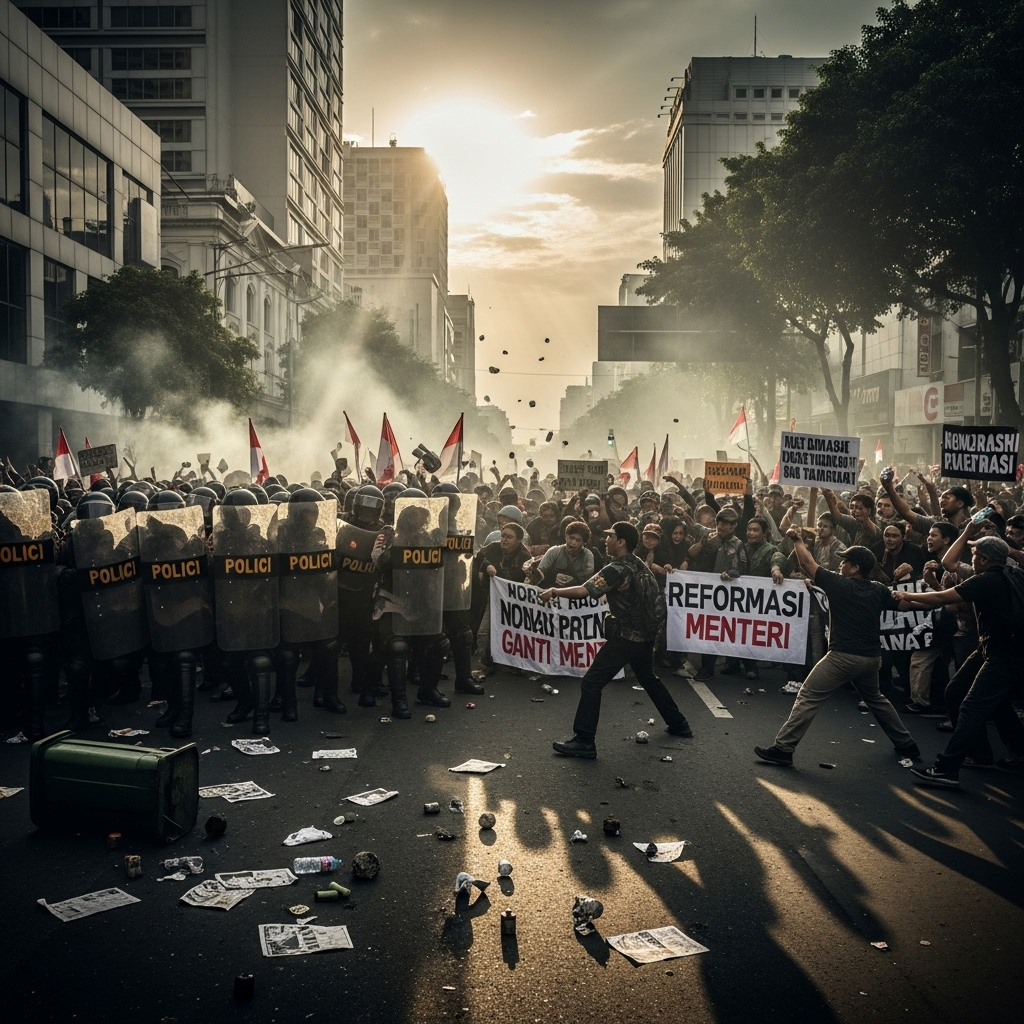
The cabinet overhaul follows a month of escalating tensions. The protests, initially sparked by a government decision to slash long-standing fuel subsidies, quickly morphed into a broader movement against rising inflation, unemployment, and perceived government corruption. Major cities, including Jakarta, Surabaya, and Medan, became flashpoints for clashes between demonstrators and security forces.
Tragically, these demonstrations turned deadly. Official reports confirm at least a dozen fatalities and hundreds of injuries nationwide. The use of tear gas and water cannons by police was widely criticized by human rights organizations, who called for an independent investigation into the alleged use of excessive force. The government’s initial hardline stance failed to deter the protesters, who demanded not just policy reversals but also accountability from the officials they held responsible.
The public outcry placed immense pressure on President Prabowo, whose approval ratings had plummeted. His administration, which came to power on a platform of strong leadership and economic prosperity, was now facing its most significant crisis. The decision to replace key members of his team is a direct acknowledgment that a change in course was unavoidable.
Unveiling the Shake-Up: Who Are the Replaced Five Ministers?
The reshuffle saw the departure of some of the most prominent figures in the Prabowo administration. The five ministers who were dismissed held portfolios directly linked to the recent crisis. This strategic removal is seen as an attempt to appease the public by ousting the officials most associated with the unpopular policies and the subsequent violent crackdown.
The outgoing ministers are:
- Minister of Finance, Budi Santoso: The architect of the controversial subsidy cuts, Santoso became the primary target of public anger. His insistence on fiscal austerity without sufficient social safety nets was seen as disconnected from the reality faced by millions of citizens.
- Minister of Energy, Rini Wulandari: Tasked with implementing the fuel price hikes, Wulandari’s department was criticized for poor communication and failing to anticipate the severe public backlash.
- Chief of National Police, General Tito Karnavian: As the head of the police force, General Karnavian bore ultimate responsibility for the aggressive tactics used against protesters. His removal was a key demand of many activist groups.
- Minister of Social Affairs, Agus Martowardojo: His ministry was accused of failing to distribute social aid effectively to cushion the blow of the subsidy cuts, leaving many vulnerable families without support.
- Minister of Law and Human Rights, Yasonna Laoly: Critics argued that Laoly’s office did little to protect the rights of peaceful assembly and was complicit in the silencing of dissent.
By removing these five ministers, President Prabowo is clearly trying to draw a line under the recent events and present a fresh start to the nation. You can read more about the previous administration’s policies in our in-depth economic analysis.
A Closer Look at the New Appointments
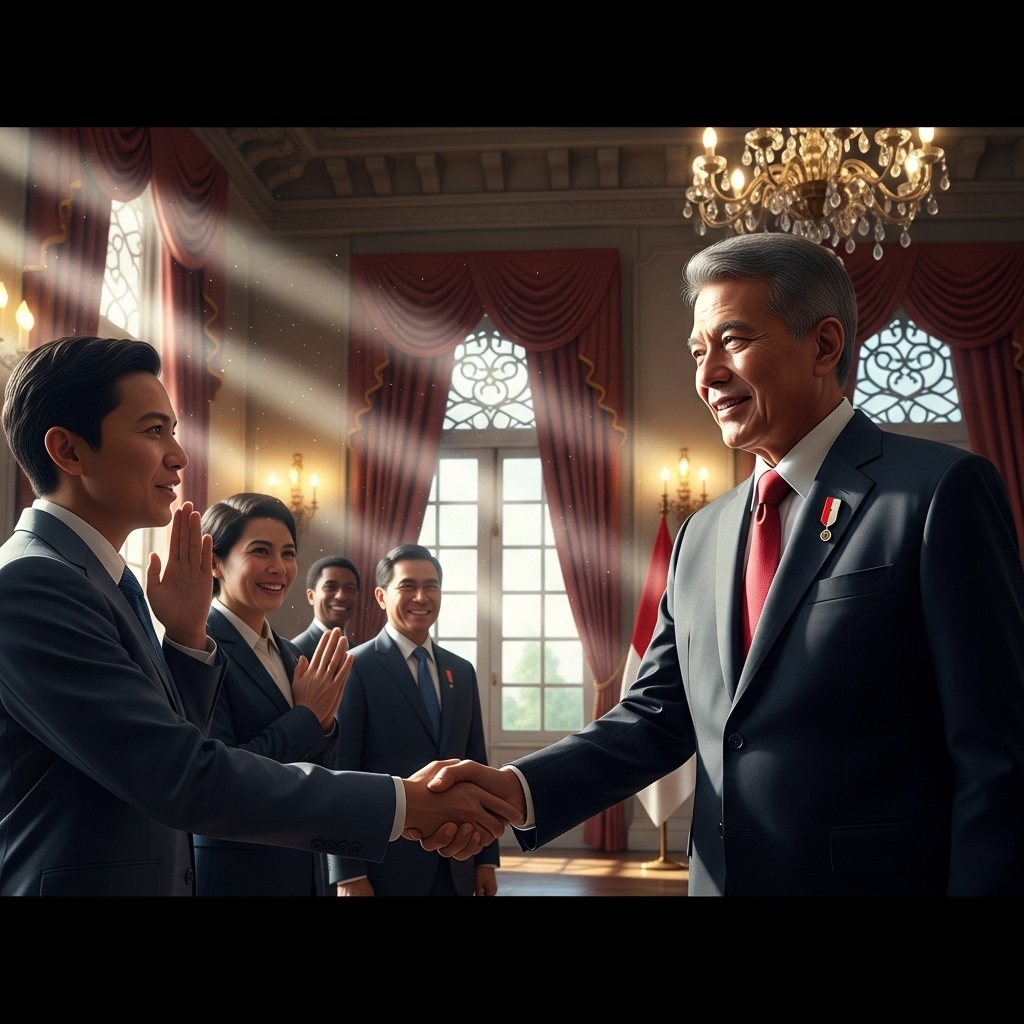
The replacements suggest a dual strategy: bringing in respected technocrats to handle the economy while appointing loyalists to consolidate control over security. The new faces are a mix of seasoned politicians, academics, and former military figures.
Dr. Sri Mulyani Indrawati, a globally respected economist and former World Bank Managing Director, makes a stunning return as Minister of Finance. Her appointment is a clear signal to international markets and investors that the administration is serious about stabilizing the economy with a more pragmatic and compassionate approach.
Taking over the National Police is General (Ret.) Dudung Abdurachman, a former Army Chief of Staff known for his firm but disciplined leadership. His appointment is expected to restore order but has raised concerns among rights groups about a potential militarization of the police force.
The other new appointments include Dr. Chatib Basri, another well-regarded economist, as the new Minister of Energy, and Tri Rismaharini, the popular former mayor of Surabaya, who will lead the Ministry of Social Affairs with a mandate to overhaul the social aid system. The new Minister of Law and Human Rights is Professor Saldi Isra, a constitutional law expert, in a move seen as an olive branch to the legal and academic communities.
Political Ramifications and Public Reaction
The response to the cabinet reshuffle has been mixed. Opposition parties have cautiously welcomed the removal of the five ministers but have labeled the move as “too little, too late.” An opposition spokesperson stated, “Replacing a few faces does not solve the systemic problems. We need fundamental policy changes, not just a personnel change.”
Public reaction on social media and in street interviews reflects a similar sentiment. While many are relieved to see the departure of unpopular officials, there remains a deep-seated skepticism about whether the new team will truly serve the people’s interests. “We’ve seen this before,” one protest organizer told reporters. “The system remains the same. We will wait and see if these new ministers bring real change or just a new style of the same old policies.”
Financial markets, however, have responded positively. The Jakarta Composite Index (JCI) saw a modest rally following the announcement, largely driven by the appointment of Sri Mulyani. The Rupiah also strengthened against the US dollar, suggesting renewed investor confidence. For more global context, see the latest reports from Reuters Asia-Pacific.

What’s Next for the Prabowo Administration?
The replacement of the five ministers is a high-stakes gamble for President Prabowo. The success or failure of this new cabinet will define the remainder of his term. The immediate challenge for the new ministers will be to craft and communicate policies that can both stabilize the economy and heal the deep social divisions.
Dr. Sri Mulyani’s first task will be to review the budget and find a sustainable alternative to the subsidy cuts. Meanwhile, General Dudung must work to rebuild trust between the public and the police, a task that will require transparency and a commitment to reform.
Ultimately, this reshuffle has bought the administration some time. However, the Indonesian public has shown it is no longer willing to tolerate policies that hurt the most vulnerable. The new ministers are on a short leash, and the entire nation will be watching closely to see if their actions match the President’s promises of accountability and recovery. The path forward for the Prabowo administration remains fraught with challenges, and its political survival depends on this new team delivering tangible results—and fast.
“`


