
New PM in France: 5 Key Challenges for Macron’s Choice
In a pivotal move for his second term, French President Emmanuel Macron has appointed a new Prime Minister, setting the stage for the next phase of his presidency. The choice of a new pm is more than a simple cabinet shuffle; it’s a strategic decision aimed at navigating a complex and often hostile political landscape. The incoming leader will immediately face a daunting inbox filled with economic pressures, social unrest, and the immense task of implementing the President’s agenda without a solid parliamentary majority.
This appointment is a critical test of Macron’s ability to adapt and govern. The success or failure of his chosen premier will likely define the legacy of his final years in the Élysée Palace. Here are the five key challenges that await France’s new Prime Minister.

Table of Contents
Navigating a Divided Parliament: The First Test for the New PM
Perhaps the most immediate and persistent challenge for the new pm will be the French National Assembly. Since the 2022 legislative elections, President Macron’s centrist coalition has lacked an absolute majority, forcing the government to build bill-by-bill alliances with opposition parties. This has been a grueling and often unsuccessful process.
The new Prime Minister will need exceptional negotiation skills to shepherd legislation through a fractured parliament. They must court support from rivals on both the center-right and center-left, a delicate balancing act where any concession to one side risks alienating the other. Failure to build consensus will force the government to rely on the controversial constitutional tool known as Article 49.3, which allows it to pass a bill without a vote.
While effective in the short term, repeated use of this article is seen as anti-democratic and is guaranteed to trigger no-confidence votes and public backlash, further eroding the government’s legitimacy.
Tackling Economic Headwinds and Inflation
The French economy, like many in Europe, is grappling with persistent inflation and a severe cost of living crisis. While energy prices have stabilized from their peaks, the cost of food, rent, and other daily necessities continues to squeeze household budgets. Public anxiety over purchasing power remains extremely high.
The new Prime Minister will be on the front line, tasked with balancing fiscal discipline against public demands for more government support. Macron’s administration has already spent tens of billions on energy shields and subsidies, but pressure remains to do more. The challenge is to protect the most vulnerable without adding unsustainable levels of public debt, a key concern for both Brussels and international markets.
Furthermore, the government must continue to pursue its pro-business reforms aimed at boosting employment and competitiveness, a goal that can sometimes conflict with short-term cost-of-living relief measures. Finding a sustainable path that fosters growth while alleviating immediate financial pain will be a monumental task.

Pushing Forward with Controversial Social Reforms
President Macron’s second term has been defined by his ambition to reform France, most notably with the highly contentious pension reform that raised the retirement age from 62 to 64. The reform passed into law but triggered some of the largest street protests and strikes in a generation, leaving deep social scars.
The new Prime Minister inherits this tense social climate. They must not only defend and implement the pension reform but also navigate other planned changes in areas like unemployment benefits and education. The key question is whether the new leader will adopt a more conciliatory tone or continue the top-down approach that has fueled so much public anger.
Rebuilding a constructive dialogue with France’s powerful trade unions will be essential. Without it, any significant new reform effort risks sparking a repeat of the massive social unrest, potentially paralyzing the country and bringing the government’s agenda to a complete halt.
Accelerating the Ecological Transition
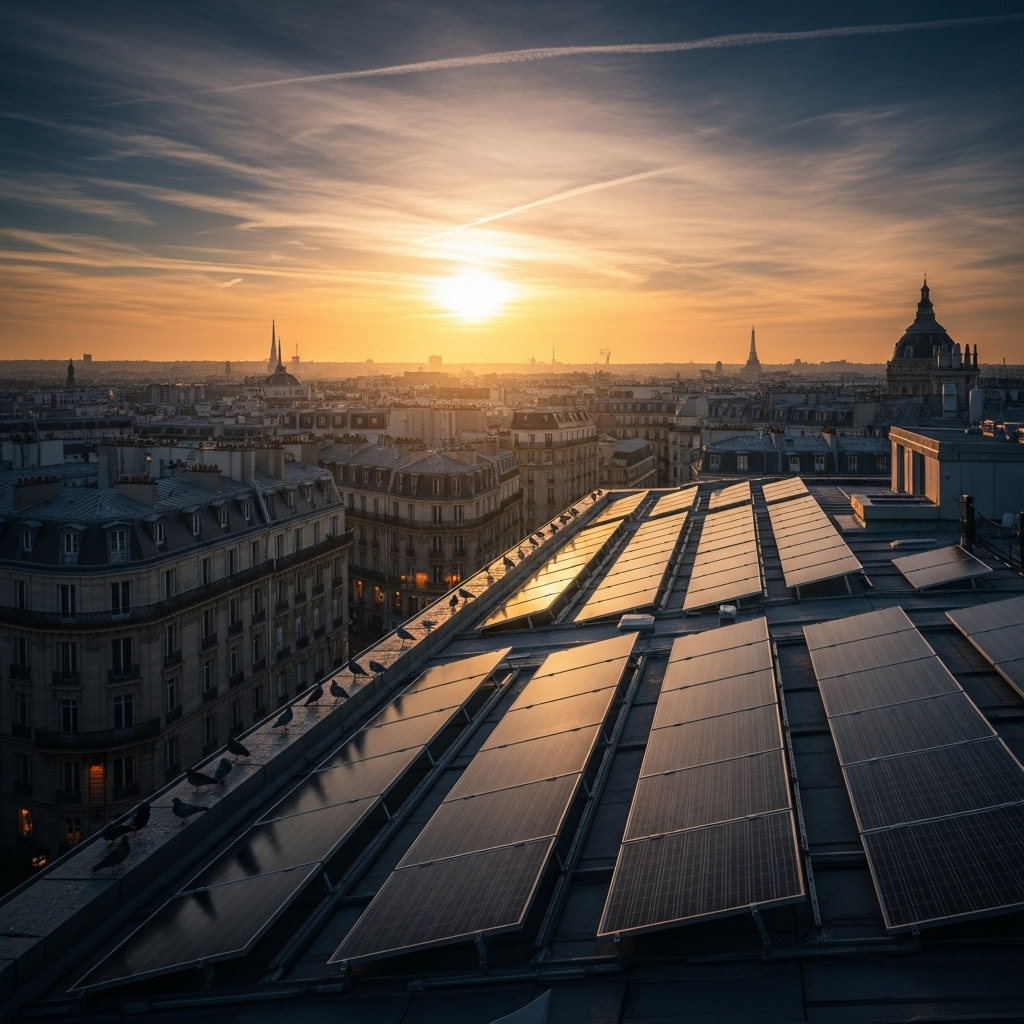
Making France a leader in the green transition is a cornerstone of Macron’s “France Nation Verte” (France Green Nation) plan. This ambitious agenda involves massive investment in renewable energy, nuclear power, building insulation, and electric vehicles. The goal is to slash emissions while creating a new model of sustainable growth.
The challenge for the new Prime Minister is turning these lofty goals into concrete action without alienating the public. The memory of the “Yellow Vest” (Gilets Jaunes) movement, which was initially sparked by a fuel tax hike, serves as a stark warning. Policies aimed at fighting climate change must be perceived as fair and must not disproportionately burden lower and middle-income households.
The new pm will need to champion the ecological transition as an opportunity for economic development and energy independence, rather than a punitive process. This involves careful policy design, clear communication, and ensuring that the financial benefits—like lower energy bills and new jobs—are tangible for ordinary citizens. An external analysis by Reuters highlights this delicate balance between ambition and reality.
Restoring Public Trust and National Unity
Underlying all these specific policy challenges is a deeper crisis of faith in the political establishment. Political polarization is rampant, with Marine Le Pen’s far-right National Rally and Jean-Luc Mélenchon’s far-left La France Insoumise commanding significant and loyal followings. Many voters feel disconnected from and unheard by the centrist government in Paris.
The new Prime Minister must be more than a technocratic manager; they must be a capable communicator who can reconnect with the French people. Their role will be to explain the government’s actions, listen to concerns from across the country, and attempt to bridge the ideological divides that threaten to tear the nation apart.
Ultimately, the new premier’s mission is to restore a sense of shared purpose and demonstrate that the government is working for all of France, not just its metropolitan elites. This is less a matter of policy and more a fundamental test of leadership and empathy.
The road ahead for France’s new Prime Minister is undeniably fraught with difficulty. Their ability to meet these five challenges will not only determine their own political future but also shape the final, crucial years of Emmanuel Macron’s presidency.


