
Nepo Kids: 19 Dead, Nepal Ministers Resign Amid Youth Anger
A devastating bus crash in the mountainous Dolakha District has claimed 19 lives, igniting a firestorm of public fury across Nepal. The tragedy has become a flashpoint for long-simmering resentment against the country’s political elite, a group derisively labeled “nepo kids” by a generation of frustrated youth. In the face of massive, youth-led protests, two senior cabinet ministers have tendered their resignations, marking a significant political crisis for the current administration.
The incident has exposed deep-seated issues of corruption, negligence, and nepotism that many Nepalis believe are crippling the nation’s progress. What began as a local tragedy has now spiraled into a national movement demanding accountability and systemic change.
In This Article:
Tragedy on the Ariko Highway: What Happened?
On the morning of September 7th, a passenger bus en route to Kathmandu from Charikot veered off a steep section of the Ariko Highway and plunged into a ravine. Initial reports from the District Police Office confirmed 19 fatalities and over 30 injuries, many of them critical. The victims were primarily students and laborers returning to the capital after the Dashain holidays.
Investigations quickly revealed a cascade of regulatory failures. The bus was reportedly operating with a permit that had been fast-tracked, despite the vehicle’s poor maintenance record. Furthermore, the company that owned the bus line, “Himalayan Express,” is allegedly controlled by the nephew of the now-resigned Minister for Physical Infrastructure and Transport, Ramesh Adhikari. This connection became the immediate catalyst for public outrage.
“This wasn’t an accident; it was a murder,” said Sunita Lama, who lost her brother in the crash. “Everyone knew those buses were unsafe, but the owners had protection from the top. Their connections killed our family.”

Who Are the ‘Nepo Kids’ Fueling the Protests?
The term “nepo kids” has become a powerful rallying cry for Nepal’s youth. It refers to the children and relatives of powerful politicians, bureaucrats, and business leaders who are perceived to gain unfair advantages in society. These privileges range from lucrative government contracts and high-paying jobs to immunity from legal accountability.
For years, young Nepalis have voiced frustration over a system they see as rigged. Despite earning qualifications and working hard, many find themselves sidelined in favor of less-qualified individuals with powerful family ties. This system of cronyism and nepotism has stifled innovation and bred a deep sense of hopelessness among the youth, a significant portion of whom seek employment abroad.
The Dolakha bus tragedy served as a brutal and tangible example of this phenomenon. The allegation is that a “nepo kid” was able to operate a dangerous, uninspected fleet of buses purely because of his family connection to a minister, leading directly to the deaths of 19 innocent people. This has transformed a general grievance into a specific and potent cause for national anger. More information on similar sentiments can be found in a recent report on South Asian youth movements by Reuters.
From Grief to Rage: Protests Paralyze Kathmandu
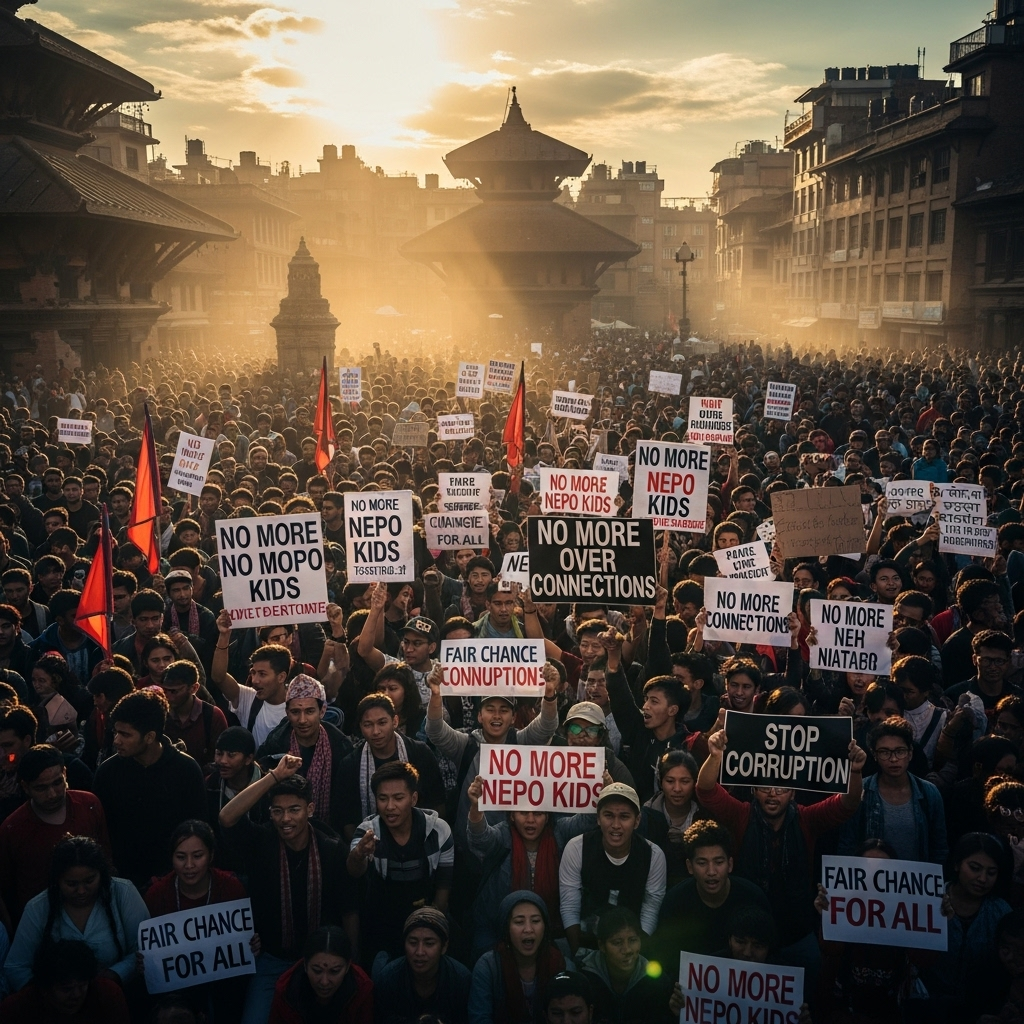
Within 48 hours of the crash, spontaneous protests erupted in Kathmandu. Centered around the Maitighar Mandala, thousands of students, activists, and ordinary citizens gathered, brandishing placards with slogans like “End Nepotism Now!” and “Our Lives Are Not Your Business.”
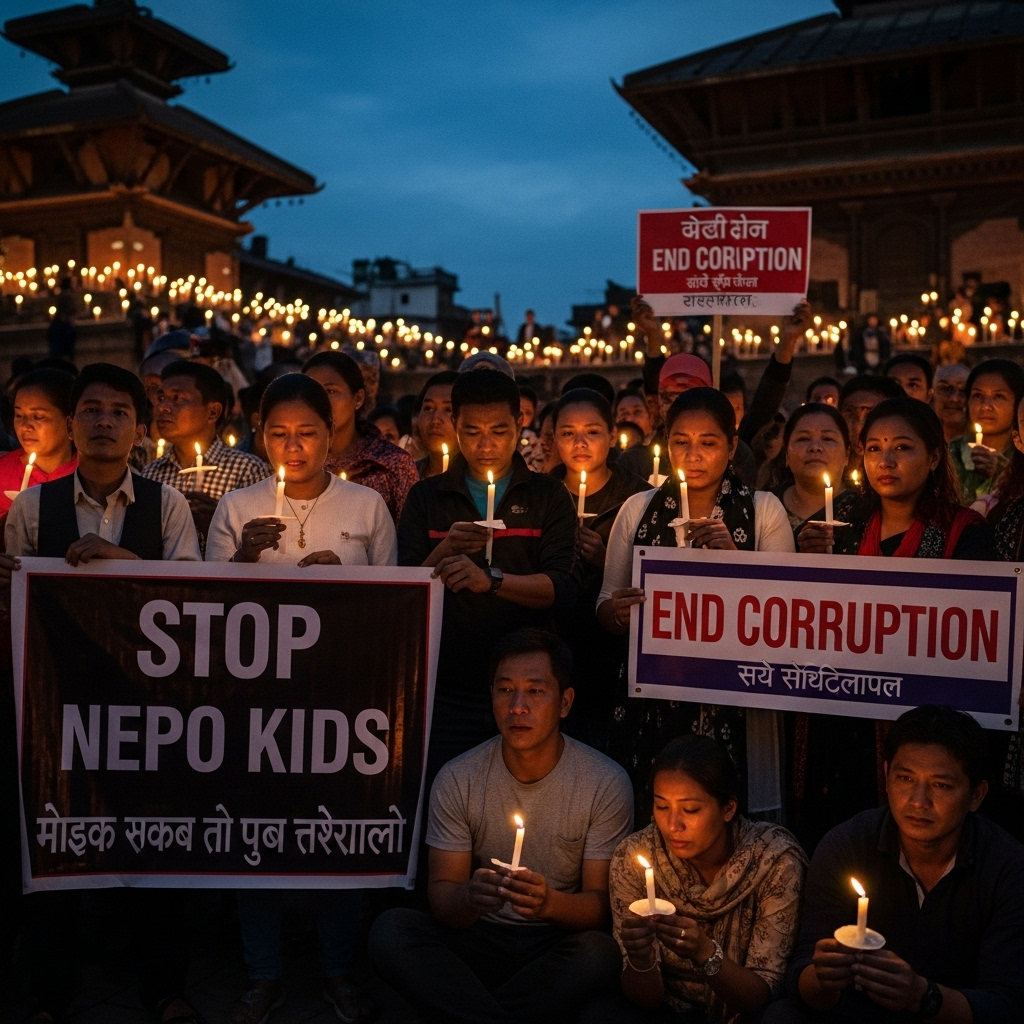
The protests, organized primarily through social media, have been peaceful but resolute. Demonstrators have blocked major roads, staged sit-ins in front of government ministries, and held candlelight vigils for the victims. Their demands are clear: justice for the victims, the resignation of all officials involved, and a commitment to systemic reform to dismantle the culture of nepotism.
“We are tired of seeing the same families rule this country like a private kingdom,” yelled Anish Shrestha, a 22-year-old university student, at a recent rally. “These nepo kids get everything, while we get unsafe roads and no future. This tragedy is the final straw.”
Political Fallout: Ministers Resign Under Pressure
The scale and intensity of the protests created immense pressure on the ruling coalition. On Tuesday evening, Prime Minister Sher Bahadur Deuba’s office announced the resignations of two key ministers:
- Ramesh Adhikari, Minister for Physical Infrastructure and Transport, whose nephew’s company operated the bus.
- Gyanendra Karki, Minister of Home Affairs, who faced criticism for the police’s initial slow response and perceived attempts to downplay the transport company’s political connections.
In his resignation letter, Adhikari stated he was stepping down on “moral grounds” to facilitate a fair investigation, though he denied any direct involvement in the issuance of the bus permit. Karki’s resignation was seen as an attempt to quell public anger over law enforcement’s handling of the crisis. However, protest leaders have called the resignations “too little, too late.” They are now demanding a high-level, independent commission to investigate deep-rooted corruption. This follows a pattern of public demand for greater transparency, similar to calls for reform seen in previous years.
A Nation at a Crossroads: What’s Next for Nepal?
The resignations have not quelled the protests. The “Anti-Nepotism Movement,” as it’s now being called, is demanding fundamental changes to how the country is governed. Activists are calling for merit-based appointments in all public sectors and stronger anti-corruption laws with real teeth.
The government has promised a thorough investigation and compensation for the victims’ families. However, there is widespread skepticism about whether this will lead to genuine change. The challenge for the youth movement is to maintain its momentum and translate street power into concrete policy reforms. For the political establishment, it is a stark warning that the old ways of doing business, built on patronage and family ties, are no longer sustainable.
The tragic loss of 19 lives has become a symbol of a broken system. The anger against the nepo kids is not just about one bus crash; it is about a generation’s demand for fairness, opportunity, and a future they can believe in. The coming weeks will be crucial in determining whether this moment of crisis will lead to a new, more equitable chapter for Nepal or fade away as another unheeded call for change.
“`


