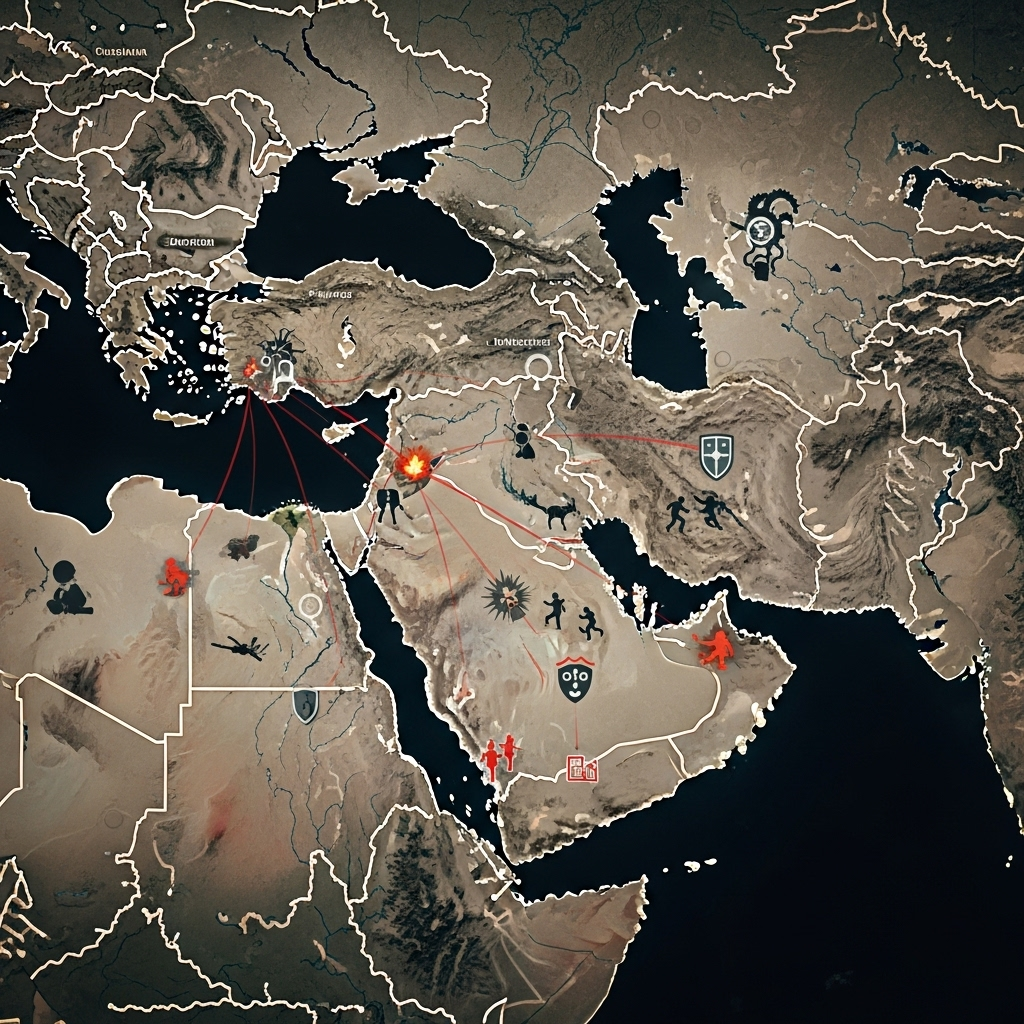
Foreign Soil: 3 Hamas Leaders Targeted in Israeli Strike
In a dramatic escalation of its campaign against Hamas, Israel has conducted a precision airstrike in the heart of Beirut, Lebanon, targeting and killing three senior Hamas leaders. The operation, which took place on foreign soil, raises significant questions about international law, national sovereignty, and the future of the volatile Middle East conflict. This strike marks a bold shift in Israeli strategy, demonstrating a willingness to conduct high-stakes operations far beyond its own borders.
The early morning explosion rocked the dense Dahieh suburb of Beirut, a known Hezbollah stronghold. While the primary targets were Hamas officials, the location itself is a politically explosive choice. This article delves into the details of the strike, the profiles of the targeted leaders, and the complex geopolitical fallout of this decisive action on foreign soil.
The Beirut Strike: A Bold Move on Foreign Soil
Eyewitnesses reported a powerful and precise explosion around 2:00 AM local time. Israeli officials, speaking on the condition of anonymity, later confirmed their responsibility, labeling it a “surgical strike” against a “ticking bomb.” The operation was reportedly carried out by the Israeli Air Force, utilizing advanced intelligence to pinpoint the exact location of the Hamas leaders within a residential apartment building.
This attack is significant not only for its targets but for its location. Conducting a military strike in the capital of Lebanon, a sovereign nation, is a profound statement. It signifies a belief within Israeli defense circles that Hamas leadership can no longer enjoy safe haven, even in allied territories. The choice to strike on foreign soil, particularly in a neighborhood heavily influenced by Hezbollah, Israel’s other major regional foe, is a calculated risk intended to disrupt the command-and-control structure of its adversaries.
Lebanese authorities immediately condemned the attack as a “flagrant violation of Lebanese sovereignty.” The incident puts the Lebanese government in a difficult position, caught between internal political pressures and the realities of a powerful non-state actor like Hezbollah operating within its borders. For more background, you can read our explainer on Israel-Hezbollah tensions.

Who Were the Targeted Hamas Leaders?
The strike successfully eliminated three key figures in the Hamas organization. While their names are still being officially confirmed by multiple sources, intelligence reports indicate the targets were:
- Saleh al-Arouri: Considered the most senior official killed, al-Arouri was a deputy leader of Hamas’s political bureau and a founder of its military wing, the Izz ad-Din al-Qassam Brigades. He was seen as a key liaison between Hamas, Hezbollah, and Iran. His elimination is a major blow to the group’s operational and political leadership.
- Samir Findi: A senior commander responsible for planning and executing attacks in the West Bank. He was believed to be a master strategist, orchestrating operations from his base in Lebanon.
- Azzam al-Aqra: Another high-ranking member of the al-Qassam Brigades, reportedly involved in the group’s international financing and weapons procurement networks. His death could disrupt crucial supply lines.
These individuals were not just symbolic figures; they were integral cogs in Hamas’s military and political machine. Targeting them on foreign soil was a strategic decision to cripple the organization’s ability to plan and fund future operations against Israel.
International Reactions and Legal Implications
The international community’s reaction has been swift and divided. The United States reiterated Israel’s right to self-defense but urged for de-escalation to avoid a wider regional war. European nations expressed grave concern over the violation of Lebanese sovereignty, calling for restraint from all parties.
Arab nations, led by Qatar and Saudi Arabia, have strongly condemned the strike. The Lebanese government has announced its intention to file a formal complaint with the United Nations Security Council, citing a breach of UN resolutions and international law.
The legality of such an extraterritorial strike is a contentious issue. Israel will likely argue that its actions fall under the principle of anticipatory self-defense, claiming the leaders were actively planning imminent attacks. However, critics argue that it undermines the entire framework of international law, which is built on the foundation of national sovereignty. The act of killing designated enemies on foreign soil, without the consent of the host country, sets a dangerous precedent.

The Doctrine of Extraterritorial Operations
This is not the first time Israel, or other nations, have conducted operations outside their recognized territory. The United States’ raid that killed Osama bin Laden in Pakistan is a prominent example. These actions are often justified under a doctrine of necessity, where a state argues it must act on foreign soil to neutralize a threat that the host nation is unable or unwilling to address.
For Israel, this doctrine has been a cornerstone of its security policy for decades. From the capture of Adolf Eichmann in Argentina to numerous operations against Palestinian militant leaders in the 1970s and 80s, the Israeli intelligence and military apparatus has a long history of acting abroad. You can learn more in our deep dive into the history of Mossad.
The core justification is always the same: when hostile actors use the sovereignty of foreign soil as a shield to plan and launch attacks, a targeted nation retains the right to defend itself, wherever the threat may be. This strike in Beirut is a modern reaffirmation of that long-held, and highly controversial, position.
What This Means for Regional Stability
The immediate and long-term consequences of this strike are still unfolding. The most pressing concern is the potential for a large-scale response from Hezbollah. An Israeli strike on its home turf, even if the targets were Hamas, is a direct challenge that the group may feel compelled to answer, potentially leading to a devastating war between Israel and Lebanon.
The operation also sends a clear message to other Hamas leaders and Iranian proxies across the region: no location is safe. While this may degrade the capabilities of these groups, it could also make them more desperate and unpredictable. The targeted killing of high-level leaders on foreign soil could provoke retaliatory attacks against Israeli or Western interests worldwide.
Ultimately, this strike on foreign soil has rewritten the rules of engagement in the current conflict. It has demonstrated Israel’s intelligence reach and its willingness to accept immense geopolitical risk to achieve its security objectives. The world now watches and waits to see how Hezbollah, Hamas, and the international community will respond.