
Red Lines: 4 Geopolitical Shifts After Israel’s Doha Strike
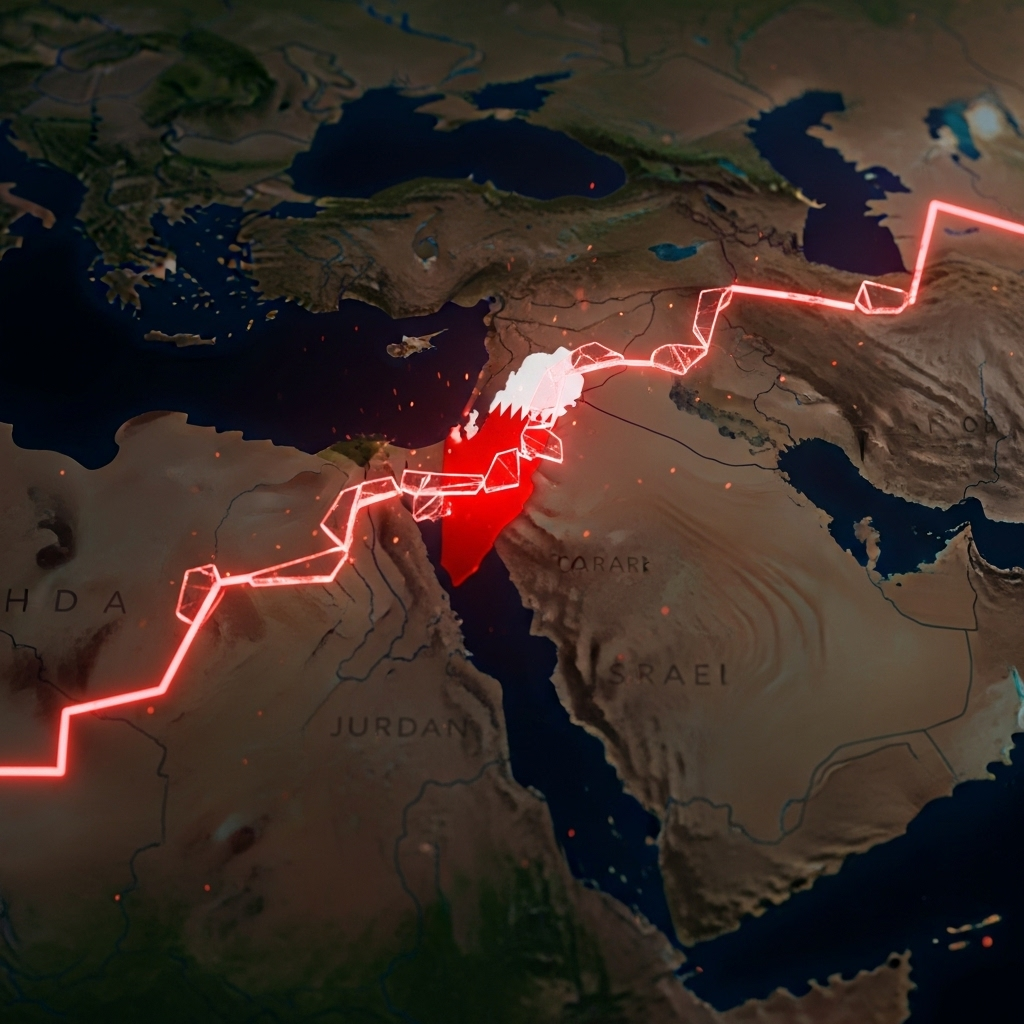
The recent Israeli strike in the heart of Doha, Qatar, was more than a targeted operation; it was a seismic event that obliterated long-standing, unspoken geopolitical understandings. This single act has dramatically redrawn the map of Middle Eastern diplomacy, crossing multiple red lines that have governed regional interactions for decades. The fallout is immediate, and the consequences are rippling across the globe, fundamentally altering alliances, strategies, and the very balance of power.
Analysts are scrambling to assess the full impact, but four major geopolitical shifts have already become starkly clear. From the collapse of delicate mediation channels to a crisis in American-Israeli relations, the strike has ushered in a new and dangerously unpredictable era. This article explores the four critical shifts that define the post-Doha landscape.
Table of Contents
1. The Qatar-Israel Diplomatic Meltdown and Mediation Collapse
For years, Qatar has carved out a unique and often controversial role as the region’s indispensable mediator. By hosting Hamas’s political office, Doha maintained a direct line of communication that was crucial for de-escalation, prisoner exchanges, and hostage negotiations. This arrangement, while criticized by some, was tacitly accepted by Israel and the West as a necessary evil—a pragmatic channel to manage an otherwise intractable conflict. The strike in Doha has shattered this fragile understanding.
By targeting individuals on Qatari soil, Israel committed a profound violation of the nation’s sovereignty. The immediate consequence is the complete collapse of Qatar’s role as a trusted intermediary. It is inconceivable that Doha could continue to host Hamas leadership or broker deals with Israel after such a direct and public affront. This leaves a gaping void in regional diplomacy.
Without Qatar, who will mediate the next hostage crisis? Who will facilitate the back-channel communications needed to prevent minor skirmishes from spiraling into full-blown wars? Other potential mediators, such as Egypt or Turkey, lack the specific relationships and financial leverage that made Qatar effective. This diplomatic vacuum raises the risk of future conflicts being resolved not through negotiation, but through brutal and unpredictable force. You can read more about Qatar’s delicate diplomatic balancing act in our previous analysis.
Redefining American Influence and Its Own Red Lines
The strike presents a monumental challenge for the United States. Qatar is not just a diplomatic player; it hosts the Al Udeid Air Base, the largest American military installation in the Middle East and the forward headquarters of U.S. Central Command (CENTCOM). An Israeli operation conducted in the capital of a key American military partner, likely without a green light from Washington, is a direct challenge to U.S. authority and regional stability.
This forces Washington to confront a painful dilemma. On one hand, its ironclad commitment to Israel’s security is a pillar of its foreign policy. On the other, its strategic partnerships with Gulf states like Qatar are essential for projecting power, containing Iran, and securing global energy flows. Israel’s decision to cross these red lines puts these competing interests in direct conflict.
The White House has been forced into a position of public condemnation, creating a rift with Israel of a severity not seen in decades. The critical question now is whether this condemnation will be backed by action. Will the U.S. place conditions on military aid? Will it curb its diplomatic support at the UN? According to a report by the Council on Foreign Relations, such moves could redefine the very nature of the U.S.-Israel alliance. This event forces the United States to publicly define its own red lines with its closest regional ally, a process that will be fraught with political peril both at home and abroad.
A Deep Freeze on Arab-Israeli Normalization
Perhaps one of the most significant casualties of the Doha strike is the momentum behind the Abraham Accords and the broader trend of Arab-Israeli normalization. For countries like the United Arab Emirates and Bahrain, who signed the historic accords, the strike is a public relations nightmare. It provides ammunition to domestic and regional critics who argue that normalization has failed to moderate Israeli behavior.
These governments are now under immense public pressure to take a harder line. We can expect to see ambassadors recalled, economic initiatives paused, and a general “deep freeze” in relations as these nations seek to distance themselves from the fallout. The vision of a cooperative, integrated Middle East, which underpinned the promise of the Abraham Accords, now seems naively optimistic.
More importantly, any prospect of Saudi Arabia—the region’s heavyweight—normalizing relations with Israel is now off the table for the foreseeable future. The political cost for Riyadh to embrace Israel after an act widely seen as reckless and destabilizing would be astronomical. The strike has handed a major victory to opponents of normalization, setting back a process that was seen as a cornerstone of future regional security by a decade or more.

Iran and Its Proxies: Exploiting the Regional Chaos
While most of the region reels from the instability, one actor stands to benefit: Iran. Tehran and its “Axis of Resistance”—including Hezbollah in Lebanon, the Houthis in Yemen, and various militias in Iraq and Syria—will exploit this event as a powerful propaganda tool. The strike will be framed as definitive proof of Israeli aggression and the impotence of Arab states that have chosen diplomacy over confrontation.
This narrative serves several of Iran’s strategic goals. First, it emboldens its proxies, who may feel justified in escalating their attacks against Israeli and American targets. They can claim to be the only ones genuinely defending regional honor against Israeli overreach. As noted by international news agencies, this increases the risk of a multi-front conflict that could spiral out of control.
Second, it strengthens Iran’s appeal among disillusioned populations in the Arab world, positioning Tehran as the true champion of the Palestinian cause. This undermines the legitimacy of pro-Western Arab governments and advances Iran’s long-term objective of pushing U.S. influence out of the Middle East. By crossing Qatar’s red lines, Israel may have inadvertently created the very chaos that its foremost adversary thrives on.

Conclusion: A More Dangerous Middle East
The strike in Doha was not a conclusion but a catalyst. By crossing geopolitical red lines that were fundamental to regional stability, Israel has triggered a series of cascading shifts. The established diplomatic architecture, fragile as it was, has been demolished, leaving a vacuum likely to be filled by extremists and opportunists. The U.S. faces a crisis of credibility, the Arab normalization process is in tatters, and Iran has been handed a strategic gift.
The coming months will reveal the full extent of the damage, but one thing is certain: the Middle East is now a more dangerous and unpredictable place. The old rules no longer apply, and the new ones are being written in real-time, with potentially devastating consequences for all involved.


