
Trump’s Fed Fight: 1 Top GOP Donor Issues a Warning
Table of Contents
- The Heart of Trump’s Fed Fight: A Push for Control
- A Top GOP Donor Sounds the Alarm
- Why is the Fed’s Independence So Crucial?
- The Economic Stakes of Trump’s Fed Fight
As the political landscape shifts, a potential second term for Donald Trump is bringing renewed focus to one of Washington’s most powerful and traditionally non-partisan institutions: the Federal Reserve. The very public nature of Trump’s fed fight during his first term has set the stage for a potential showdown with enormous consequences for the U.S. economy. Now, a prominent GOP donor is breaking ranks to issue a stark warning about the dangers of politicizing America’s central bank.
The donor, who has contributed millions to Republican campaigns, argues that undermining the Fed’s independence could trigger unprecedented market volatility and jeopardize the long-term stability of the U.S. dollar. This warning from within the GOP’s own financial-backing circles highlights the deep-seated anxieties even among Trump’s allies about his economic agenda.
The Heart of Trump’s Fed Fight: A Push for Control
At the core of the issue is the century-old tradition of Federal Reserve independence. The central bank is designed to operate free from short-term political pressure, allowing it to make difficult decisions—like raising interest rates to combat inflation—without fear of reprisal from the White House or Congress. This autonomy is considered a bedrock principle of a stable, modern economy.
During his presidency, Trump repeatedly and publicly criticized Fed Chair Jerome Powell, a man he himself appointed, for raising interest rates. He framed the Fed’s actions as a direct impediment to his economic growth agenda. Now, advisors close to Trump have reportedly drafted proposals that would fundamentally reshape this relationship. These plans could include:
- Asserting Presidential Authority: One radical idea suggests the president has the authority to directly guide monetary policy or even remove the Fed chair over policy disagreements, a power most legal scholars believe the president does not possess.
- Setting Interest Rates from the White House: A more direct approach could involve the White House attempting to set interest rates, effectively absorbing the Fed’s primary function.
- Replacing Personnel: A more certain path would be to refuse to reappoint Jerome Powell when his term ends and install a loyalist who would be more compliant with the administration’s economic wishes.
These proposals represent a dramatic departure from decades of established economic policy. The goal, from Trump’s perspective, is to ensure the central bank is an engine for growth as he defines it, prioritizing lower interest rates to fuel the stock market and business investment, even if it risks higher inflation.
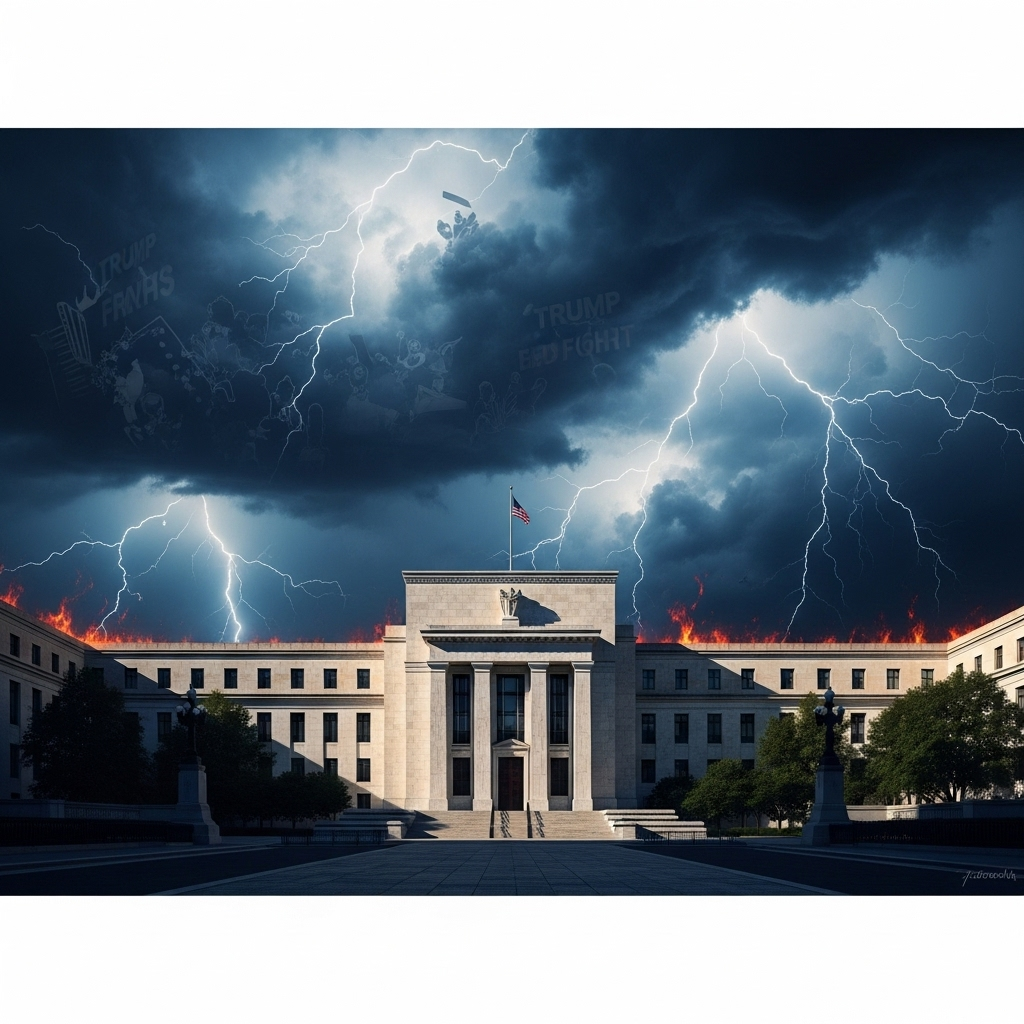
A Top GOP Donor Sounds the Alarm
While many in the Republican party have remained silent or even supportive of Trump’s critiques, at least one major financial backer is now voicing grave concerns. Speaking on the condition of anonymity to discuss sensitive political matters, the donor described the effort to subordinate the Fed as “playing with fire.”
“The foundation of American economic strength is trust,” the donor stated. “Global investors buy our bonds and hold our currency because they trust our institutions. The moment you make interest rates a political tool, that trust evaporates overnight. The consequences would be catastrophic.”
The warning is rooted in financial pragmatism. This donor, a significant figure in the private equity world, understands that market stability relies on predictable, rules-based monetary policy. Their primary fears include:
- Runaway Inflation: If a president can demand lower interest rates to boost the economy before an election, it could lead to an overheated economy and uncontrollable inflation, eroding the savings of everyday Americans.
- Capital Flight: International investors, spooked by political interference, might sell their U.S. Treasury bonds, causing borrowing costs for the U.S. government to skyrocket.
- Devaluation of the Dollar: A loss of faith in the Fed’s credibility could severely damage the U.S. dollar’s status as the world’s reserve currency, a privilege that affords the United States immense economic and geopolitical power.
This isn’t an ideological squabble; it’s a warning from the heart of the capitalist system that Trump champions. The message is clear: the short-term political gain from controlling the Fed would come at an unacceptably high long-term price.

Why is the Fed’s Independence So Crucial?
To understand the donor’s warning, it’s essential to grasp why central bank independence is a cornerstone of economic policy worldwide. The Federal Reserve has a “dual mandate” from Congress: to promote maximum employment and maintain stable prices. Often, these two goals are in conflict.
For example, to fight inflation (stable prices), the Fed may need to raise interest rates. This cools down the economy but can also slow down hiring (maximum employment). A politician facing re-election has every incentive to push for lower rates to create a short-term economic boom, even if it leads to painful inflation down the line.
An independent Fed can make the unpopular but necessary decision to raise rates, acting as a “chaperone who has ordered the punch bowl removed just when the party was really warming up,” in the famous words of former Fed Chair William McChesney Martin Jr.
This independence ensures that monetary policy is based on economic data, not political calendars. For a deeper understanding of the Fed’s structure and mission, you can visit their official page on its purpose and functions here. The credibility earned from this independence is what allows the Fed to effectively manage the economy through turbulent times.
The Economic Stakes of Trump’s Fed Fight
The potential fallout from Trump’s Fed fight extends far beyond the Beltway. If markets begin to believe the Fed has lost its autonomy, the reaction could be swift and severe. Bond traders, who value stability and predictability above all else, might demand higher yields on U.S. government debt to compensate for the new “political risk.”
This would immediately increase borrowing costs for the U.S. government, worsening the national debt. It would also translate into higher interest rates for consumers on mortgages, car loans, and credit cards, regardless of the Fed’s official stance.
Furthermore, the U.S. dollar’s role as the global reserve currency could be challenged. Countries like China and Russia would be emboldened to promote alternatives, and even allies might diversify their reserves away from the dollar. This would diminish American influence and make it more expensive for the nation to finance its deficits.
The debate is no longer theoretical. The warnings are now coming not just from Democrats or academics, but from the very Republican donors who helped build the modern GOP. As the election cycle progresses, the future of the Federal Reserve and the stability of the American economy will be at the center of a high-stakes battle for control.
“`


