
Missouri House Passes 6-2 GOP Redistricting Map for 2024
In a significant move that will shape the state’s political landscape for the next decade, the Missouri House of Representatives has passed a new congressional redistricting map. The plan, which solidifies a 6-2 Republican advantage, was approved after a lengthy and often contentious debate, setting the stage for a final showdown in the state Senate.
This decision by the Missouri House marks a critical step in a once-a-decade process that redraws the boundaries for the state’s eight U.S. House seats based on the latest census data. The approved map aims to maintain the current partisan split, ensuring six districts are likely to elect Republicans and two are designed to favor Democrats.
Article Contents
Breaking Down the 6-2 Map Proposal
The core of the legislation is a map that largely protects incumbents and reinforces the existing partisan geography of Missouri. Proponents argue that the 6-2 configuration accurately reflects the statewide voting preferences of Missourians, who have consistently favored Republican candidates in recent presidential and statewide elections.
Under the new map, the two solidly Democratic districts remain centered around the state’s major urban areas:
- 1st District: This district, represented by Rep. Cori Bush, continues to encompass St. Louis City and parts of north St. Louis County, remaining a Democratic stronghold.
- 5th District: Centered on Kansas City and represented by Rep. Emanuel Cleaver, this district also retains its strong Democratic lean.
The remaining six districts are drawn to favor Republican candidates. A key point of contention during the debate was the configuration of the 2nd District in the St. Louis suburbs. Some conservative factions had pushed for a more aggressive “7-1” map that would have dismantled the 2nd District as a competitive seat, splitting its suburban population to bolster other GOP districts. However, the House leadership ultimately advanced the 6-2 version, which keeps the 2nd District as a Republican-leaning, but potentially competitive, suburban seat.

The Contentious Missouri House Debate
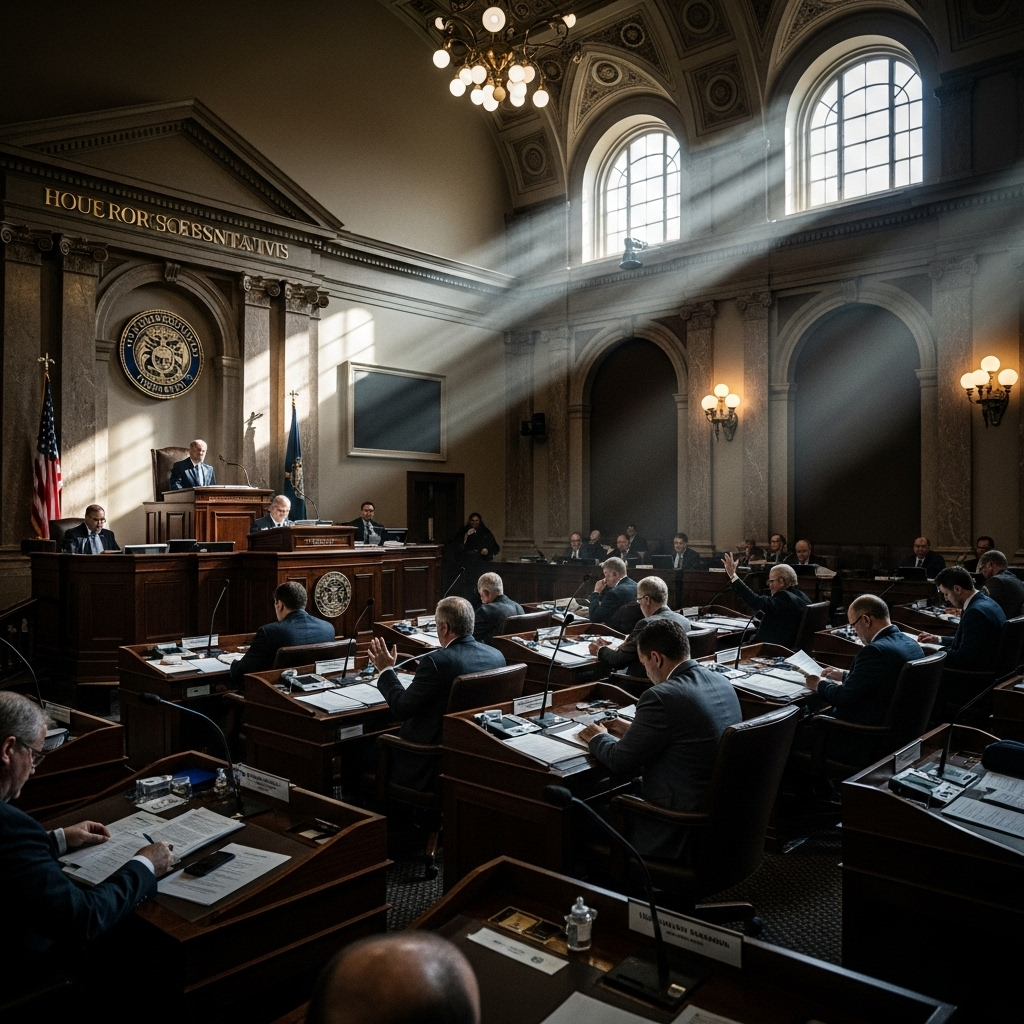
The path to passage was anything but smooth. The floor debate in the Missouri House lasted for several hours, characterized by sharp exchanges between the Republican majority and the Democratic minority. Democrats vehemently opposed the map, labeling it a partisan gerrymander that disenfranchises voters by “packing” Democrats into two districts and “cracking” their influence elsewhere.
“This map is not about fair representation; it’s about politicians picking their voters,” one Democratic representative stated during the debate. “We are silencing hundreds of thousands of voices by pre-determining election outcomes for the next ten years.”
The debate also exposed rifts within the Republican caucus itself. A conservative faction argued that the 6-2 map was not aggressive enough and that the party was missing a crucial opportunity to expand its congressional majority. They championed a 7-1 map, which they believed was both achievable and more representative of Missouri’s conservative tilt. Despite their efforts, amendments to create a 7-1 map were ultimately defeated, and the more moderate 6-2 proposal prevailed.
The final vote saw the bill pass largely along party lines, demonstrating the GOP leadership’s ability to unite its members behind the final compromise. For more details on the legislative process, you can view the bill’s history on the official Missouri House website.
Political Implications for Missouri’s Future
The approval of this map by the Missouri House has profound implications. First and foremost, it locks in a significant Republican advantage in the state’s congressional delegation. This provides a stable foundation for the national Republican party as it seeks to maintain or expand its majority in the U.S. House of Representatives.
For incumbents, the map offers a high degree of security. The boundaries were drawn to protect existing members of both parties, reducing the likelihood of competitive primary or general election challenges. For example, the 2nd District, while a topic of debate, remains configured to favor incumbent Rep. Ann Wagner.
However, critics argue that this stability comes at a cost. By creating fewer competitive districts, the map may lead to increased political polarization. When officials don’t have to appeal to a broad base of voters, they are more likely to cater exclusively to their party’s base. This can make bipartisan compromise more difficult both in Washington D.C. and within the state.
Furthermore, the map’s configuration could have downstream effects on state-level politics. The boundaries and political dynamics established for federal elections often influence candidate recruitment and strategy for the state legislative races within those same areas.
Next Steps: The Bill Heads to the Senate
While the House passage is a major victory for the bill’s sponsors, the fight is not over. The legislation now moves to the Missouri Senate, where it faces another uncertain battle. The same intra-party divisions that were present in the House also exist in the Senate, with a conservative caucus eager to push for a 7-1 map.
This could lead to a filibuster, a procedural tactic where a small group of senators can hold up legislation indefinitely through prolonged debate. If the conservative faction decides the 6-2 map is unacceptable, they could block its passage and attempt to force a new compromise. This could potentially delay the process until the courts are forced to intervene and draw the map themselves—a scenario most legislators want to avoid.
If the Senate does pass the bill, it will then head to the governor’s desk for his signature. Governor Mike Parson has previously indicated a preference for a 6-2 map, suggesting he is likely to sign the bill if it reaches him in its current form.
The clock is ticking. With the 2024 election cycle approaching, the state must finalize its congressional districts to allow candidates time to file and campaign. The coming weeks in the Missouri Senate will be crucial in determining the final shape of Missouri’s political power for the next decade.
“`


