
two out of five judges: Bolsonaro guilty in TSE trial
The high-stakes trial of former Brazilian President Jair Bolsonaro at the Superior Electoral Court (TSE) has reached a critical juncture, as two out of five judges who have voted so far have found him guilty of abuse of political power. The partial verdict places Bolsonaro’s political future in jeopardy, as a final guilty ruling would render him ineligible for public office for eight years.
The trial centers on a meeting Bolsonaro held with foreign ambassadors in July 2022, during which he made unsubstantiated claims against Brazil’s electronic voting system. This article breaks down the charges, the votes cast so far, and what lies ahead in this landmark case.
The Charges Against Bolsonaro Explained
The case against Jair Bolsonaro was brought forward by the Democratic Labour Party (PDT). The core of the accusation is that Bolsonaro committed an abuse of political power and misused public media for electoral purposes. This stems from a July 18, 2022, event held at the Alvorada Palace, the presidential residence.
During this event, Bolsonaro addressed dozens of foreign ambassadors and spent nearly an hour criticizing Brazil’s internationally recognized electronic voting machines. He claimed, without presenting concrete evidence, that the system was prone to fraud. The meeting was broadcast live on the state-run television channel, TV Brasil, and across the president’s social media platforms.
Prosecutors argue that by using the presidential office and public resources to attack the very foundation of the electoral system, Bolsonaro sought to undermine the democratic process for his own political gain. This action, they contend, created a climate of distrust and instability ahead of the 2022 general election. For more background on the election’s context, you can read our recap of the 2022 Brazilian election.

The Votes So Far: Why Two Out of Five Judges Found Guilt
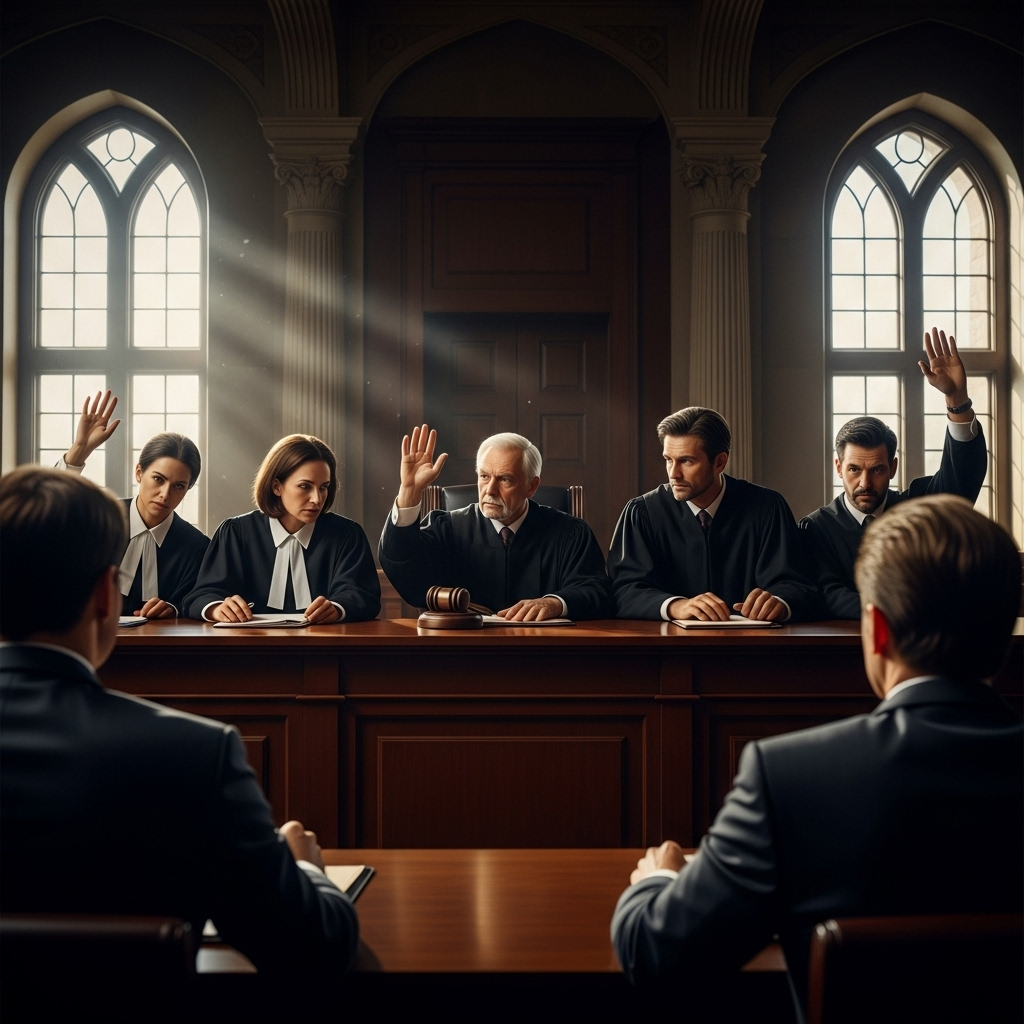
The TSE is composed of seven judges. As of the latest session, five have cast their votes, creating a tense atmosphere as the nation awaits the final outcome. The current tally shows that two out of five judges have sided with the prosecution, while three have voted for acquittal. Understanding their reasoning is key to grasping the legal complexities at play.
The first guilty vote came from the case’s rapporteur, Justice Benedito Gonçalves. In a lengthy and detailed argument, Gonçalves stated that Bolsonaro’s speech was not a legitimate act of presidential speech but a calculated move to “discredit the electoral system.” He highlighted that the former president used his powerful position to spread disinformation, which constitutes a clear abuse of power.
Key points from Justice Gonçalves’s vote included:
- The event was an official state function, not a campaign rally, yet it served a clear electoral purpose.
- Public resources, including the national television network, were improperly used to broadcast the attacks on the voting system.
- The rhetoric used was found to be violent and antidemocratic, directly attacking the credibility of the Judiciary.
The second guilty vote echoed these sentiments, emphasizing that freedom of speech for a public official, especially the president, does not extend to undermining democratic institutions. The judge argued that Bolsonaro’s actions crossed a line from political opinion into an illicit act designed to destabilize the upcoming election. For official updates on the trial, you can visit the TSE’s official website.
Conversely, the three judges who have so far voted for acquittal argued that while Bolsonaro’s speech was inappropriate, it did not rise to the level of an offense severe enough to warrant political ineligibility. They contended that the impact of the meeting on the election’s outcome was not definitively proven.
What to Expect as the Final Votes Are Cast
With the current vote count at 2-3 (guilty-not guilty), the trial is far from over. The decision now rests with the two remaining judges on the seven-member panel. A single additional vote for guilt would tie the score at 3-3, leaving the final decision to the court’s president, Justice Alexandre de Moraes, who would cast the tie-breaking vote.
A majority of four votes is required for a definitive ruling. The possible outcomes are:
- Acquittal (3-4): If both remaining judges vote not guilty, Bolsonaro will be acquitted.
- Guilty Verdict (4-3 or more): If at least one of the remaining judges votes guilty, a majority will be formed to convict Bolsonaro.
Analysts are closely watching the upcoming votes, as the court has historically taken a firm stance against attacks on the democratic process. The next session is scheduled to continue this week, and a final verdict is expected to be reached by the end of the month. Bolsonaro’s defense team has maintained that his speech was an exercise in freedom of expression and that he was merely raising legitimate concerns about the electoral process.
The Political Implications for Bolsonaro and Brazil
The partial result, with two out of five judges voting for a guilty verdict, has already sent shockwaves through Brazil’s political landscape. A final conviction would make Bolsonaro, the most prominent figure on the Brazilian right, ineligible to run for or hold public office until 2030.
This would create a significant power vacuum on the right. Without Bolsonaro as a viable presidential candidate for the 2026 election, his supporters and allied parties would be forced to find a new standard-bearer. Potential names being floated include São Paulo Governor Tarcísio de Freitas and Minas Gerais Governor Romeu Zema. However, neither possesses the same level of charismatic appeal and national recognition as Bolsonaro.
A guilty verdict would also be a major victory for Brazil’s democratic institutions, signaling that even a former president is not above the law. It would serve as a powerful deterrent against future attempts to discredit the electoral system. For a deeper dive into this topic, see our analysis on the future of Brazil’s right-wing movement.
As Brazil holds its breath, the fate of one of its most polarizing political figures hangs in the balance. The votes of the remaining two judges will not only decide Jair Bolsonaro’s future but will also set a lasting precedent for the country’s democracy.
“`


