
Public property flag rules: 1 Michigan city ban proceeds
The debate over what flags can be flown on government-owned land intensifies as a Michigan city enacts a controversial new ordinance. This move sparks a nationwide conversation about free speech, inclusivity, and the role of government in representing its constituents on public property.
In This Article:
The Hamtramck Decision: A Closer Look at the Flag Ban on Public Property
In a move that has captured national attention, the city of Hamtramck, Michigan, has officially decided to restrict the types of flags that can be flown on city-owned public property. The Hamtramck City Council voted unanimously to pass a resolution that effectively bans the display of flags with political or social messages, including the Pride flag, from all municipal flagpoles. This decision came after weeks of heated debate and public comment, reflecting a deep divide within the diverse community.
Proponents of the ban, including the all-Muslim city council and the mayor, argued that the measure is intended to promote neutrality and unity. Their stated goal is to avoid embroiling the city government in political controversies and to ensure that public property remains a space for all residents, regardless of their beliefs. “We want to be inclusive for everybody,” Mayor Amer Ghalib stated, emphasizing that the ordinance is not targeted at any single group but is a blanket policy to ensure the government doesn’t favor one group’s cause over another’s.
The council’s rationale centers on the idea that government flagpoles should be reserved for symbols that represent the entire populace, such as the American flag, the Michigan state flag, and the city’s own flag. By limiting the display to these official emblems, they believe they are stepping back from culture-war flashpoints and focusing on core government functions. This decision highlights a growing tension in municipalities across the country over how to manage expressive symbols on government-controlled land.
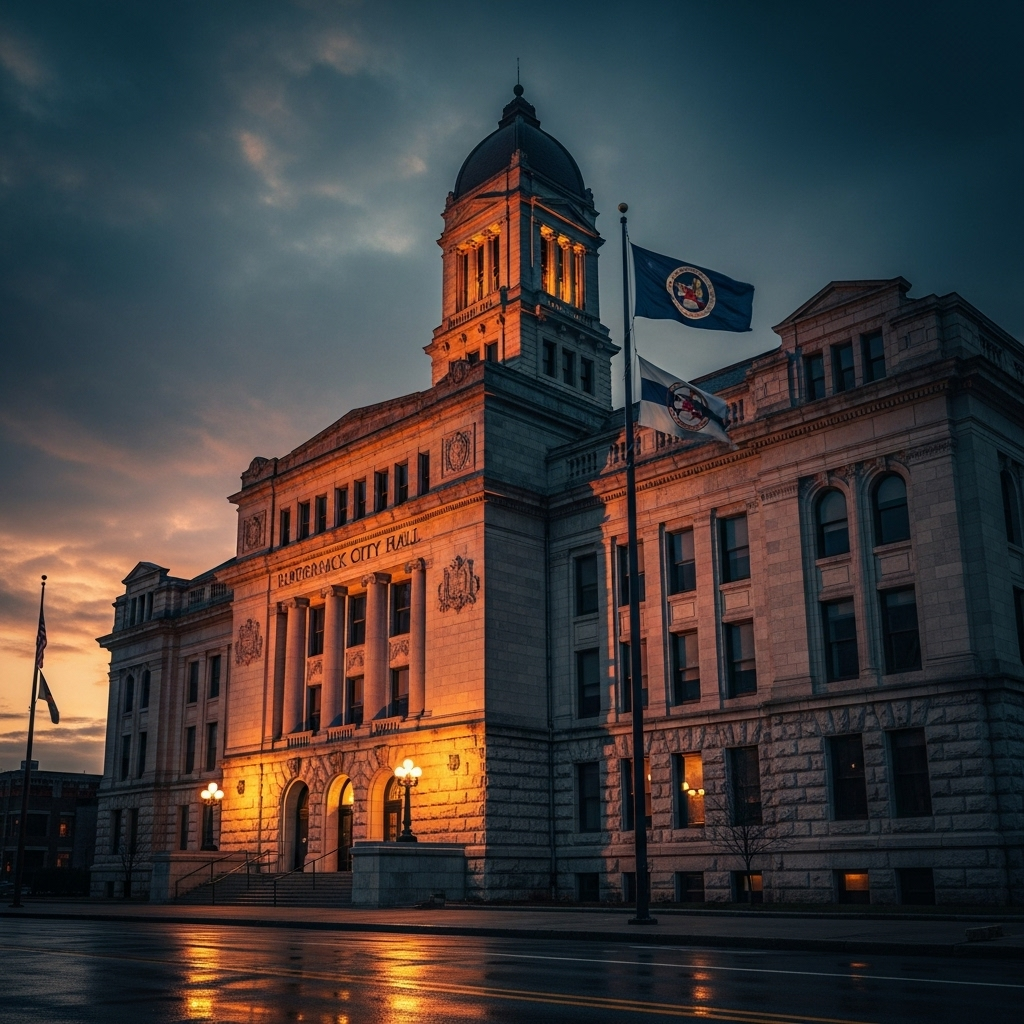
What Does the New Ordinance Entail for Public Property?
The newly enacted resolution is specific about what is and isn’t permitted on flagpoles located on city-owned public property. It’s crucial to understand that this ordinance does not affect what private citizens or businesses can display on their own property. The focus is strictly on government-controlled spaces.
Under the new rules, the only flags permitted to be flown are:
- The flag of the United States of America.
- The flag of the State of Michigan.
- The official flag of the City of Hamtramck.
- The Prisoner of War/Missing in Action (POW/MIA) flag.
- Flags of the sovereign nations from which a significant portion of Hamtramck’s residents hail.
This final point is a nod to Hamtramck’s reputation as one of Michigan’s most ethnically diverse cities, with large populations of Yemeni, Bengali, and Eastern European descent. However, any international flag would require a separate council resolution for approval. Conspicuously absent from the approved list are flags representing social or political movements, such as the LGBTQ+ Pride flag, Black Lives Matter flags, or Thin Blue Line flags. The ordinance effectively ends the city’s practice of flying the Pride flag during the month of June, a tradition that began several years ago.
The Legal and First Amendment Implications
Whenever a government entity restricts expression, questions about the First Amendment inevitably arise. However, the legal landscape surrounding flags on public property is complex. The key distinction lies in whether the flagpole is considered a “public forum” for private speech or a medium for “government speech.”
In a 2022 Supreme Court case, Shurtleff v. City of Boston, the court ruled unanimously that Boston violated a Christian group’s free speech rights by refusing to fly their flag, because the city had treated its flagpole as a public forum by allowing many other private groups to fly their flags. This case set a precedent that if a government opens up its property for private expression, it cannot then discriminate based on viewpoint.
However, the Hamtramck council’s approach seems designed to circumvent this issue. By explicitly closing the forum and declaring that the city’s flagpoles are exclusively for government speech, they are likely on firmer legal ground. The Supreme Court has consistently held that the government has the right to control its own speech. For more detailed information on this topic, you can review resources from the American Civil Liberties Union (ACLU) on free speech.
Legal experts suggest that as long as the policy is applied neutrally and does not single out a specific viewpoint for exclusion—which Hamtramck’s broad ban aims to do—it is less likely to be successfully challenged in court. The city is essentially stating, “This flagpole speaks for the government, and only the government.”

Community Reaction and the National Conversation
The reaction in Hamtramck and beyond has been swift and polarized. Many residents, particularly from the city’s socially conservative religious communities, have voiced strong support for the council’s decision. They see it as a restoration of traditional values and a way to protect children from what they consider to be controversial ideologies. Supporters filled public meetings, applauding the move as a way to maintain community cohesion.
On the other side, LGBTQ+ residents and their allies have condemned the resolution as a step backward. They argue that the Pride flag is a symbol of inclusion and safety, and its removal from public property sends a message that they are not welcome. “When you take down the Pride flag, you’re not creating neutrality, you’re creating a void,” one resident stated during a protest. “You’re telling a vulnerable part of your community that you don’t see them.”
This local issue has quickly spiraled into a national news story, becoming a proxy for a larger cultural debate. It taps into ongoing conversations about religious freedom, LGBTQ+ rights, and the very definition of what it means for a government to be inclusive. For more insights into local governance, see our article on understanding municipal resolutions.
The Future of Flags on Public Property in Michigan and Beyond
Hamtramck is not an isolated case. Other cities and school districts across the United States are grappling with similar policies. From school boards banning Pride and BLM flags in classrooms to municipalities re-evaluating their flagpole policies, the debate over symbolic speech on public property is growing.
The Hamtramck decision could serve as a template for other municipalities wishing to adopt a “government speech only” model. By creating a clear, neutral policy, they can potentially avoid the legal pitfalls that Boston encountered while still achieving a desired outcome of limiting expressive displays. This trend could lead to fewer non-governmental flags acessórios being flown on official flagpoles nationwide.
However, the backlash and activism spurred by these decisions are also a powerful force. The debate forces communities to confront difficult questions: What is the purpose of public property? Should it be a blank slate, or should it reflect the diversity and struggles of all its people? As more cities face this choice, the outcome in Hamtramck will undoubtedly be cited by both sides, making this small Michigan city a bellwether for a much larger American conversation.


