
‘Reckless’ drone incursions: 1 Nation Responds to Russia
Tensions have sharply escalated along NATO’s eastern flank as Romania issued a powerful condemnation of what it termed “reckless’ drone incursions” originating from Russian forces operating near its border. In a series of alarming incidents over the past 72 hours, debris from downed drones has been discovered on Romanian territory, prompting a swift and multifaceted response from Bucharest and putting NATO allies on high alert. This dangerous spillover from the conflict in Ukraine is testing the alliance’s resolve and raising critical questions about collective defense.
The Romanian Ministry of Defence confirmed that at least three separate incidents involved unmanned aerial vehicles (UAVs) crossing into its sovereign airspace before being engaged or crashing. While there have been no reported casualties, the psychological and strategic impact is significant, forcing a direct confrontation with the realities of the neighboring war.
In This Article
- The Escalation of ‘Reckless’ Drone Incursions
- Romania’s Firm Diplomatic and Military Response
- NATO and the International Community Weigh In
- What’s Next? De-escalation or Further Confrontation?
The Escalation of ‘Reckless’ Drone Incursions
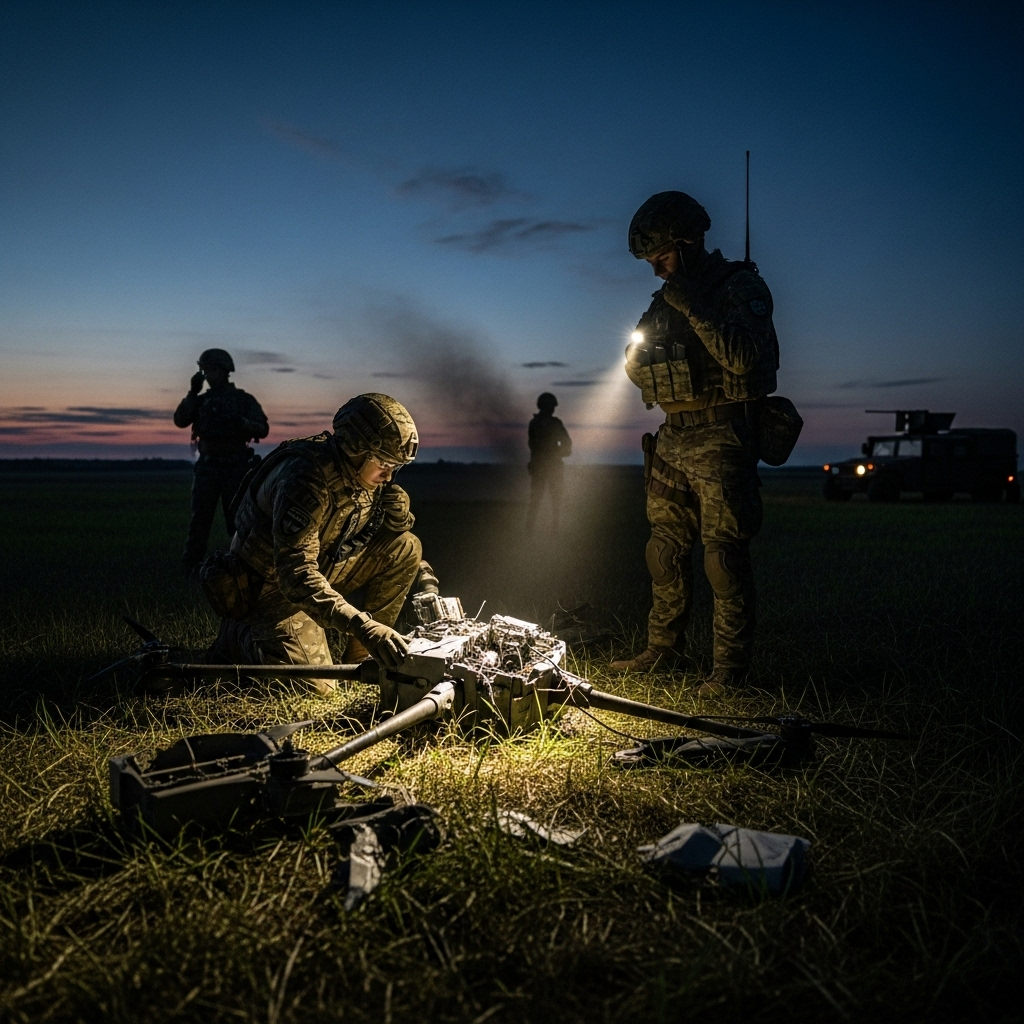
The latest wave of incidents began late Monday evening when air raid sirens were activated in several Romanian communities along the Danube River, which forms a natural border with Ukraine. Residents reported hearing the distinct buzz of low-flying drones followed by loud explosions. The Ministry of Defence later confirmed that fragments, “consistent with those of a Russian-origin Geran-2 drone,” were found in a field less than a mile from the village of Plauru.
This was not an isolated event. A second incident occurred Tuesday, where Romanian air defense systems tracked a UAV that violated its airspace for approximately four minutes before it appeared to crash or was neutralized over an unpopulated area. A third violation was reported early Wednesday morning, prompting the scrambling of F-16 fighter jets from the Romanian Air Force’s 86th Air Base.
An official from the Romanian intelligence service, speaking on the condition of anonymity, described the pattern as a deliberate provocation or, at best, a display of gross negligence. “Whether intentional or not, these ‘reckless’ drone incursions pose an unacceptable risk to our citizens and sovereignty,” the official stated. “Russia is playing a dangerous game, using the proximity of NATO territory as a backdrop for its military operations, with little regard for the consequences of a miscalculation.”
Military analysts suggest that these drones were likely targeting Ukrainian port infrastructure on the Danube but either malfunctioned or were diverted by Ukrainian electronic warfare systems, causing them to stray into Romanian airspace. Regardless of the immediate cause, the result is a direct threat to a NATO member state.
Romania’s Firm Diplomatic and Military Response
Bucharest’s response has been swift and firm. The Romanian Foreign Ministry immediately summoned the Russian Ambassador to deliver a formal protest, demanding a full explanation and an immediate cessation of actions that threaten Romanian territory. In a strongly worded statement, the ministry declared, “The repeated ‘reckless’ drone incursions are a grave violation of international law and a direct challenge to Romania’s national security.”
On the military front, Romania has visibly increased its defense posture. Air patrols along the eastern border have been intensified, and additional air defense assets, including radar systems and anti-aircraft batteries, have been redeployed to the region. Defence Minister Angel Tîlvăr announced that Romania is in constant communication with its NATO allies regarding the situation.
“Our commitment to the safety of our citizens is absolute,” Minister Tîlvăr said in a press conference. “We have enhanced our surveillance and defense capabilities and are prepared to take all necessary measures to protect our airspace. These incidents underscore the importance of vigilance and the strength of our alliance.”
The repeated violations are forcing a serious discussion within NATO about the threshold for a collective response. While drone debris falling in a field may not trigger a full Article 5 collective defense response, the pattern of behavior is seen as a deliberate test of NATO’s red lines. For more information on the alliance’s official stance, you can visit the official NATO website.

NATO and the International Community Weigh In
The incidents have drawn sharp condemnation from across the NATO alliance. Secretary General Jens Stoltenberg held an emergency phone call with Romanian President Klaus Iohannis, expressing “strong solidarity” with Romania. In a subsequent statement, Stoltenberg affirmed, “NATO is monitoring the situation closely. We have no information indicating an intentional attack by Russia, but we have condemned these irresponsible attacks. Such incidents are dangerous and highlight the risk of accidents and miscalculation.”
The United States, through a Pentagon spokesperson, reiterated its “ironclad” commitment to NATO’s defense. “An attack on one is an attack on all,” the spokesperson reminded reporters. “We stand with our Romanian allies and will support them in bolstering their air defenses. These ‘reckless’ drone incursions from Russia must stop.”
Other neighboring countries, including Poland and Bulgaria, have also expressed their support for Romania and increased their own states of alert. The consensus among Western leaders is that while the incursions may not have been deliberate targeted attacks on Romania itself, they represent a dangerous escalatory potential that Russia is either unwilling or unable to control.
De-escalation or Further Confrontation?
The critical question now is what happens next. Russia has remained publicly silent on the specific allegations from Romania, following its typical playbook of denial and obfuscation. For NATO, the challenge is to formulate a response that is strong enough to deter future incursions without escalating the situation into a direct conflict with Russia.
Possible next steps could include the deployment of additional advanced NATO air defense systems to Romania, such as the Patriot or SAMP/T batteries, and an increase in the alliance’s air policing missions over the Black Sea. The goal is deterrence by denial—making the cost and difficulty of such violations too high for Russia to continue.
For the residents of eastern Romania, the sound of drones has become an unwelcome part of life. The recent ‘reckless’ drone incursions have shattered any illusion of safety from the war next door. As Romania and its allies reinforce their defenses, the world watches to see if diplomacy and deterrence can contain a conflict that is now, quite literally, spilling over NATO’s borders.
“`


