Ongoing tourism decline: 100s of Vegas dealers replaced
The glittering facade of Las Vegas is showing signs of strain as the city grapples with an ongoing tourism decline that has now hit its most iconic figures: the casino dealers. In a move sending ripples across the Strip, major casino operators have confirmed layoffs impacting hundreds of table game dealers, citing reduced foot traffic and a strategic shift towards automated gaming solutions.
This development is a stark indicator of the challenges facing the world’s entertainment capital. As visitor numbers fail to rebound to pre-pandemic highs, corporations are making tough decisions that are fundamentally altering the employment landscape and the very experience of a Las Vegas vacation.
The Human Cost of a Shifting Landscape
Sources inside several major resorts confirm that between 300 and 400 dealer positions have been eliminated over the past month. These are not seasonal adjustments; they are permanent reductions in force. The move affects employees at some of the most famous properties on Las Vegas Boulevard, many of whom have been the face of the casino floor for decades.
“After 18 years of dealing craps, I was told my position was ‘redundant’,” said one recently laid-off dealer who asked to remain anonymous. “They said it’s about efficiency and matching staffing to guest flow. It feels like they’re replacing us with machines, and the ongoing tourism decline is the excuse they needed.”
Casino workers’ unions, such as the Transport Workers Union Local 721 which represents dealers at some properties, are reportedly in emergency negotiations to secure severance packages and potential retraining opportunities for affected members. The union has voiced “grave concern” over the trend, emphasizing that human dealers provide a level of entertainment, security, and customer service that machines cannot replicate.
For many, this isn’t just a job loss; it’s the end of a career. Becoming a skilled dealer in a game like poker or craps requires years of practice, a unique set of mathematical and interpersonal skills, and a deep understanding of casino procedure. These are not easily transferable skills in a market that is actively phasing them out.

Analyzing the Causes of the Ongoing Tourism Decline
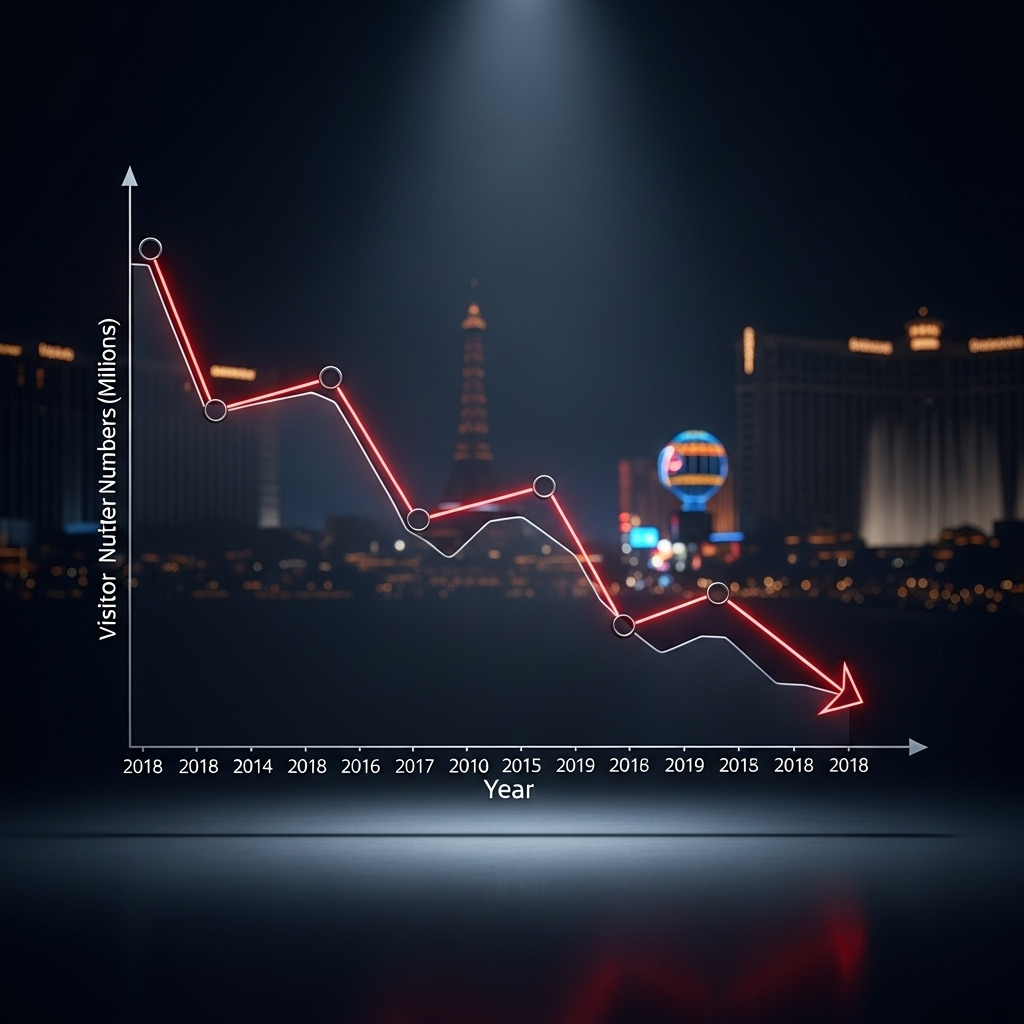
The current slump is not the result of a single factor but a confluence of persistent issues. While the city has seen a partial recovery since 2020, the momentum has stalled. The ongoing tourism decline, when measured against projected growth and historical peaks, can be attributed to several key pressures.
First, economic uncertainty and inflation continue to squeeze discretionary spending for many American households. A trip to Las Vegas, once a relatively affordable getaway, now competes with rising costs for gas, groceries, and housing. According to the Consumer Price Index, while inflation has cooled, its cumulative effect has permanently raised the cost of living, leaving less room for entertainment budgets.
Second, the competitive landscape has changed dramatically. The proliferation of legalized sports betting and regional casinos across the United States means that millions of potential visitors no longer need to travel to Nevada for a high-quality gambling experience. Why fly to Vegas when a new resort casino has opened a two-hour drive away?
Finally, there’s a demographic shift in progress. Younger visitors (Millennials and Gen Z) often prioritize different experiences over traditional gambling. They are drawn more to nightclubs, celebrity chef restaurants, music festivals, and “Instagrammable” attractions. While they spend money, a lower percentage of it is happening at the felt tables, reducing the need for a large dealer workforce.
The Acceleration of Automation on the Casino Floor
The decline in tourism has provided a powerful incentive for casinos to accelerate a long-planned transition: automation. Faced with lower revenues and persistent labor costs, executives see technology as a crucial tool for protecting profit margins.
Walk onto any major casino floor today, and the evidence is clear. The space dedicated to Electronic Table Games (ETGs) has expanded significantly. These terminals, which offer digital versions of blackjack, roulette, and craps with a virtual dealer, allow a single employee to oversee dozens of players at once. They also offer lower minimum bets, appealing to budget-conscious players, further pulling traffic from live tables.
Beyond ETGs, fully automated “robot dealers” for games like baccarat are being trialed, and stadium-style gaming setups—where dozens of players bet on the outcome of a single live-dealt or digital game—are becoming permanent fixtures. For the casino, the benefits are undeniable:
- Reduced Labor Costs: Fewer dealers, supervisors, and support staff are needed.
- 24/7 Operation: Machines don’t need breaks, vacations, or sick days.
- Data Collection: Every bet is tracked digitally, providing valuable data for marketing and player analysis.
However, this efficiency comes at the cost of the classic Vegas atmosphere. The camaraderie, the energy of a hot craps table, and the personal interaction with a charismatic dealer are elements that technology has yet to successfully replicate.
What This Means for the Future of Las Vegas
These dealer layoffs are a microcosm of a much larger identity crisis for Las Vegas. The city’s economic model has always been built on a massive hospitality workforce. When a core component of that workforce begins to shrink due to the dual threats of an ongoing tourism decline and automation, it raises fundamental questions about the city’s future.
While leaders have made strides in diversifying the Vegas economy—attracting professional sports teams like the Raiders and Golden Knights, and expanding its world-class convention business—the gaming and resort industry remains the central economic engine. As we noted in our analysis of the city’s economic resilience, a significant portion of non-gaming revenue is still dependent on the ecosystem created by the casinos.
The city now faces the challenge of adapting its brand. Is it still a gambling mecca, or is it an all-encompassing entertainment destination where gambling is just one of many options? The current strategy of leaning into automation suggests casinos are trying to have it both ways: catering to new entertainment seekers while optimizing the gambling experience for profitability, even if it means fewer jobs.

Looking Ahead: Can Vegas Reinvent Itself Again?
Las Vegas has a long history of reinvention, from its mob-era roots to its family-friendly phase in the 90s and its current ultra-luxury status. Overcoming the current challenges will require another such pivot.
Experts suggest a multi-pronged approach is necessary. On one hand, casinos must find ways to make the live gaming experience a premium, must-have attraction. This could involve creating more intimate, high-service gaming salons or integrating table games with other entertainment elements. It means treating dealers not as functionaries but as key entertainment assets.
On the other hand, the city as a whole must continue to double down on non-gaming attractions. This includes investing in unique public infrastructure, supporting the arts, and developing attractions that can’t be replicated by a regional casino. The success of large-scale events like the Formula 1 race shows there is a strong appetite for unique, large-scale spectacles.
The path forward for Las Vegas is uncertain. The recent layoffs are a painful but clear signal that the status quo is no longer sustainable. The city’s ability to navigate this ongoing tourism decline and technological disruption will determine whether the next chapter in its story is one of renewed growth or managed decline.
“`