
foreign minister: Canada’s 1 Big Israel Policy Question
Table of Contents
For any Canadian foreign minister, the portfolio is a complex web of global challenges. Yet, few files carry the same domestic and international weight as the Israeli-Palestinian conflict. Navigating this landscape forces Ottawa to confront a foundational foreign policy question, one that shapes its alliances, its voice at the United Nations, and its very identity on the world stage. The question is this: Is Canada’s primary role to be a staunch, unequivocal ally of Israel, or is it to be an impartial advocate for international law and a two-state solution, even when that means criticizing Israeli government policy?
This single, challenging question underpins every statement, sanction, and diplomatic maneuver. The answer, often delivered through carefully calibrated language and actions, reveals the government’s core priorities and the tightrope the foreign minister must walk.
The Core Dilemma Facing Canada’s Foreign Minister
At its heart, the dilemma is a conflict of identities. On one hand, Canada and Israel share deep-rooted ties, including robust trade relationships, intelligence sharing, and cultural connections. Successive governments have emphasized an “unshakeable” bond with Israel as a democratic partner in the Middle East. Supporting Israel is often framed as a commitment to a fellow democracy and a stand against regional instability.
On the other hand, Canada has a long and proud history as a “middle power”—a nation that champions multilateralism, human rights, and international law. This identity calls for a principled stance that supports the self-determination of both Israelis and Palestinians. It means upholding UN resolutions, including those that deem Israeli settlements in the occupied territories illegal under the Fourth Geneva Convention. This path requires the foreign minister to apply Canada’s stated principles universally, which can, and often does, lead to friction with its Israeli allies.
Every major event in the region forces this question to the forefront. From conflicts in Gaza to debates over settlement expansion or the status of Jerusalem, the Department of Global Affairs, led by the foreign minister, must choose its words and actions. A statement of “ironclad support” for Israel’s security can be perceived as ignoring the Palestinian plight, while a call for “all parties to de-escalate” can be criticized by others as creating a false equivalence.
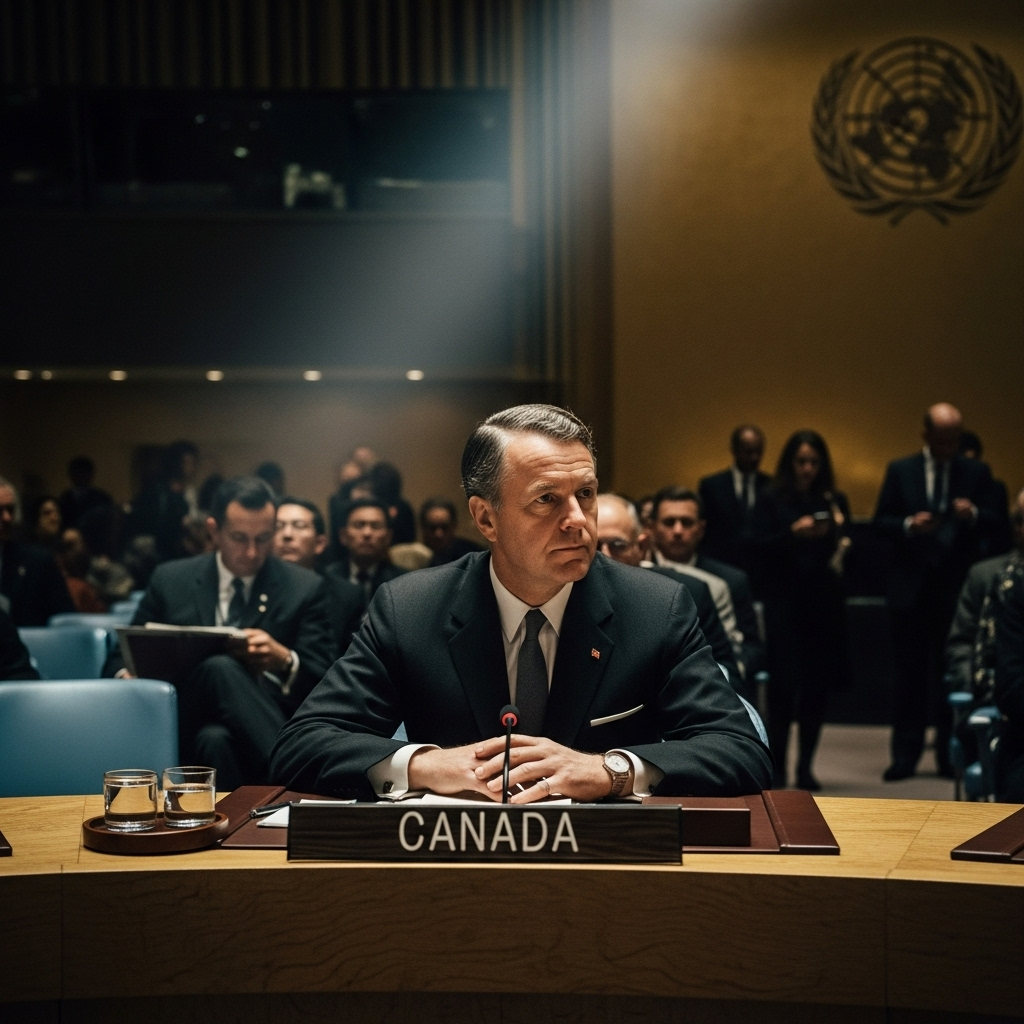
A Legacy of the “Honest Broker” Role
Canada’s traditional foreign policy identity was forged in the post-war era, most famously by then-External Affairs Minister Lester B. Pearson during the 1956 Suez Crisis. His Nobel Peace Prize-winning effort to create a UN peacekeeping force cemented Canada’s reputation as a constructive, impartial mediator—an “honest broker.” This legacy has been a cornerstone of Canadian diplomacy for decades.
This approach was often applied to the Israeli-Palestinian file. While maintaining friendly relations with Israel, past governments sought to be a trusted partner for both sides, contributing to peace processes and providing significant humanitarian aid to Palestinians. The goal was to maintain credibility with all parties, allowing Canada to play a constructive role that a more partisan power could not.
However, recent decades have seen this traditional stance challenged. Some political shifts have favoured a more explicitly pro-Israel policy, aligning Canada more closely with the United States’ approach. This move has been celebrated by some as a principled stand with a key ally but lamented by others as an abandonment of Canada’s unique and valuable role as a balanced international voice. The current foreign minister operates in the shadow of these dueling legacies.
How the Foreign Minister Navigates Modern Pressures
The balancing act is not merely academic; it is influenced by intense and often contradictory pressures both at home and abroad.
Domestically, the foreign minister must answer to a diverse Canadian public. Vocal and politically active Jewish and Palestinian-Canadian communities advocate passionately for their perspectives. Furthermore, the issue is a fault line in Canadian politics, with different parties adopting distinct tones and policies. A policy perceived as too critical of Israel can alienate key voter blocs, while a policy seen as insufficiently supportive of Palestinian rights can draw protests and condemnation from civil society groups and other constituencies.
Internationally, the pressures are just as acute. As a member of the G7, Canada’s alignment with its allies, particularly the United States, is a constant consideration. Washington’s policy on Israel often creates a powerful gravitational pull. Simultaneously, Canada’s multilateral commitments at the United Nations place it alongside a global majority that is often critical of Israeli policies like settlement construction. When a resolution on Palestinian statehood comes to a vote, the foreign minister must decide: vote with the US and Israel, or vote with the vast majority of UN member states? Each choice has diplomatic consequences.
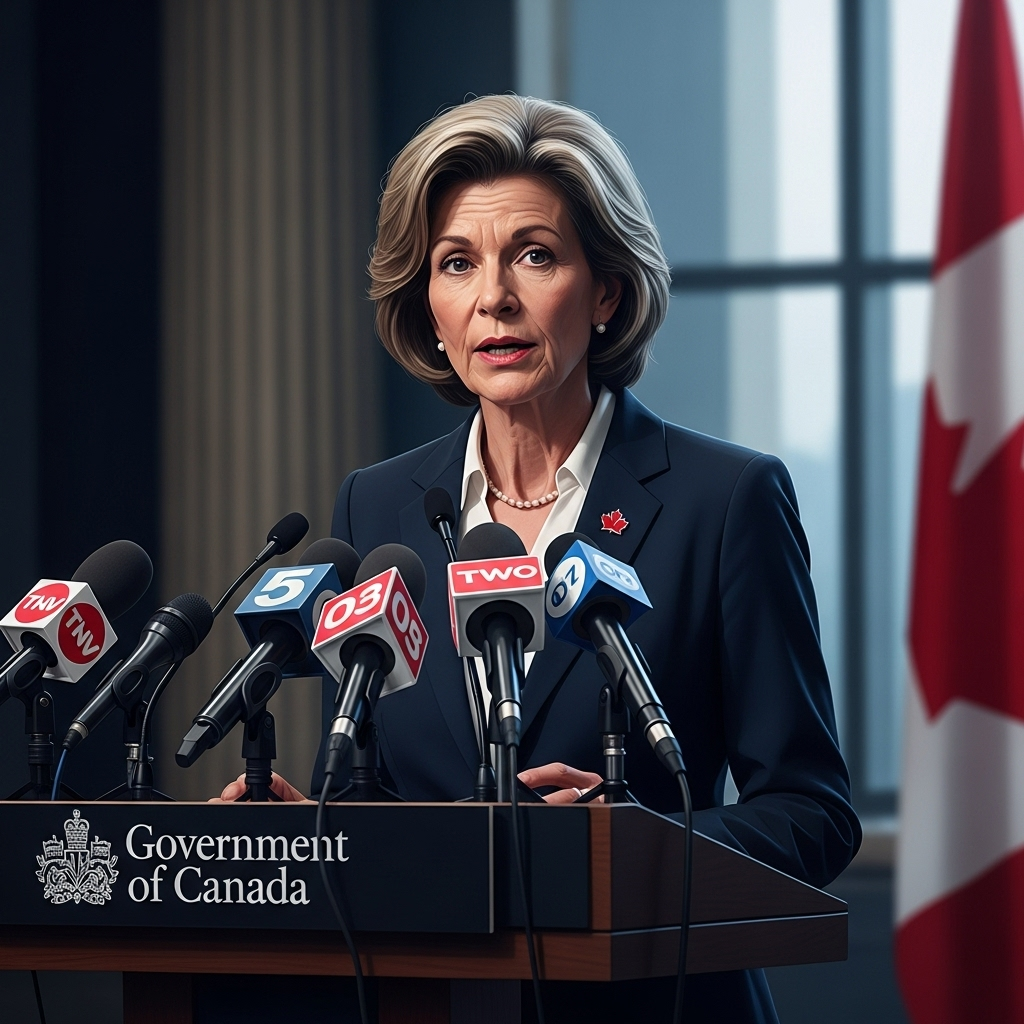
Charting a Course: The Current Stance
The current government’s approach often appears to be an attempt to thread the needle. The foreign minister will typically issue statements that try to address both sides of the core question. For instance, an announcement of humanitarian aid for Gaza will often be paired with a strong condemnation of Hamas and a reaffirmation of Israel’s right to defend itself.
Key policy actions offer more concrete clues:
- UN Voting Record: Canada’s votes at the UN General Assembly are closely scrutinized. While often voting against resolutions singling out Israel, the current government has occasionally shifted, for example, by supporting resolutions that affirm the Palestinian right to self-determination, marking a subtle change from previous patterns.
- Funding for UNRWA: The decision to restore and maintain funding for the UN Relief and Works Agency for Palestine Refugees (UNRWA) signals a commitment to humanitarian principles, even when the agency is criticized by Israel.
- Settlement Language: Official statements consistently refer to Israeli settlements as a violation of international law and a “serious obstacle to peace.” This is a clear adherence to long-standing official policy, but the emphasis and frequency of these statements can vary.
The result is a policy of “strategic ambiguity.” It attempts to keep Canada in conversation with all sides, preserving the potential for a constructive role while managing the significant domestic and international political pressures. Critics, however, argue this ambiguity can be interpreted as indecisiveness, undermining Canada’s influence.

The Unanswered Question: What Comes Next?
Ultimately, Canada’s “1 Big Israel Policy Question” is never permanently answered. It is posed and re-posed with every regional development. The role of the foreign minister is less about making a final choice between being an ally or an arbiter, and more about managing the persistent tension between these two poles.
The path forward will continue to be a tightrope walk. Maintaining this delicate balance requires immense diplomatic skill and a clear understanding of what Canada truly wants to achieve in the Middle East. As global dynamics shift, the pressure to choose a more definitive path will only grow, ensuring this will remain the most challenging and consequential file on any Canadian foreign minister’s desk.


