
‘Block Everything’ Protests: France Arrests Over 100
Tensions have boiled over in France as nationwide demonstrations, dubbed the ‘block everything’ protests, led to significant clashes with law enforcement. Authorities confirmed that over 100 individuals have been arrested as protesters escalated their actions, bringing key transportation routes to a standstill.
The movement, a volatile coalition of farmers, transport workers, and climate activists, aims to paralyze the nation’s economy to force government concessions on a range of issues, from agricultural import policies to fuel taxes and environmental regulations. The Interior Ministry has vowed a firm response to maintain public order, setting the stage for a protracted conflict.
Table of Contents
What Are the ‘Block Everything’ Protests?
The “Tout Bloquer” or ‘block everything’ protests are a widespread, decentralized series of demonstrations that have erupted across France. The movement lacks a single leader but is unified by a deep-seated frustration with economic pressures and what participants see as government inaction. The core grievances vary by group, creating a powerful, if somewhat unstable, alliance.
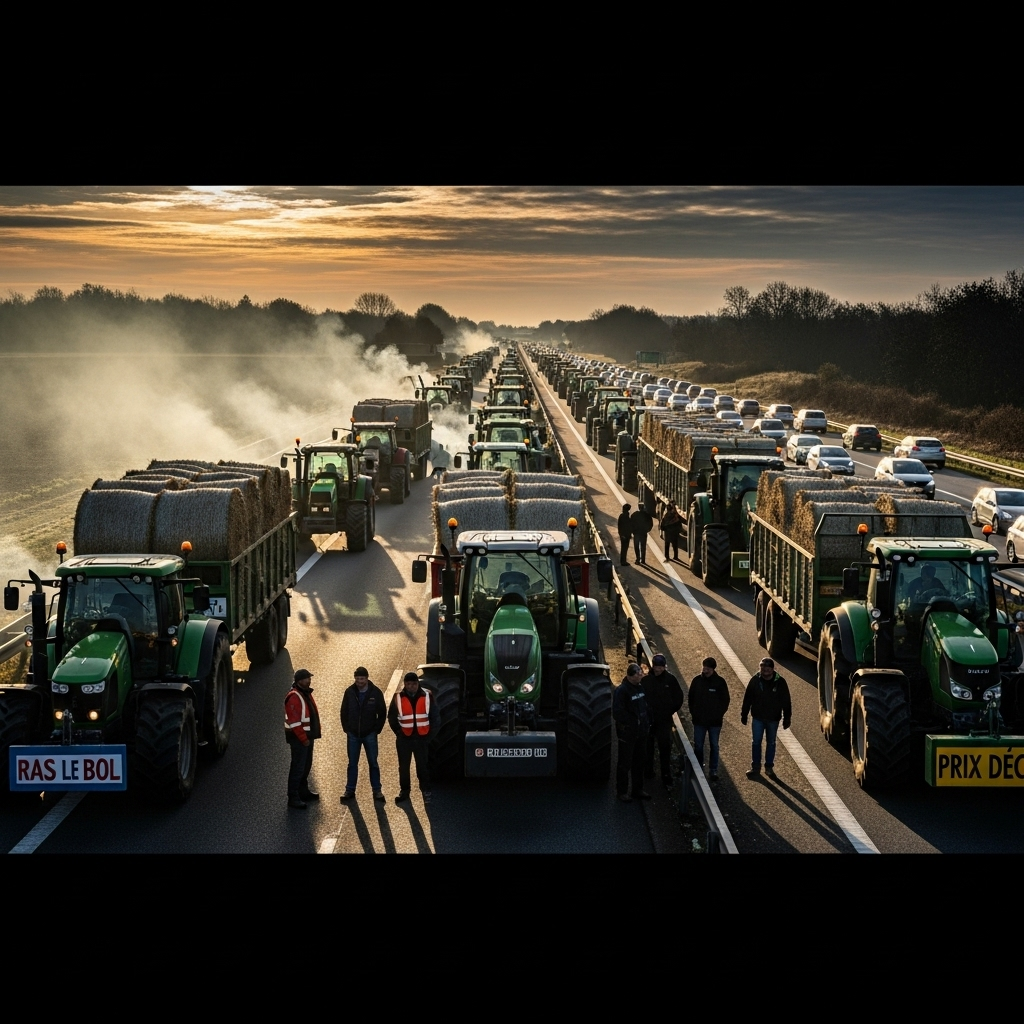
Farmers: At the heart of the movement are agricultural workers who claim they are being driven out of business by a combination of low prices for their produce, rising operational costs, and unfair competition from cheaper imports that do not meet France’s strict environmental and labor standards. They are demanding protective tariffs and a fundamental reform of the EU’s Common Agricultural Policy. For more background, see our deep dive into the farmers’ demands.
Transport Workers: Truckers and logistics personnel have joined the fray, protesting high fuel taxes and new regulations they argue make their jobs untenable. Their participation is critical, as their vehicles and expertise are central to the strategy of blockading major highways and distribution centers.
Climate Activists: In a surprising twist, some environmental groups have joined the protests, not in opposition to the farmers, but in solidarity against unregulated global trade. They argue that importing goods from countries with lax environmental laws undermines France’s own climate goals and effectively “exports” pollution.
This coalition’s unified goal is to create enough economic pain to force the government to the negotiating table with meaningful proposals. Their slogan, “Block Everything,” is a literal description of their tactics.
Escalation in Major Cities: A Siege Mentality
The protests, which began with sporadic roadblocks in rural areas, have now escalated to target France’s economic nerve centers. In recent days, convoys of tractors and trucks have converged on major cities, leading to significant disruption and the arrests of over 100 individuals.
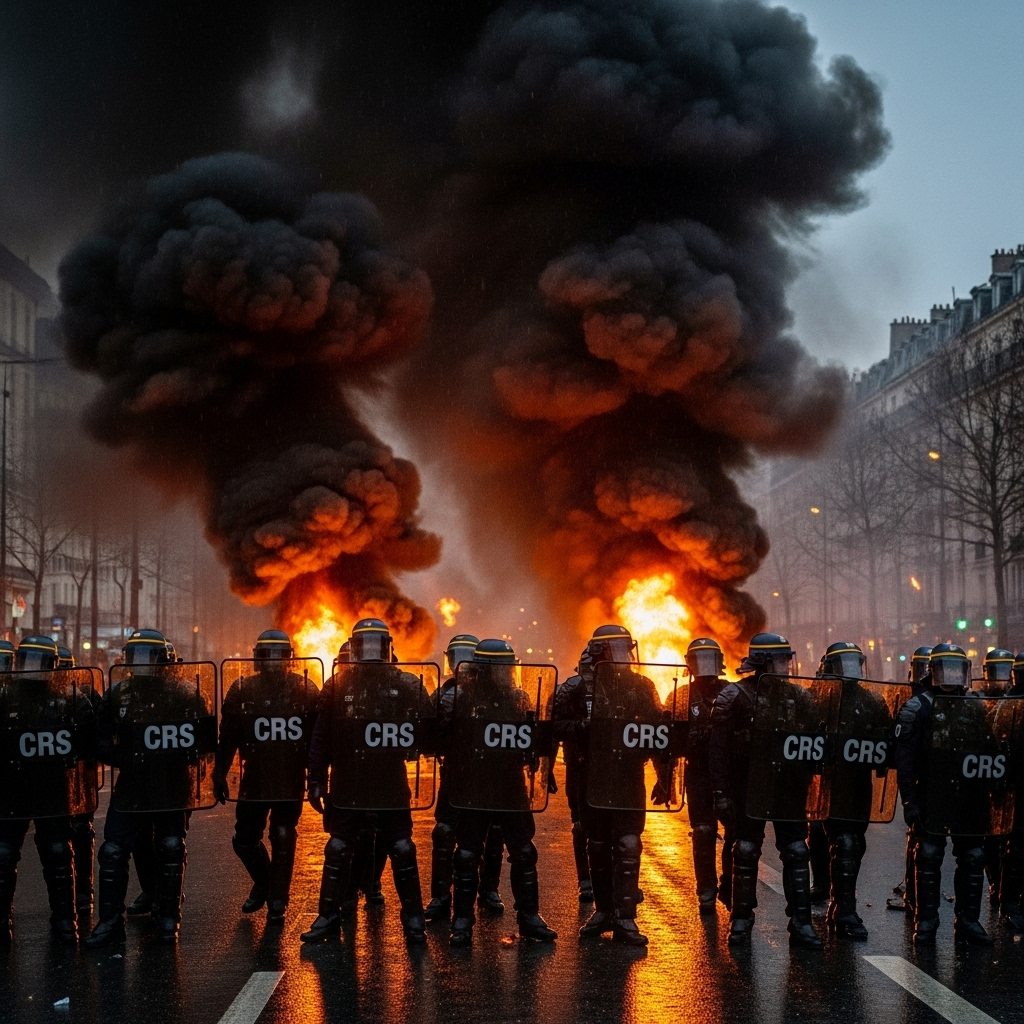
In Paris, protesters have attempted to establish a “siege,” blocking several key motorways (autoroutes) leading into the capital. The A1, A4, and A6 have all seen major blockades, causing miles-long traffic jams and forcing commuters onto overwhelmed public transport. Gendarmes have been deployed in force, using tear gas and heavy machinery to clear some routes, but protesters have proven agile, shifting their blockades to new locations.
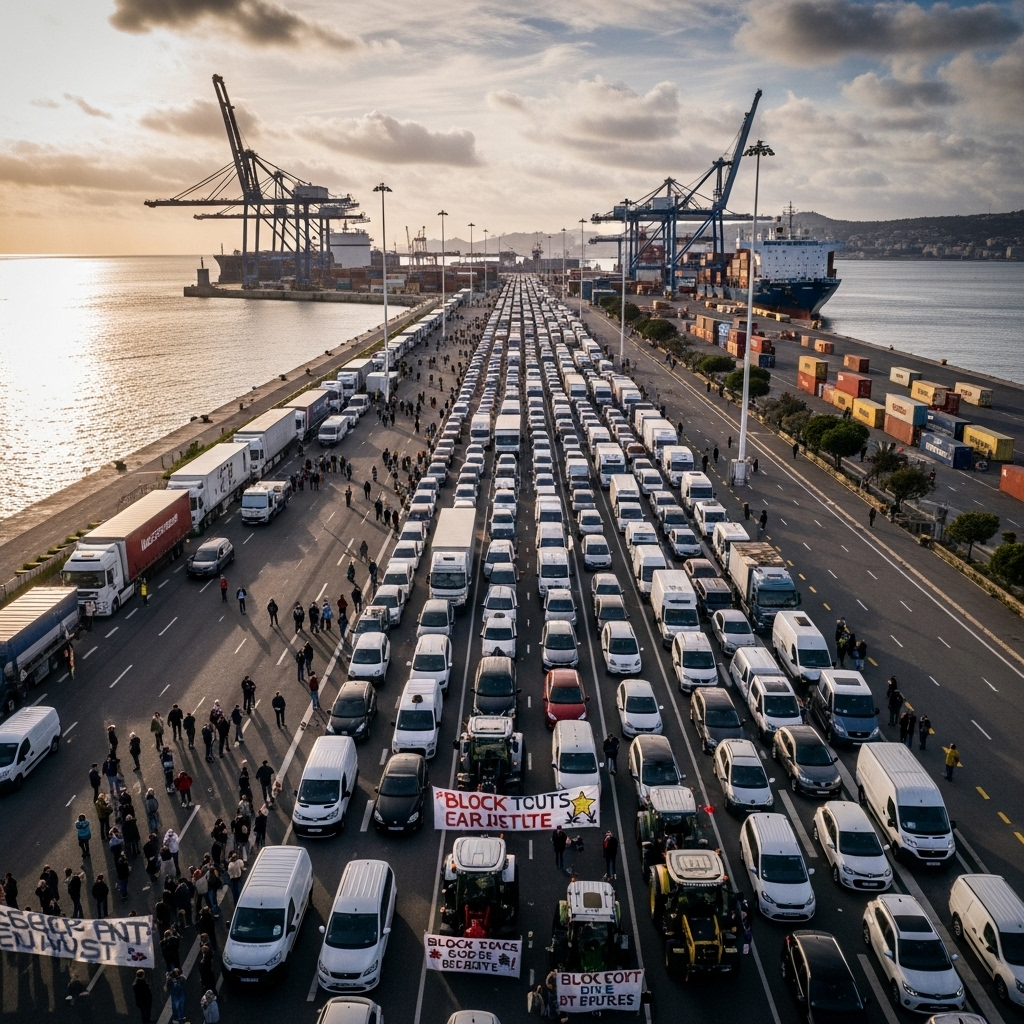
In Marseille, the country’s largest port has been a primary target. Protesters have blocked access roads, preventing trucks from entering or leaving the port complex. This has had an immediate impact on supply chains, with fears of shortages of certain imported goods if the blockade continues. More than 35 arrests were made in the Marseille region alone after demonstrators clashed with police.
Similar scenes have played out in Lyon, Bordeaux, and Lille, where strategic roundabouts, bridges, and access points to industrial zones have been occupied. The protesters’ coordination, often using encrypted messaging apps, has made it difficult for authorities to anticipate their next move.
Government’s Stance and Public Reaction
The French government, led by President Emmanuel Macron, is walking a tightrope. Interior Minister Gérald Darmanin stated in a press conference that while the “right to protest is sacred,” the “right to work and move freely must be guaranteed.” He warned that acts of “unacceptable violence or degradation” would be met with a zero-tolerance policy.
“We hear the anger, but chaos is not a solution,” Darmanin declared. “Over 100 arrests have been made, and we will not hesitate to make more to restore order.”
Public opinion, a crucial factor in French social conflicts, remains deeply divided. Polls suggest a majority of the public feels sympathy for the farmers’ core complaints. However, this support is being tested as the disruptions from the ‘block everything’ protests affect daily life. Many citizens are frustrated with fuel shortages, empty supermarket shelves, and the inability to get to work.
The government has promised a new package of aid for farmers and has sent ministers to meet with union representatives. However, the protesters have so far dismissed these overtures as insufficient, demanding systemic change rather than temporary financial relief. For an official perspective, the French Interior Ministry’s website provides regular updates on the security situation.
Economic Impact and an Uncertain Future
The economic cost of the blockades is already mounting. The French National Federation of Road Transport estimates the daily losses for their sector alone are in the tens of millions of euros. Industries from retail to manufacturing are reporting severe supply chain disruptions. Perishable goods are rotting in trucks and warehouses, representing a total loss for many agricultural producers.
The key question now is how long the movement can sustain its momentum and how the government will ultimately respond. The arrests could either intimidate protesters into submission or galvanize them further, turning the arrestees into martyrs for the cause. The coalition of farmers and activists is also fragile; their long-term goals differ significantly, and government negotiators may try to exploit these divisions.
If a resolution is not found quickly, the ‘block everything’ protests could have a lasting impact on the French economy and President Macron’s political authority. The government is under immense pressure to find a solution that appeases the protesters without being seen as capitulating to disruptive tactics, a challenge that has defined French politics for decades.
As the standoff continues, the nation watches with bated breath. The coming days will be critical in determining whether France descends further into chaos or finds a path toward a fragile peace.
“`


