Slightly Demented Designs: 7 Wild Looks from NYFW
New York Fashion Week has always been a crucible for creativity, a place where the wearable meets the wonderfully weird. But this season, the line between avant-garde and absurd was gloriously blurred. We saw a wave of slightly demented designs that challenged conventions, provoked thought, and, frankly, made us gasp. These weren’t just clothes; they were theatrical statements, walking art installations that redefined the very essence of couture.
From bio-textiles that seemed to breathe to accessories with a mind of their own, this year was less about trends and more about telling wild, surrealist stories. Forget quiet luxury; this was about loud, unapologetic, and beautifully bonkers expression. Let’s dive into the seven looks that are still living in our heads, rent-free.
Article Contents
1. Nocturna’s “The Weeping Chandelier”
Opening their show in near-total darkness, designer Nocturna sent a single model down the runway in what can only be described as a wearable, weeping chandelier. The “dress” was a chaotic cage of rusted wires and mismatched crystal pendants, all tangled together. Embedded within were dozens of flickering LED bulbs programmed to mimic dying gas lamps.
The effect was both haunting and mesmerizing. As the model moved, the crystals chimed a discordant melody, and the lights would sputter and dim. It was a commentary on decaying opulence and fleeting beauty, a piece that was utterly impractical but emotionally resonant. It wasn’t meant for a gala, but for a gallery. This was performance art, proving that fashion’s purpose can transcend mere clothing.
2. Mundane’s “Suburban Camouflage”
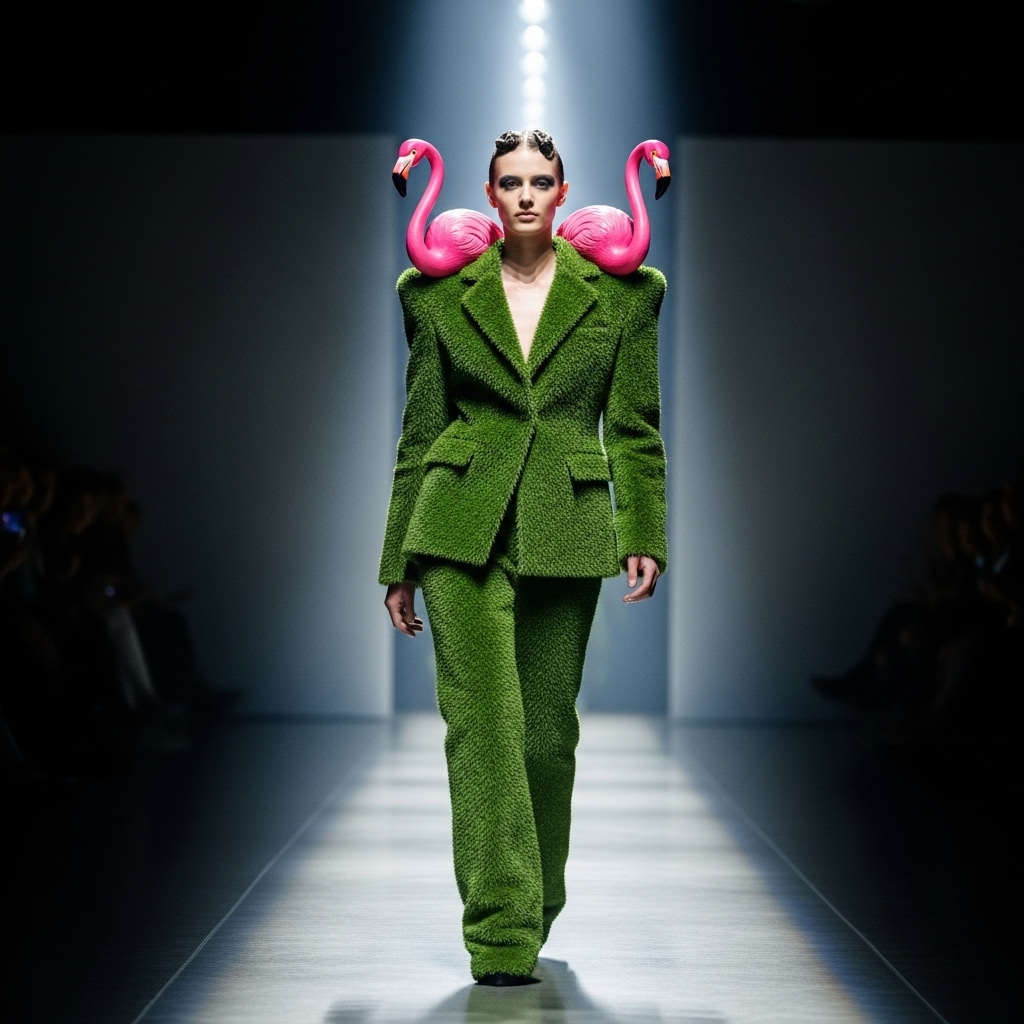
At the other end of the spectrum was the shockingly satirical collection from Mundane. Their standout piece was a two-piece suit and matching hat crafted entirely from hyper-realistic astroturf. The tailoring was impeccable, but the material was pure kitsch. The crowning touch? A pair of plastic pink flamingos were affixed to the shoulders like military epaulets.
The look was a hilarious critique of suburban conformity and the lengths we go to maintain a “perfect” facade. It was one of the most photographed moments of the week, a perfect blend of high-fashion skill and low-brow humor. While you probably won’t see it at your next board meeting, it was a genius example of how slightly demented designs can make a powerful social statement.
3. Glitch’s “Digital Ghost in the Machine”
Tapping into our collective digital anxiety, the designer Glitch presented a collection that looked like a computer error brought to life. The most striking look was a multi-layered gown of iridescent organza and sheer tulle. But woven into the fabric were flexible micro-LED screens displaying corrupted JPEG images, error 404 messages, and fractured lines of code.
As the model walked, the gown shimmered and shifted, creating a “glitching” effect in real-time. It was disorienting and beautiful, a physical manifestation of our often-broken relationship with technology. It was a clever, forward-thinking concept that felt incredibly timely, making it one of the most innovative designs of this NYFW season.
4. Luggage & Co.’s “The Anxious Traveler”
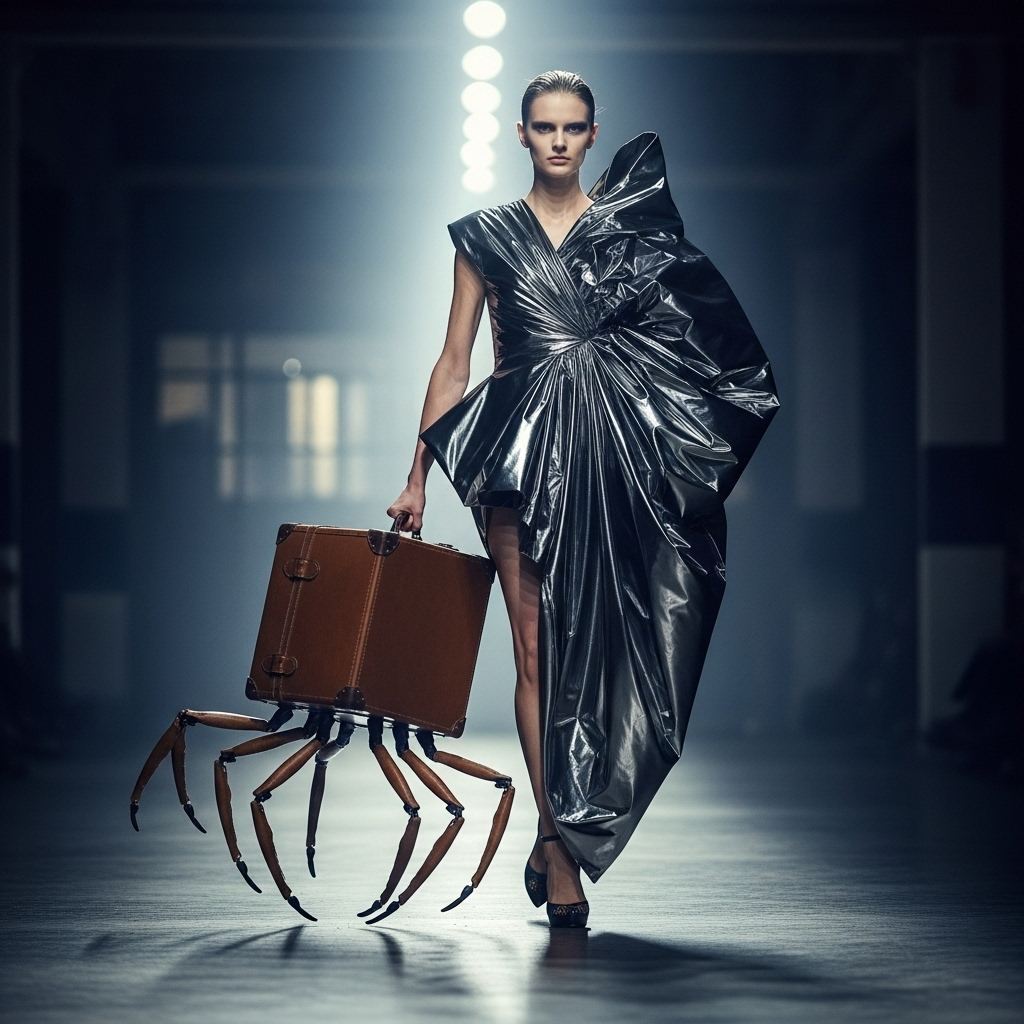
Proving that accessories can be the main event, the luxury brand Luggage & Co. stole the show without focusing on the clothes at all. Their model wore a simple, severe black trench coat and sunglasses. The focus was on what she was carrying: a vintage leather suitcase that had a life of its own.
Outfitted with cleverly hidden animatronics, the suitcase’s small, spidery legs would periodically emerge and try to scuttle away from the model, who had to wrestle it back into submission. It was a bizarre, darkly comedic performance piece about emotional baggage. The audience was captivated, laughing and gasping as the sentient luggage made another escape attempt. It was a bold risk that paid off, cementing the brand as a true innovator.
5. Terra Firma’s Unforgettable, Slightly Demented Designs
Leaning heavily into the bio-couture movement, Terra Firma’s collection was both groundbreaking and vaguely unsettling. The finale piece was a form-fitting bodysuit that appeared to be made of a living, breathing mycelium network. Delicate, pale mushroom growths sprouted organically from the shoulders, hem, and a magnificent headpiece.
The designer explained that the garment was cultivated, not sewn, over a period of months. It was a true fusion of nature and fashion, a look that was literally alive. These slightly demented designs pushed the boundaries of sustainable fashion into a new, weird, and wonderful territory. It posed the question: what if our clothes were living organisms we had to care for? This was a concept that felt more sci-fi than runway, reminiscent of our previous season’s review of surrealist fashion.
6. Grimms’ “Post-Apocalyptic Breakfast”
What would Holly Golightly wear after the world ends? Designer Grimms offered a brutalist answer. They took the iconic “breakfast at Tiffany’s” silhouette—a simple, elegant black gown—and absolutely destroyed it. The silk was artfully ripped, stained with what looked like soot, and singed along the edges.
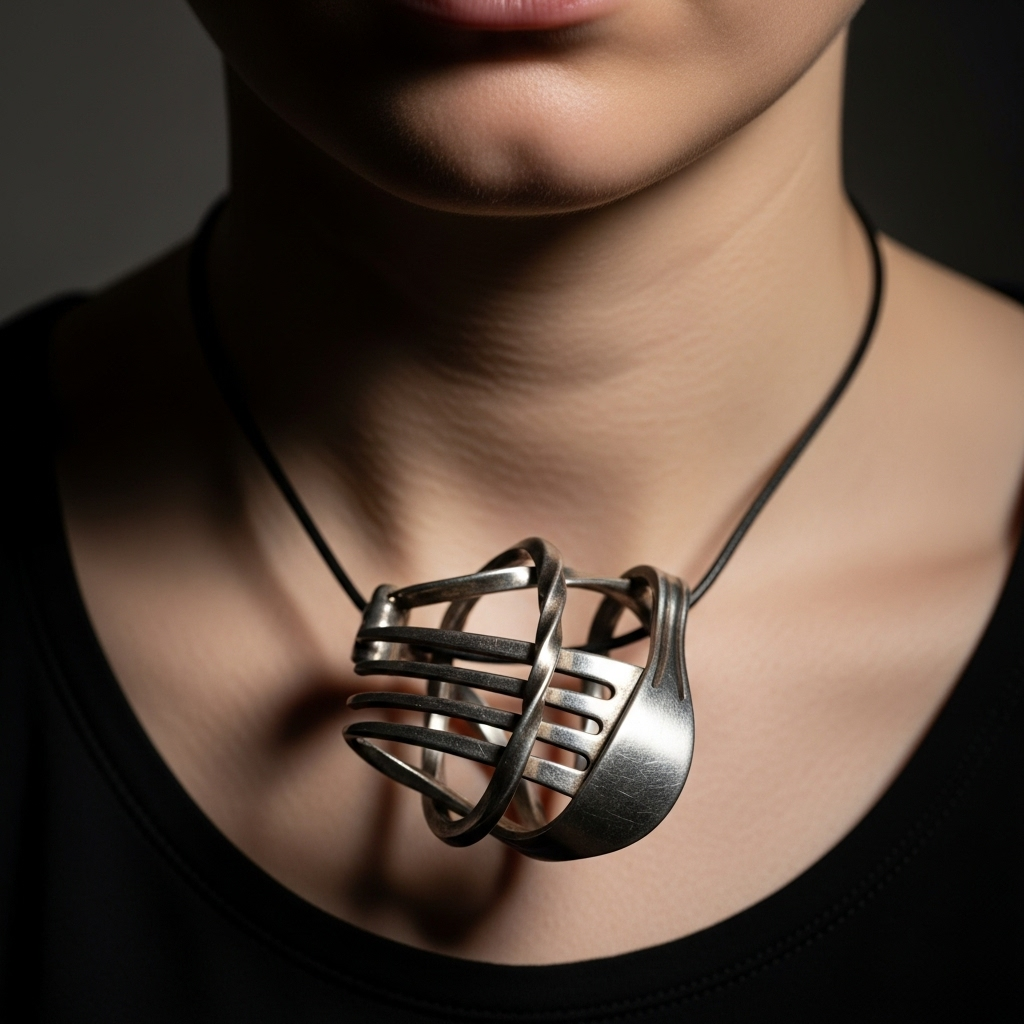
But the genius was in the jewelry. The model was adorned with a necklace, bracelets, and earrings made from melted, warped, and repurposed silverware. A fork’s tines were twisted into a sharp-edged choker, while spoons were hammered into brutalist cuffs. It was a powerful statement on survival and the transformation of everyday objects into armor. It was gritty, tough, and strangely glamorous.
7. Viscera’s “Anatomical Anomaly”
Perhaps the most intellectually challenging collection came from Viscera. Known for their biological themes, this season they presented a flowing, floor-length silk gown in a delicate blush tone. Upon closer inspection, the pattern revealed itself to be a photorealistic print of human internal organs, rendered with scientific precision but scattered in all the wrong places.
A beautifully illustrated heart was printed on the sleeve, the intricate webbing of the lungs adorned the train, and the winding path of the intestines created a strange new kind of waistline. It was grotesque yet stunning, forcing the viewer to confront the beautiful, messy reality of the bodies beneath the clothes. The design was deeply unsettling and profoundly beautiful, a perfect encapsulation of the “slightly demented” ethos that made this NYFW so truly unforgettable.
“`