
world cup onside/offside: 2 big stories for USMNT & Messi
Few rules in sports generate as much debate, celebration, and heartbreak as the offside rule in soccer. When it comes to the biggest stage, the world cup onside/offside decisions become legendary moments etched in history. The introduction of Semi-Automated Offside Technology (SAOT) in Qatar 2022 has only added a new layer of precision and controversy. From game-changing calls for the USMNT to pivotal moments in Lionel Messi’s historic run, the thin line between onside and offside has never been more significant.
In this article, we’ll break down how these crucial calls have shaped recent history and what they mean for the future of the beautiful game.
The USMNT and the Millimeter Margins
For the United States Men’s National Team (USMNT), the World Cup is always a test of grit and execution. In the modern era, it’s also a battle against the high-tech scrutiny of VAR and SAOT. While the USMNT has had its share of historical grievances, the new technology brings a different kind of challenge where goals can vanish in the blink of an eye.
Look no further than the 2022 World Cup group stage match against Wales. Timothy Weah scored a brilliant goal in the 36th minute, a moment of pure joy for American fans. The buildup was perfect, the pass from Christian Pulisic was sublime, and the finish was clinical. For a split second, however, every fan held their breath, waiting for the dreaded VAR check. The lines were drawn, and Weah was deemed just onside, allowing the goal to stand. It was a perfect example of how a world cup onside/offside decision can swing the momentum of a critical match.
However, the team has also been on the wrong end of these calls in other competitions, serving as a warning for future World Cups. Players like Brenden Aaronson and Ricardo Pepi have seen goals chalked off for the slightest of margins. These moments are frustrating, but they highlight the razor-thin line that modern attackers must navigate. For a team like the USMNT, which often relies on quick counter-attacks and runs in behind the defense, mastering the timing of these runs is no longer just a skill—it’s a science.
As we look ahead to the 2026 World Cup on home soil, the USMNT’s success could very well hinge on these moments. Will a Pulisic through-ball find a perfectly-timed run, or will a striker’s shoulder be a millimeter ahead of the last defender? The team’s ability to adapt to the precision of modern officiating will be paramount. Check out our USMNT 2026 Roster Predictions to see who might be leading that line.
How Technology Nearly Derailed Messi’s Destiny
Lionel Messi’s journey to lifting the 2022 World Cup trophy is a story for the ages. It was a campaign filled with drama, passion, and, of course, controversial offside calls. In Argentina’s very first match against Saudi Arabia, the new Semi-Automated Offside Technology played a starring role, and not in a way Argentinian fans enjoyed.
In the first half alone, Argentina had three goals disallowed for offside. One by Messi and two by Lautaro Martínez. The calls were incredibly tight, with one of Martínez’s goals being ruled out because his shoulder was fractionally ahead of the defender. The 3D animated replays, a hallmark of the new system, showed the world just how precise—and unforgiving—the technology is. Argentina would go on to lose that match 2-1 in one of the greatest upsets in World Cup history. For a moment, it seemed like this new, hyper-accurate world cup onside/offside system might be the unexpected villain in Messi’s final quest for glory.
This early struggle highlighted a key debate: has the technology gone too far? While the decisions were technically correct according to the official Laws of the Game, many pundits and fans argued that such microscopic offsides go against the spirit of the rule, which was designed to prevent goal-hanging, not to penalize a well-timed run that is off by a centimeter.
Ultimately, Argentina adapted. They became more cautious with their runs, more precise in their timing. They overcame that initial setback and embarked on their legendary tournament run. The story of Messi’s World Cup is therefore intrinsically linked to the story of offside technology. It serves as a testament to his and his team’s ability to adjust and triumph, even when the rules, and the robots enforcing them, seemed stacked against them.

The Evolution of World Cup Onside/Offside Rulings
The debate around onside and offside is as old as the game itself, but the way we officiate it has changed dramatically. For decades, the final word belonged to the assistant referee’s flag and the center referee’s whistle. This led to countless human errors and “what if” scenarios that are still debated today.
The first major shift came with the Video Assistant Referee (VAR), introduced at the 2018 World Cup in Russia. VAR allowed a team of officials with access to multiple camera angles to review key decisions, including offside in the buildup to a goal. This was a monumental step towards accuracy, but it came with its own problems: long delays, subjective line-drawing on screens, and a sense that the game’s flow was being interrupted.
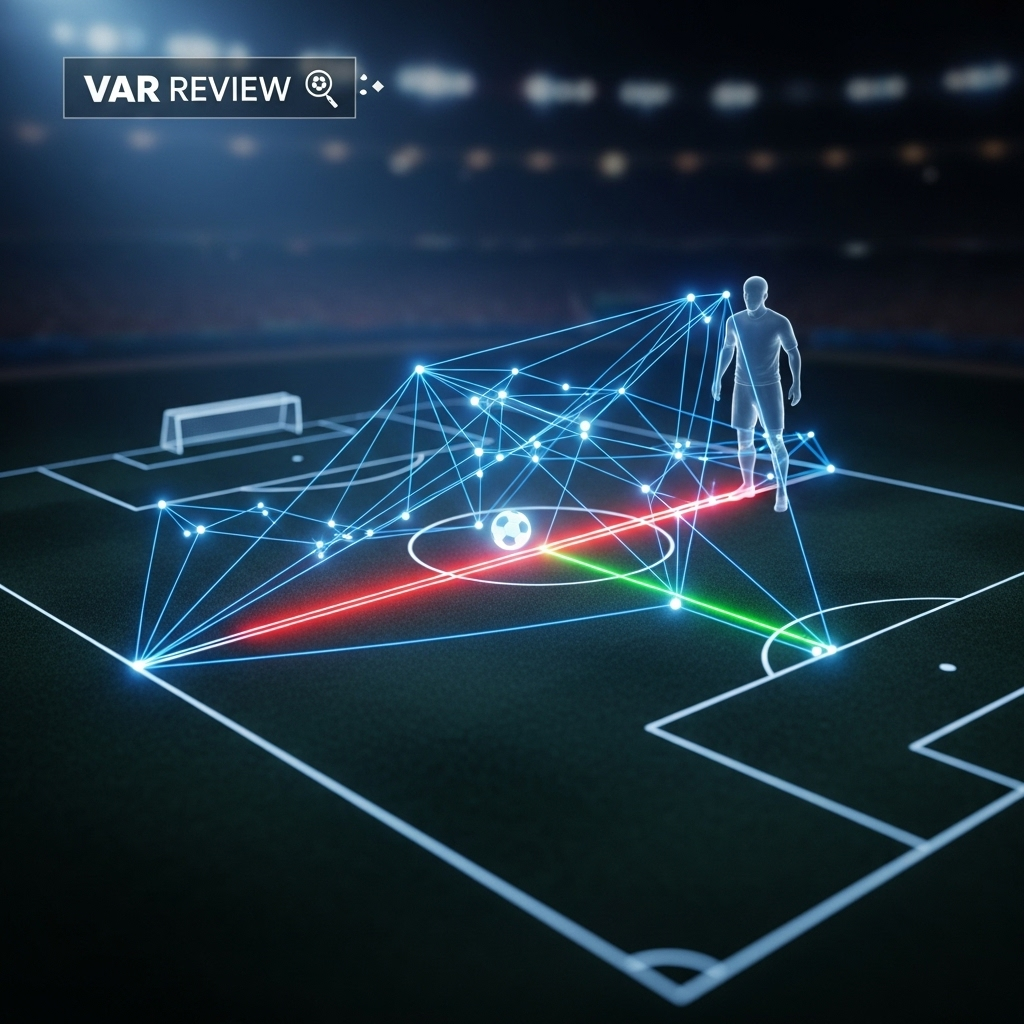
Enter the 2022 World Cup in Qatar and Semi-Automated Offside Technology (SAOT). This system represents the cutting edge of officiating:
- Limb-tracking Cameras: Special cameras mounted under the stadium roof track the ball and up to 29 data points on each player’s body 50 times per second.
- Sensor in the Ball: A sensor inside the match ball relays its position 500 times per second, allowing for an exact determination of the kick point.
- Artificial Intelligence: AI processes this data in real-time. If it detects a potential offside, it sends an alert to the VAR officials.
The VAR officials then validate the proposed decision before the referee is informed. This process is faster than the manual VAR checks of 2018 and provides a 3D animation for fans to see exactly why the decision was made. While it has made world cup onside/offside calls more accurate, as seen in the Messi example, it has also amplified the discussion about whether such precision is truly beneficial for the sport. For a deeper dive, read ESPN’s breakdown of how the technology works.
What’s Next for the Offside Rule?
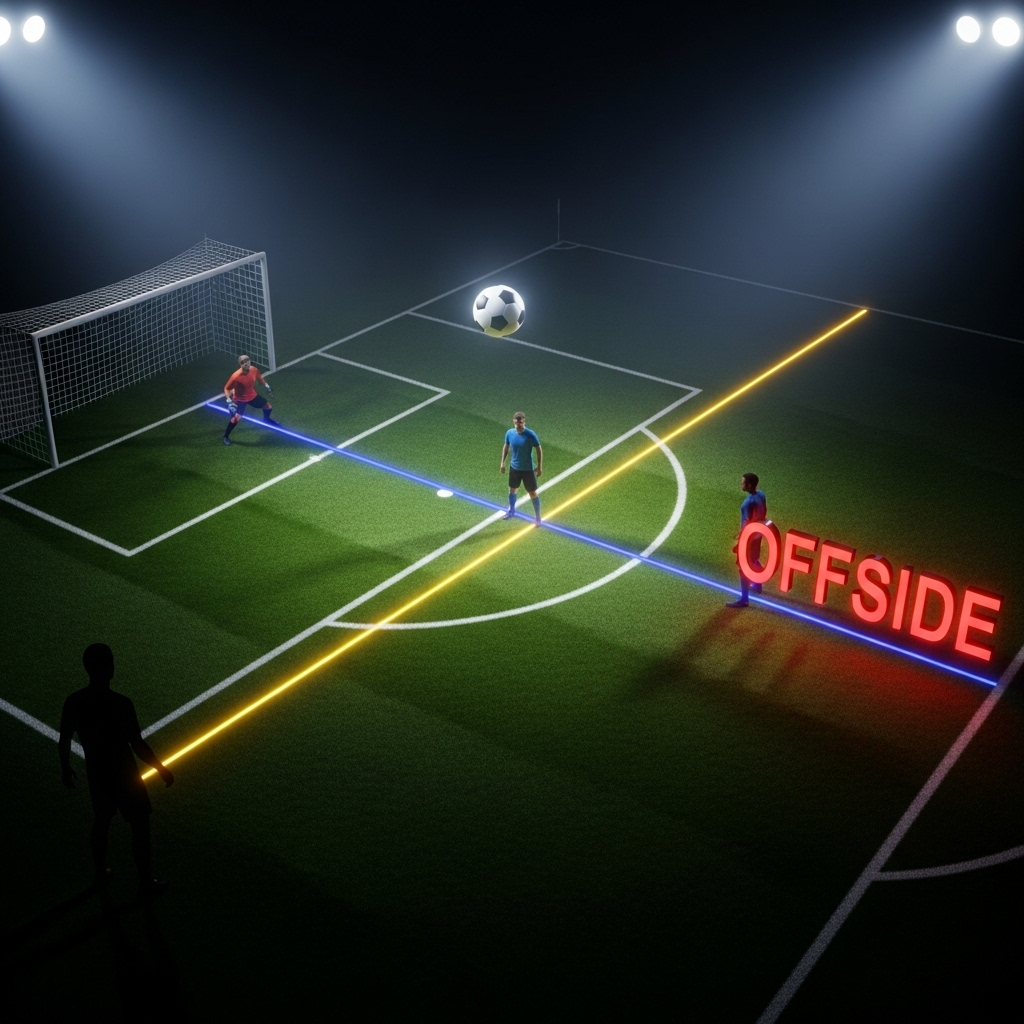
The journey of the offside rule is far from over. The introduction of SAOT has solved the problem of accuracy but has created a philosophical debate. Is the “spirit of the law” being lost? Are we penalizing attackers for being fractions of a centimeter ahead of a defender, something that has no material impact on the play?
In response, influential figures like former Arsenal manager Arsène Wenger, now FIFA’s Chief of Global Football Development, have proposed changes. The “Wenger Rule” suggests that a player should be considered onside if any part of their body that can legally score a goal is level with or behind the second-to-last defender. This is a complete reversal of the current rule, where a player is offside if any part of their body is ahead.
This change, often called “daylight” offside, would give a clear advantage back to the attacker and likely lead to more goals. It would eliminate the frustrating “toe-nail” offsides and could make the game even more exciting. Trials for this new interpretation are already underway in lower leagues in Italy and Sweden. Whether it gets adopted for a future World Cup remains to be seen, but it’s clear that the conversation around the perfect world cup onside/offside rule is still very much alive.
“`


