
‘Block Everything’ Protests: Hundreds Arrested in France
France has been rocked by a wave of intense demonstrations as the ‘block everything’ protests, known locally as “Tout Bloquer,” escalated across the country. The civil disobedience campaign, aimed at paralyzing key infrastructure, has led to significant clashes with law enforcement and resulted in the arrest of hundreds of individuals in major cities like Paris, Lyon, and Marseille.
The movement, which began as a grassroots effort organized on social media, has rapidly gained momentum. Protestors cite a combination of grievances, including the soaring cost of living, controversial environmental regulations, and a general feeling of disconnect from the political establishment. The government has vowed to restore order, leading to a tense standoff that shows no signs of abating.
In This Article
What Are the ‘Block Everything’ Protests?
The ‘block everything’ protests are a decentralized form of civil action characterized by the strategic obstruction of critical infrastructure. Unlike traditional, union-led strikes, this movement lacks a single leadership structure, with local groups coordinating actions through encrypted messaging apps and social media platforms. Their stated goal is to create enough economic and social disruption to force the government to address their demands.
Core issues fueling the demonstrations include:
- Economic Hardship: Protestors are demanding more significant government intervention to combat inflation, particularly concerning fuel, food, and housing costs.
- Policy Opposition: Recent green policies, which include higher fuel taxes and restrictions on older vehicles in urban centers, are seen by many as unfairly penalizing the working and middle classes.
- Political Disenfranchisement: There is a widespread sentiment that the government is unresponsive to the needs of ordinary citizens, pushing policies that benefit corporations and the wealthy.
The name “Tout Bloquer” is a literal command: to block roads, oil refineries, distribution centers, and ports. This tactic aims to hit the economy where it hurts, creating a crisis that politicians cannot ignore. The movement draws parallels to earlier French protest movements, like the “Gilets Jaunes” (Yellow Vests), but with a more explicit focus on complete logistical paralysis.
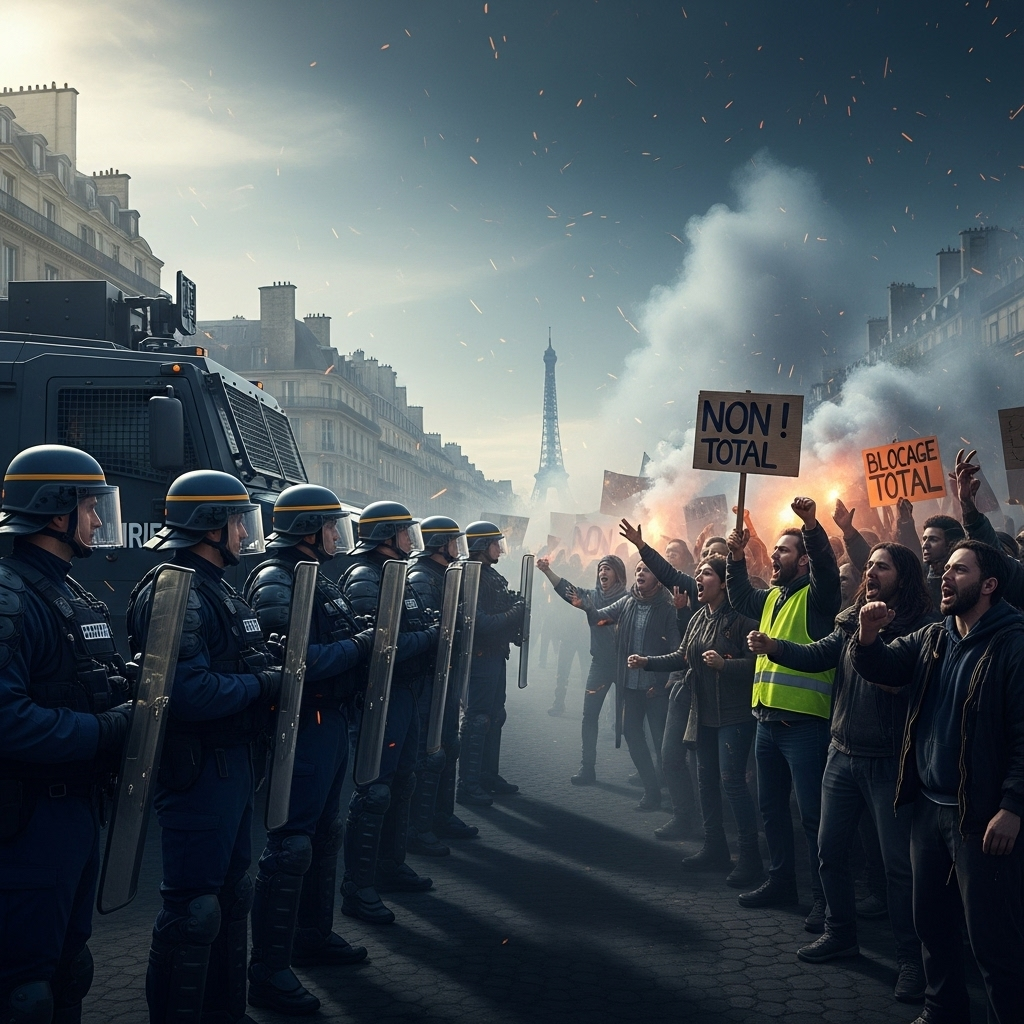
Escalation in Major French Cities
Over the past 72 hours, the protests have intensified dramatically. In Paris, demonstrators attempted to blockade the Périphérique ring road, a vital artery for the capital. This led to violent confrontations with CRS riot police, who used tear gas and water cannons to disperse the crowds. Over 250 arrests were made in the Paris region alone.
In Lyon, protestors successfully blocked access to several major industrial parks and distribution hubs, causing immediate disruptions to supply chains. Local news reported miles-long tailbacks of trucks, with drivers stranded for hours. The Port of Marseille, a critical hub for Mediterranean trade, also faced significant disruptions as activists used small boats and burning barricades to obstruct entry points.
The total number of arrests nationwide has now surpassed 600, according to reports from international news agencies. The tactics have become more confrontational, with some protestors setting fire to tires and pallets to create impassable barriers, further challenging the capacity of law enforcement to manage the situation.

Government Response and Public Reaction
The French government has taken a hardline stance. Interior Minister Gérald Darmanin condemned the violence and disruption, stating, “The right to protest does not mean the right to paralyze the country, to destroy property, or to endanger the lives of our citizens. We will be firm in restoring public order.” Additional police forces have been deployed to key locations to prevent further blockades.
Public opinion remains deeply divided. Polls suggest that while a significant portion of the population sympathizes with the economic grievances behind the ‘block everything’ protests, many are critical of the disruptive methods. Small business owners, in particular, have voiced their frustration, as the blockades prevent both deliveries and customers from reaching them. A recent analysis highlights growing concerns over the protests’ impact on the fragile French economy.
“I understand they are angry,” said one shopkeeper in Toulouse, “but they are hurting people like me, not the politicians in Paris. My business cannot survive this for another week.” This sentiment reflects a growing rift between the movement’s goals and its real-world consequences for everyday people.
The Economic Impact of the Demonstrations
The economic fallout from the ‘block everything’ protests is already significant. The French National Federation of Road Transport (FNTR) has estimated daily losses in the tens of millions of euros due to blocked highways and delayed deliveries. Supermarkets are beginning to report shortages of fresh produce and other goods as supply chains falter.
The blockades pose a direct threat to France’s “just-in-time” logistics model, where companies rely on rapid, predictable deliveries to keep shelves stocked and factories running. Experts from the Organisation for Economic Co-operation and Development (OECD) warn that prolonged disruption could have a cascading effect, leading to temporary factory shutdowns and increased costs for consumers.
Furthermore, the image of a nation in turmoil could negatively impact tourism, a cornerstone of the French economy. With images of clashes and blockades being broadcast globally, potential visitors may choose to postpone or cancel their trips, compounding the economic damage.

What’s Next for the Movement?
The future of the ‘block everything’ protests is uncertain. The government’s strategy of mass arrests and a heavy police presence may deter some participants, but it could also galvanize others, leading to even more determined and potentially violent confrontations. The decentralized nature of the movement makes it difficult for authorities to negotiate or decapitate its leadership.
For the protests to de-escalate, President Macron’s government may need to offer tangible concessions, such as a freeze on new fuel taxes or direct financial aid for low-income households. However, any such move could be seen as rewarding disruptive behavior, potentially encouraging similar movements across Europe.
As France heads into another week, the standoff continues. The protestors remain defiant, while the government is under immense pressure to restore normalcy without appearing to capitulate. The coming days will be crucial in determining whether the ‘block everything’ protests will fizzle out or plunge the country into a deeper crisis.
“`


