
‘Block everything’ protests: Over 300 Arrested in France
France was gripped by widespread chaos on Wednesday as the so-called “‘block everything’ protests” brought key transportation arteries to a standstill, resulting in violent clashes with police and leading to the arrest of over 300 individuals nationwide. The coordinated actions, aimed at causing maximum economic disruption, have plunged the government into a crisis as it scrambles to restore order.
The protests, known in French as “tout bloquer,” saw thousands of demonstrators use vehicles, tractors, and burning barricades to shut down major highways, fuel depots, and distribution centers. The movement, a coalition of farmers, truckers, and citizens angered by new eco-taxes, represents one of the most significant challenges to President Macron’s administration this year.
Article Contents
What Sparked the Latest ‘Block Everything’ Protests?
The catalyst for this latest wave of unrest is a newly enacted government bill introducing a “Green Contribution” tax. This legislation imposes significant levies on diesel fuel used for agricultural machinery and commercial transport, alongside stricter emissions standards for older vehicles. Organizers argue the tax unfairly penalizes rural and working-class communities who rely on their vehicles for their livelihoods.
“This isn’t an environmental policy; it’s a punishment,” said Alain Dubois, a farmer from Normandy who participated in the blockade near Rouen. “They sit in Paris and make decisions that bankrupt us. We have no choice but to block everything until they listen.”
This sentiment echoes the grievances of the famous ‘Gilets Jaunes’ (Yellow Vests) movement, which began in 2018 over fuel tax hikes. Many analysts see the current “‘block everything’ protests” as a spiritual successor, but with a more organized and disruptive strategic focus from the outset. The core philosophy is simple: if the economy stops, the government is forced to act.

A Nationwide Day of Disruption
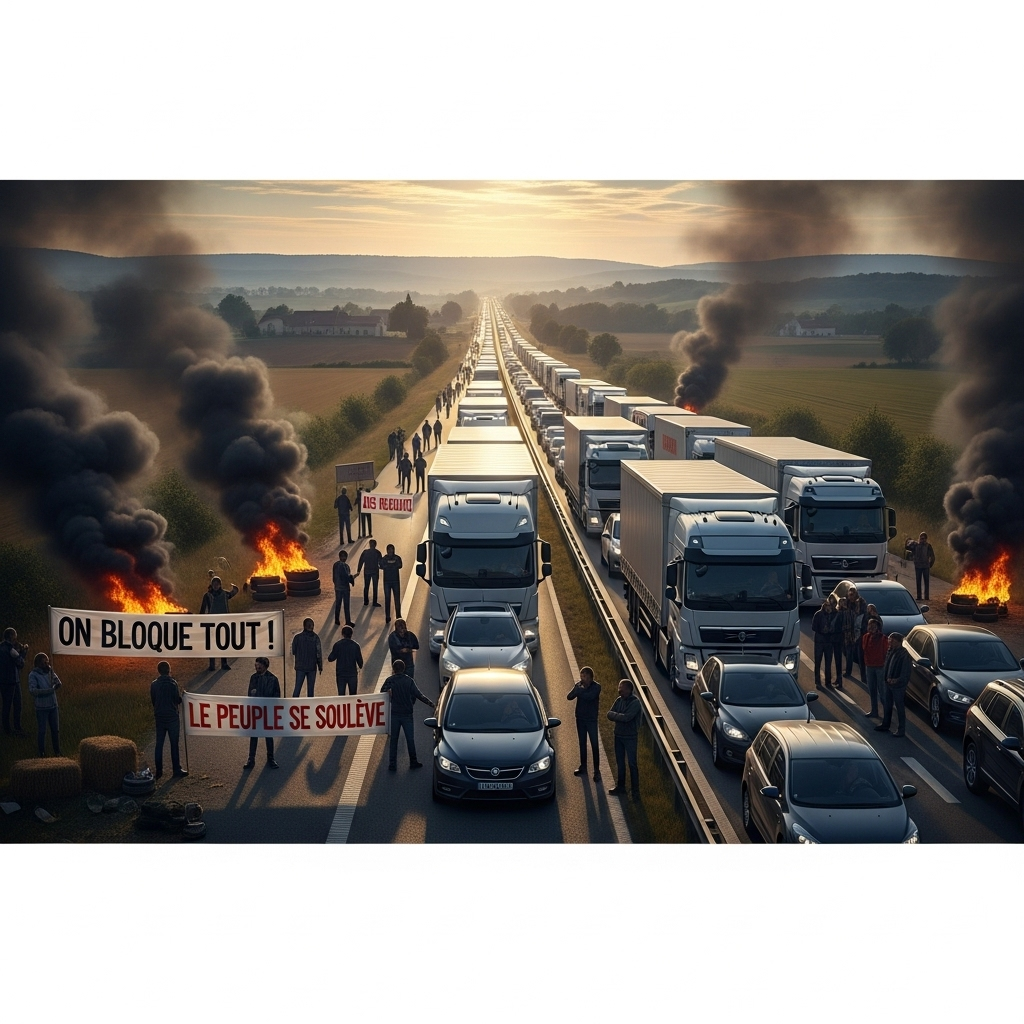
The scale of the disruption was immense and meticulously coordinated. From the early hours of Wednesday morning, convoys of tractors and trucks established “points de blocage” (blocking points) on critical infrastructure. The A1 motorway, the main artery connecting Paris and Lille, was completely impassable for most of the day. Similar scenes played out on ring roads around Lyon, Marseille, and Bordeaux.
In addition to highways, protesters targeted symbols of the global economy. At least seven major Amazon distribution centers were blockaded, preventing deliveries from entering or leaving. In the port city of Le Havre, access to several major oil refineries was cut off, raising concerns about fuel shortages if the “‘block everything’ protests” continue.
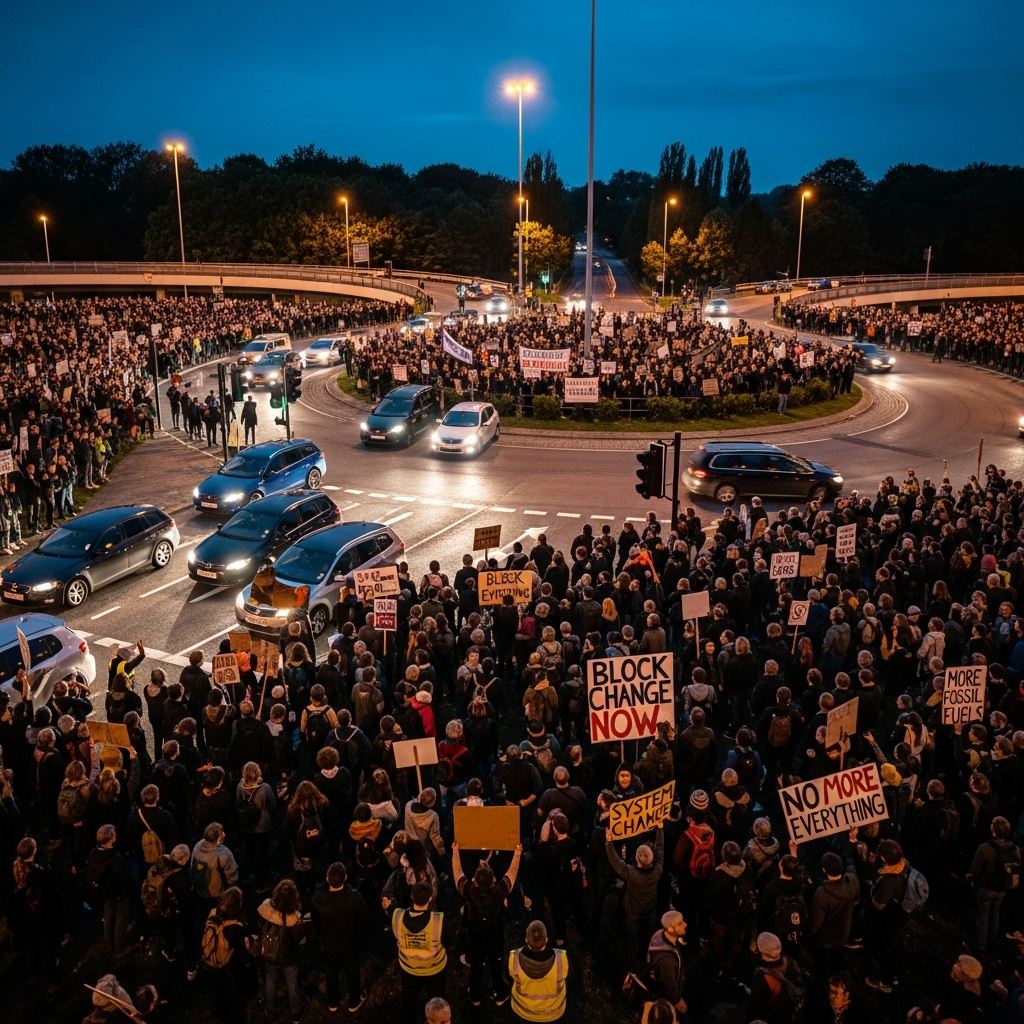
Demonstrators used a variety of tactics, from creating walls of hay bales and tires to slow-moving “snail operations” (opérations escargot) that created miles-long traffic jams. While many blockades were static, some turned confrontational as frustrated motorists attempted to break through, leading to tense standoffs that often required police intervention.
The Government’s Firm Response
The French government, caught off guard by the intensity of the protests, adopted a hardline stance. Interior Minister Gérald Darmanin addressed the nation in the afternoon, vowing to restore public order and condemning the “unacceptable violence and infringements on the freedom of movement.”
Darmanin confirmed that over 320 arrests had been made across the country on charges ranging from obstructing traffic to destruction of public property and violence against law enforcement officers. “Protesting is a right, but paralyzing the country and endangering citizens is not,” he stated. “The state will be firm.”
Thousands of national police officers and gendarmes, including specialized CRS riot control units, were deployed to dismantle the barricades. In Paris and Lyon, officers used tear gas and water cannons to disperse crowds after protesters began setting vehicles and refuse bins alight. The heavy-handed response has drawn criticism from some opposition politicians, who are calling for dialogue instead of confrontation.
Economic Impact and Public Reaction
The economic cost of a single day of “‘block everything’ protests” is estimated to be in the hundreds of millions of euros. The national road haulage federation, FNTR, reported that over 60% of their fleet was either immobilized or severely delayed, causing major disruptions to supply chains for supermarkets, factories, and businesses.
Public reaction remains deeply divided. Opinion polls conducted in the morning showed a slight majority in favor of the protesters’ motivations. However, as the day wore on and images of stranded commuters, closed businesses, and violent clashes dominated the news, patience began to wear thin. “I understand their anger, but I need to get to my job,” one office worker in Paris told a local news channel. “This hurts everyone, not just the government.”
The long-term economic damage is a growing concern. If the blockades become a recurring event, it could severely impact France’s economic stability and investor confidence. You can read more about these challenges in our recent analysis on the French economy.
What’s Next for the Movement?
As of Wednesday evening, police have cleared most of the major blockades, but protest leaders are vowing that this is just the beginning. A spokesperson for the loosely-knit “Action Citoyenne” collective, one of the main organizing groups, has called for another day of action next week if the government does not announce a full withdrawal of the Green Contribution tax.
“Today was a warning shot,” the spokesperson declared in a statement. “The government has two choices: listen to the people or face a country that is completely and permanently blocked. The power is in our hands.”
President Macron’s office has yet to issue a formal response, but he is expected to convene an emergency cabinet meeting on Thursday. The administration is trapped between its climate commitments and a populace increasingly willing to resort to extreme measures to resist policies they deem unjust. The ‘block everything’ protests have drawn a new line in the sand, and how the government chooses to cross it will likely define the political landscape for months to come.
“`


