
‘Block Everything’ Protests: Over 200 Arrested in France
Chaos erupted across major French cities this week as the latest wave of ‘block everything’ protests led to significant travel disruption and the arrest of over 200 individuals. Climate activists, demanding more aggressive government action on environmental policy, brought traffic to a standstill in Paris, Lyon, and Marseille, escalating their campaign of civil disobedience. The French Interior Ministry confirmed the arrests, stating that while the right to protest is protected, endangering public safety and blocking critical infrastructure will not be tolerated.
These demonstrations represent a significant escalation from previous climate marches, with activist groups adopting more confrontational methods to force their message into the national spotlight. As commuters fumed and police mobilized, the question on everyone’s mind is whether this high-stakes strategy will lead to policy change or simply alienate the public.
Table of Contents
- What Sparked the Latest Protests?
- The Tactics Behind the ‘Block Everything’ Protests
- Government Response and Public Reaction
- A Growing Trend in European Activism
What Sparked the Latest Protests?
The immediate catalyst for this new wave of demonstrations appears to be the government’s recently unveiled “Green Transition Bill of 2025.” While touted by officials as a significant step forward, activist groups like Dernier Avertissement (Final Warning) and Extinction Rebellion have condemned it as “woefully inadequate.” They argue the bill relies too heavily on unproven technologies and long-term targets, failing to implement the immediate, drastic emissions cuts that scientists say are necessary.
In a press release, a spokesperson for Dernier Avertissement stated, “We have marched, we have petitioned, and we have been ignored. The government offers us breadcrumbs when our house is on fire. The ‘block everything’ protests are a last resort, a fire alarm for a society that refuses to wake up.” Their demands are clear: an immediate halt to all new fossil fuel projects and a state-funded, rapid transition to renewable energy.
This sentiment follows the latest Intergovernmental Panel on Climate Change (IPCC) report, which painted a grim picture of accelerating climate impacts. The report’s stark warnings have fueled a sense of desperation among activists, who feel that conventional methods of political engagement have failed.
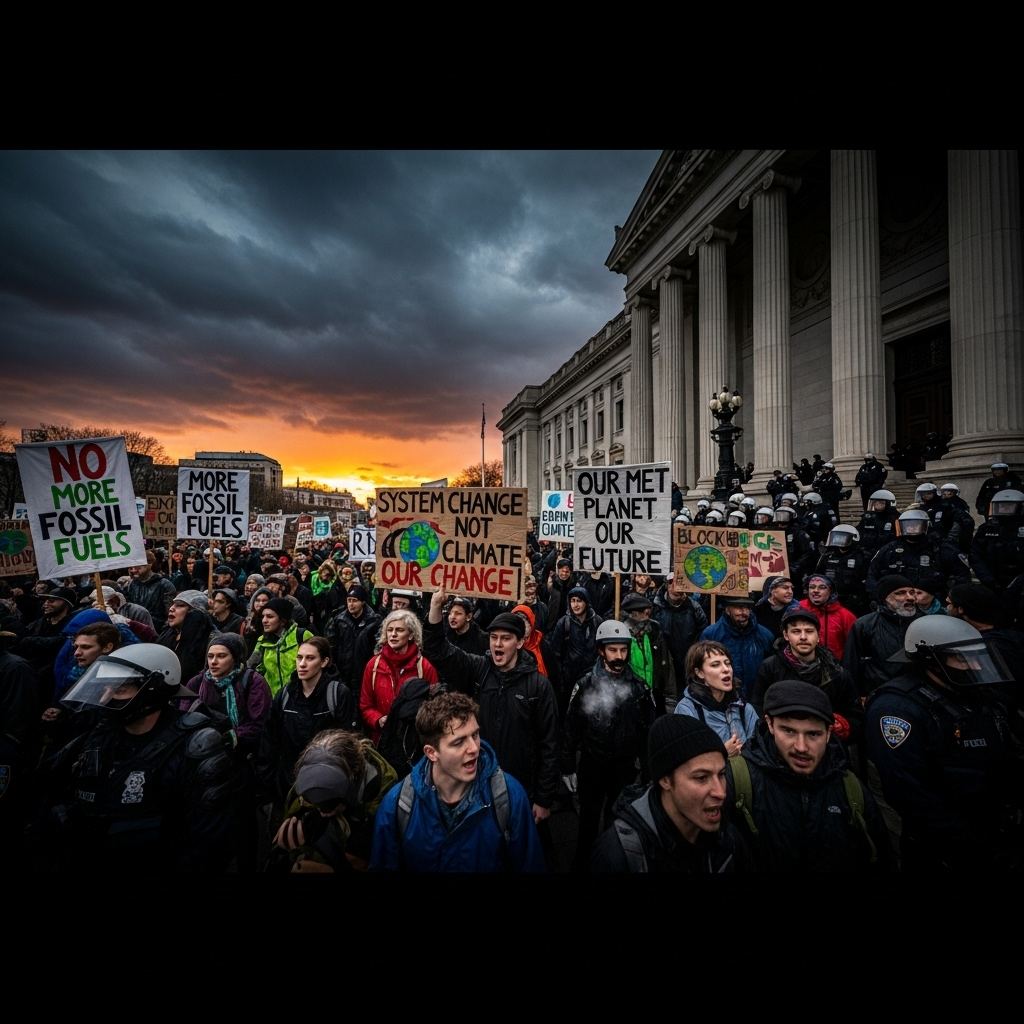
The Tactics Behind the ‘Block Everything’ Protests
The name “‘block everything'” is a literal description of the protestors’ strategy. Coordinated groups of activists, often numbering in the dozens, target critical infrastructure points to cause maximum disruption with minimal personnel. Their tactics are designed to be non-violent but highly disruptive.
Key tactics observed this week include:
- Highway Blockades: In Paris, activists glued their hands to the asphalt of the Périphérique ring road during morning rush hour, causing miles-long traffic jams. Similar actions were seen on major autoroutes near Lyon and Marseille.
- Public Transport Halts: Protestors chained themselves together on train tracks at major hubs, forcing the suspension of regional and high-speed rail services.
- “Swarming”: Groups of cyclists and pedestrians repeatedly cross major intersections, preventing the flow of traffic in city centers.
These actions are a core part of the civil disobedience model employed by the movement. By disrupting the daily economic life of the country, they aim to make it impossible for the government and the public to ignore their demands. The goal, as one activist told a local news channel, is “to create a friction in the system that is proportional to the crisis we are facing.” For more analysis on protest strategies, see our related article on the evolution of climate activism in Europe.
Government Response and Public Reaction
The French government’s response has been firm. Interior Minister Gérald Darmanin condemned the actions as “unacceptable” and “dangerous.” Speaking to the press, he said, “The right to protest does not include the right to endanger lives, block emergency services, and hold the entire country hostage.”
This rhetoric was backed by a swift and forceful police response. Law enforcement agencies were deployed in large numbers to clear the blockades, often using specialized equipment to un-glue activists from roads. The official figures report over 220 arrests on charges including obstructing traffic and endangering public safety. Several activists are expected to face trial, a move the government hopes will deter future actions.
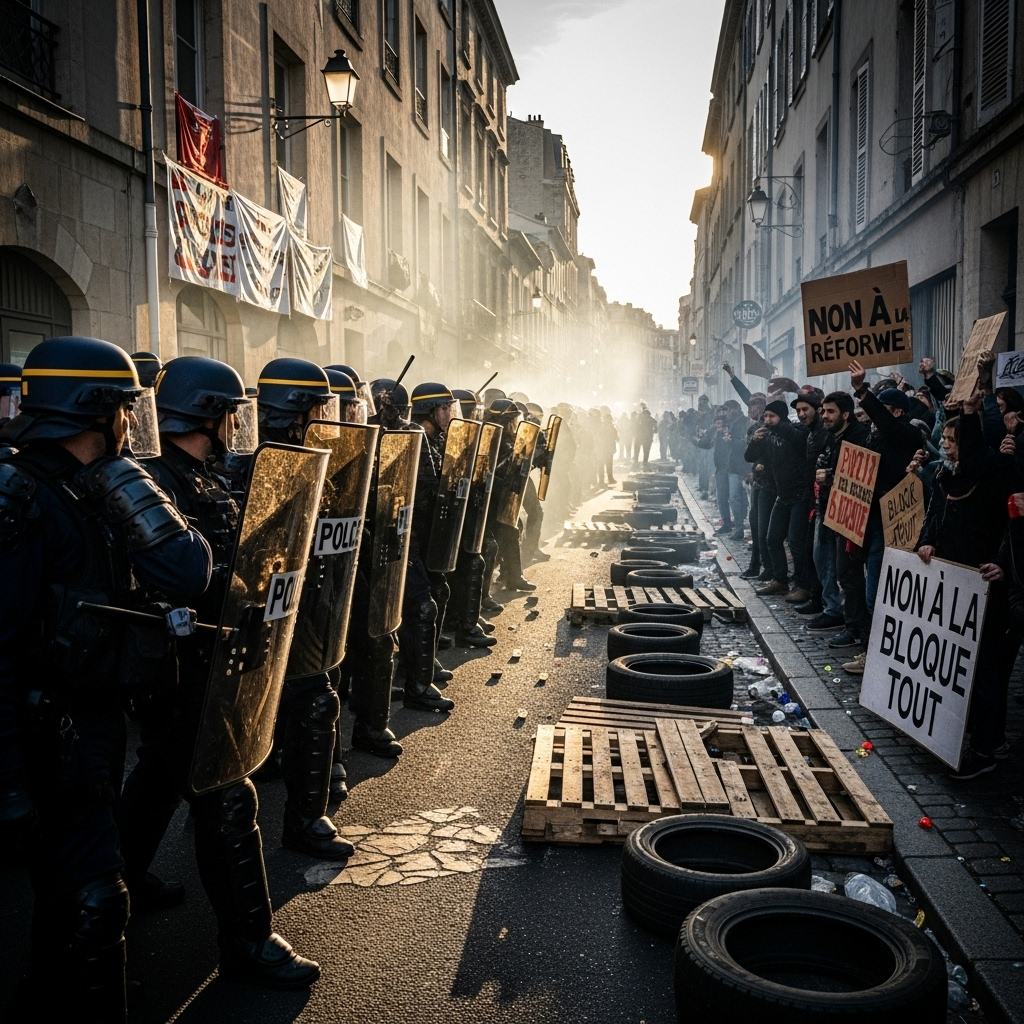
Public reaction is deeply polarized. Videos of frustrated motorists arguing with protestors have gone viral. Many citizens, while sympathetic to environmental concerns, strongly disapprove of the disruptive methods. “I have to get to work. I have to pick up my kids. These people are not winning any allies by making my life impossible,” one Parisian driver commented. However, polls also show a significant minority, particularly among younger generations, who support the activists’ goals and see the disruptions as necessary.
A Growing Trend in European Activism
France is not alone in experiencing these disruptive environmental protests. The ‘block everything’ protests are part of a broader, transnational movement that has seen similar actions in Germany, the United Kingdom, and the Netherlands. Groups like the UK’s “Just Stop Oil” and Germany’s “Letzte Generation” (Last Generation) have employed identical tactics, from blocking highways to targeting famous works of art with soup.
This shift from mass marches to targeted, high-disruption events marks a strategic evolution in the climate movement. Activists believe that the era of polite requests is over. They are now operating under the assumption that only by causing significant economic and social disruption can they force governments to confront the climate crisis with the urgency it requires. You can learn more about the specific policies being debated in our deep dive, French Climate Policy Explained.
Critics, however, warn that this approach could backfire. By alienating the broader public and prompting a harsh state crackdown, the movement risks being marginalized as a radical fringe rather than a mainstream force for change. The latest reports from across Europe show a consistent pattern: arrests are increasing, and public patience is wearing thin.
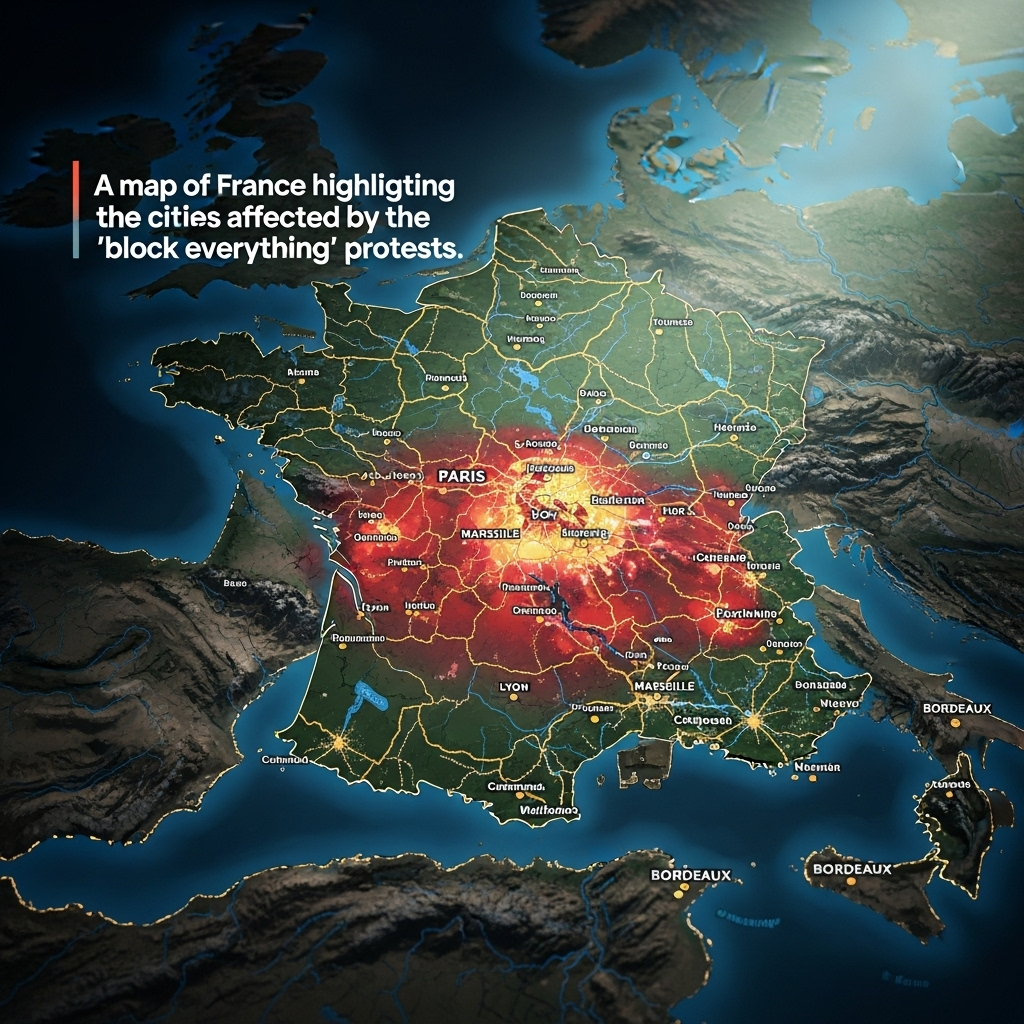
As France cleans up from a week of turmoil, the core conflict remains unresolved. The government is under pressure to maintain public order, while activists are more determined than ever to escalate their actions. The ‘block everything’ protests have successfully captured the nation’s attention, but whether they will ultimately achieve their ambitious goals or crumble under legal and public pressure remains to be seen. The coming months will be a critical test for both the French government’s resolve and the climate movement’s disruptive strategy.
“`


