
‘block everything’ protests: Hundreds arrested in France
Paris, France – Widespread civil disobedience has engulfed France as the “‘block everything’ protests” movement escalated dramatically, leading to the arrest of over 400 individuals across the country. Major highways, distribution centers, and city centers have been brought to a grinding halt by coordinated actions aimed at forcing government concessions on economic and environmental policies.
Understanding the ‘Block Everything’ Protests
The “‘block everything’ protests,” or “tout bloquer” as they are known locally, represent a diverse coalition of citizens, including farmers, students, and workers, united by a shared frustration with the rising cost of living and perceived government inaction on critical issues. Unlike traditional single-issue demonstrations, this movement’s core strategy is maximum economic disruption. Protesters argue that conventional marches and petitions have been ignored, leaving them with no choice but to escalate their tactics.
Their demands are broad but center on several key areas:
- Fuel and Energy Prices: A primary catalyst for the movement is the soaring cost of fuel and household energy, which protesters claim is crippling working-class families.
- Agricultural Policies: Farmers are a significant contingent, protesting against what they see as unfair competition from imports, burdensome environmental regulations, and low sale prices for their produce.
- Pension Reforms: Lingering anger over recent pension reforms continues to fuel the public’s discontent.
- Climate Policy: While some protesters criticize environmental regulations, others are demanding more robust and socially just climate action, arguing current policies disproportionately burden the poor.
This coalition of grievances has created a powerful, if sometimes ideologically inconsistent, force on the streets. The movement’s name is a literal reflection of its goal: to block key infrastructure and halt the flow of goods and services to create leverage against the government.
Disruption Hotspots: Paris and Key Regions Paralyzed
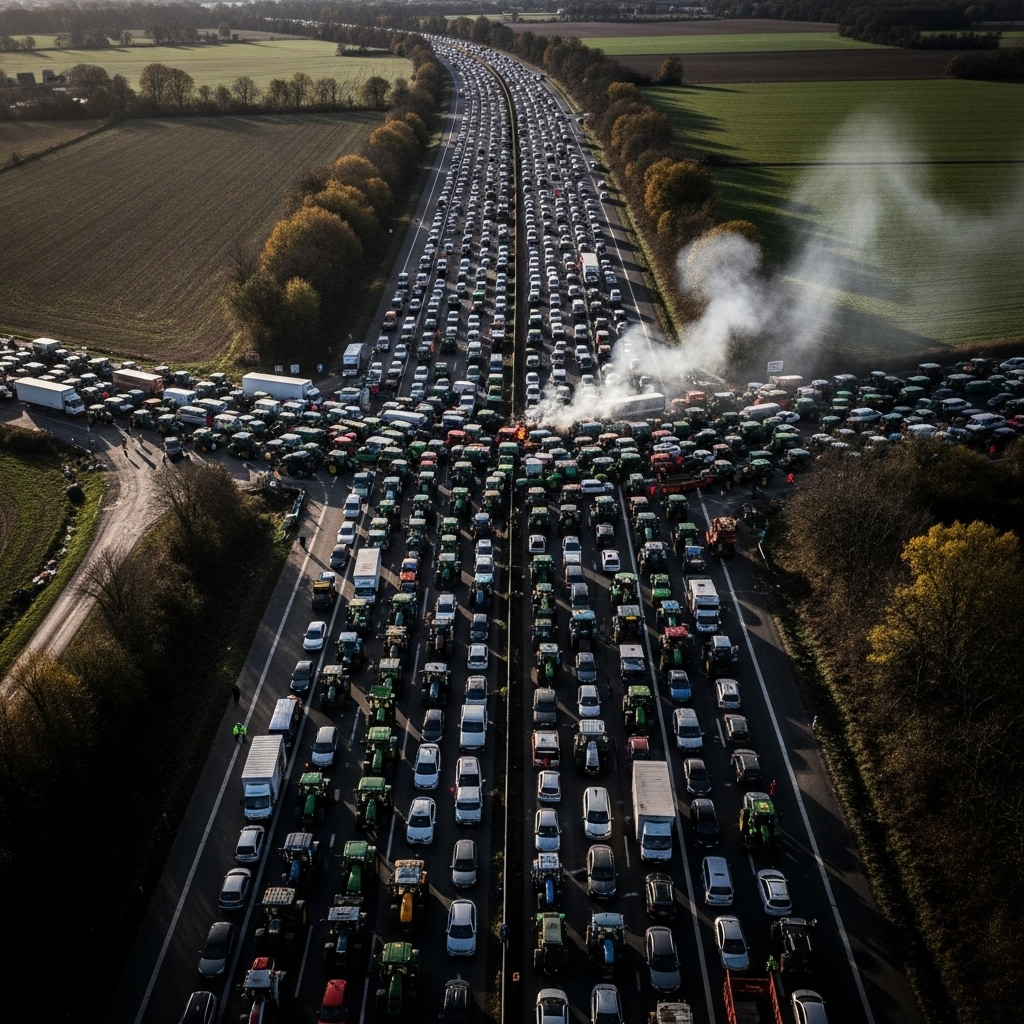
The protests have been most acute in the greater Paris region, Île-de-France. Early morning commuters on Thursday found major arteries, including the A1 and A6 motorways, completely blocked by tractors, hay bales, and slow-moving convoys. The blockades created kilometers-long traffic jams, effectively sealing off parts of the capital’s periphery.
Other key cities were also heavily impacted:
- Lyon: Protesters targeted the main logistics and distribution hubs to the east of the city, attempting to stop goods from reaching supermarkets.
- Marseille: Access to the major port of Marseille-Fos was severely restricted, with demonstrators blocking key access roads and causing significant delays to shipping operations.
- Bordeaux: Wine producers joined the action, using tractors to blockade government buildings and express their anger over economic pressures.
The coordinated nature of these actions suggests a high level of organization, largely facilitated through encrypted messaging apps and social media groups. Experts note that this decentralized command structure makes the movement difficult for authorities to predict and contain. For more information on the economic factors driving these tensions, you can read our deep dive on French economic policy.
Government Crackdown and the Official Response
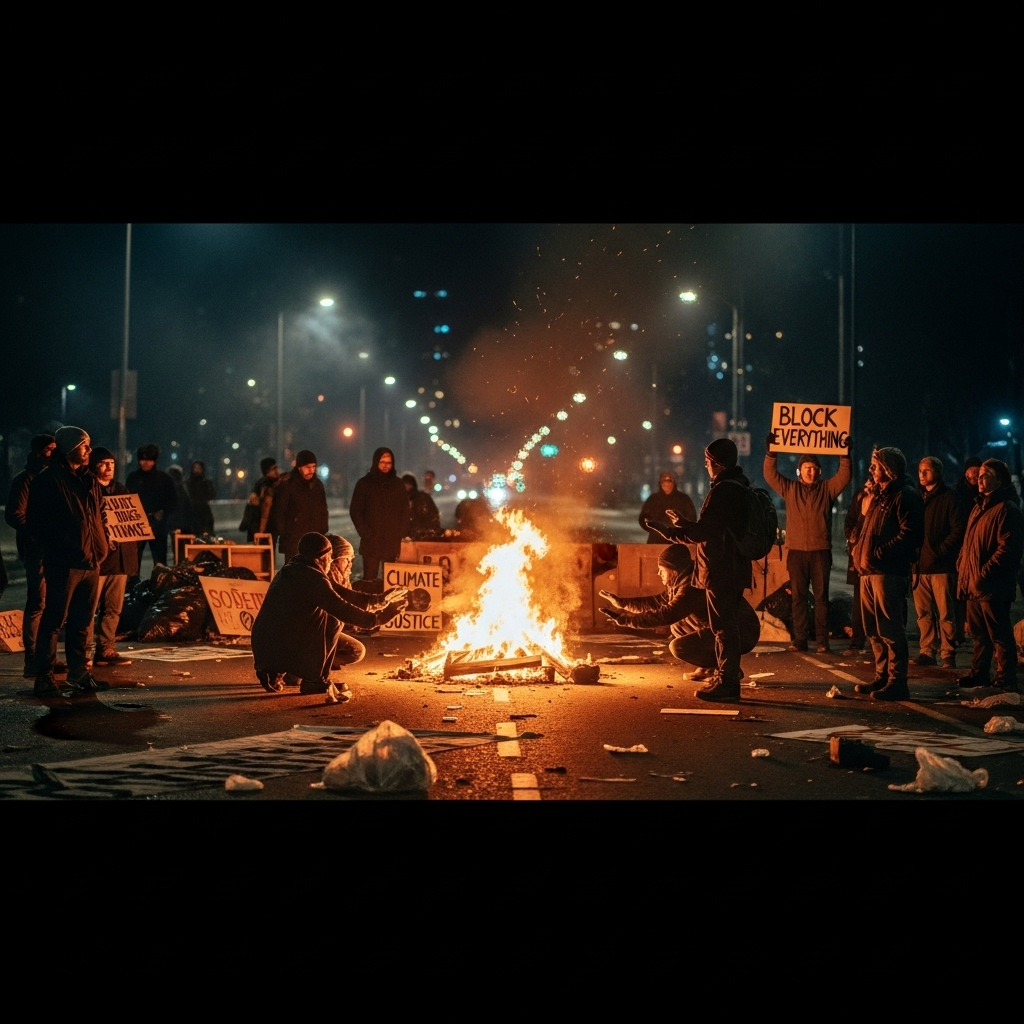
The government’s response has been swift and firm. Interior Minister Gérald Darmanin announced that while the right to protest is protected, “the right to block and endanger the lives of others is not.” He confirmed that over 400 arrests had been made for offenses ranging from obstructing traffic to vandalism and violence against law enforcement.
Thousands of gendarmes and police officers have been deployed to dismantle the blockades. In several locations, confrontations between police and protesters turned tense, with tear gas being used to disperse crowds attempting to fortify their positions. Authorities have focused on clearing the most critical infrastructure, particularly the roads leading to Paris’s Charles de Gaulle and Orly airports.
President Emmanuel Macron, speaking from an EU summit in Brussels, called for calm and dialogue but insisted that “order will be maintained.” He has tasked the Prime Minister with holding emergency meetings with farming unions and transport associations in an attempt to de-escalate the situation. However, many involved in the “‘block everything’ protests” are not affiliated with official unions, complicating negotiation efforts.
A Sign of Broader European Discontent?
The events in France are not occurring in a vacuum. They are the latest and most intense expression of a wave of populist anger and agrarian unrest sweeping across Europe. Similar protests, though on a smaller scale, have recently taken place in Germany, Poland, Romania, and the Netherlands. Farmers, in particular, feel squeezed between EU environmental goals, international trade agreements, and domestic economic pressures.
Analysts suggest that these movements tap into a deeper vein of anti-establishment sentiment and a feeling among rural and working-class populations that they have been left behind by globalization and the green transition. The tactics seen in the “‘block everything’ protests” in France could inspire similar actions in neighboring countries if governments fail to address the root causes of the discontent.
As noted in recent Reuters coverage of European affairs, these protests pose a significant challenge to both national governments and the European Union, which sets many of the agricultural and environmental policies at the heart of the disputes.
As the standoff continues, the economic cost of the blockades mounts, and political pressure intensifies. The coming days will be critical in determining whether the government can find a path to resolution or if France is heading for a prolonged period of social and economic turmoil. The ‘block everything’ protests have made it clear that a significant portion of the population has reached its breaking point.
“`


