
‘block everything’ protests: Over 300 Arrested in France
Major transport arteries across France were brought to a standstill this week as widespread ‘block everything’ protests erupted in response to a controversial new environmental tax. The nationwide demonstrations, organized by a coalition of farmers, truckers, and independent business owners, saw highways, fuel depots, and city centers barricaded, leading to significant disruption and culminating in the arrest of over 300 individuals, according to the Ministry of the Interior.
The protests, known as “Opération Tout Bloquer” (Operation Block Everything), represent the most significant civil unrest the French government has faced this year, testing its resolve on its ambitious green agenda.
Article Contents
What Sparked the Unrest in France?
The catalyst for the widespread anger is the newly implemented “Eco-Contribution Levy,” a government measure designed to tax commercial transportation based on carbon emissions. While championed by environmental groups and the government as a necessary step towards meeting France’s climate goals, it has been decried by those in the transport and agricultural sectors as a “punitive and destructive” tax.
Protest organizers argue that the levy disproportionately harms small to medium-sized enterprises that cannot afford to upgrade to newer, greener fleets. “They are asking us to pay for the transition without giving us the means to transition,” said Jean-Luc Dubois, a spokesperson for a farmers’ union in Lyon. “This isn’t an environmental policy; it’s a death sentence for family businesses.”
The government’s perceived failure to consult with the affected industries before announcing the levy has further fueled the outrage. Critics point to a pattern of top-down policy-making from Paris that ignores the realities of life in rural and industrial France. For a deeper dive into the policy itself, you can read our explainer on the new Eco-Contribution Levy.
Understanding the ‘Block Everything’ Protests
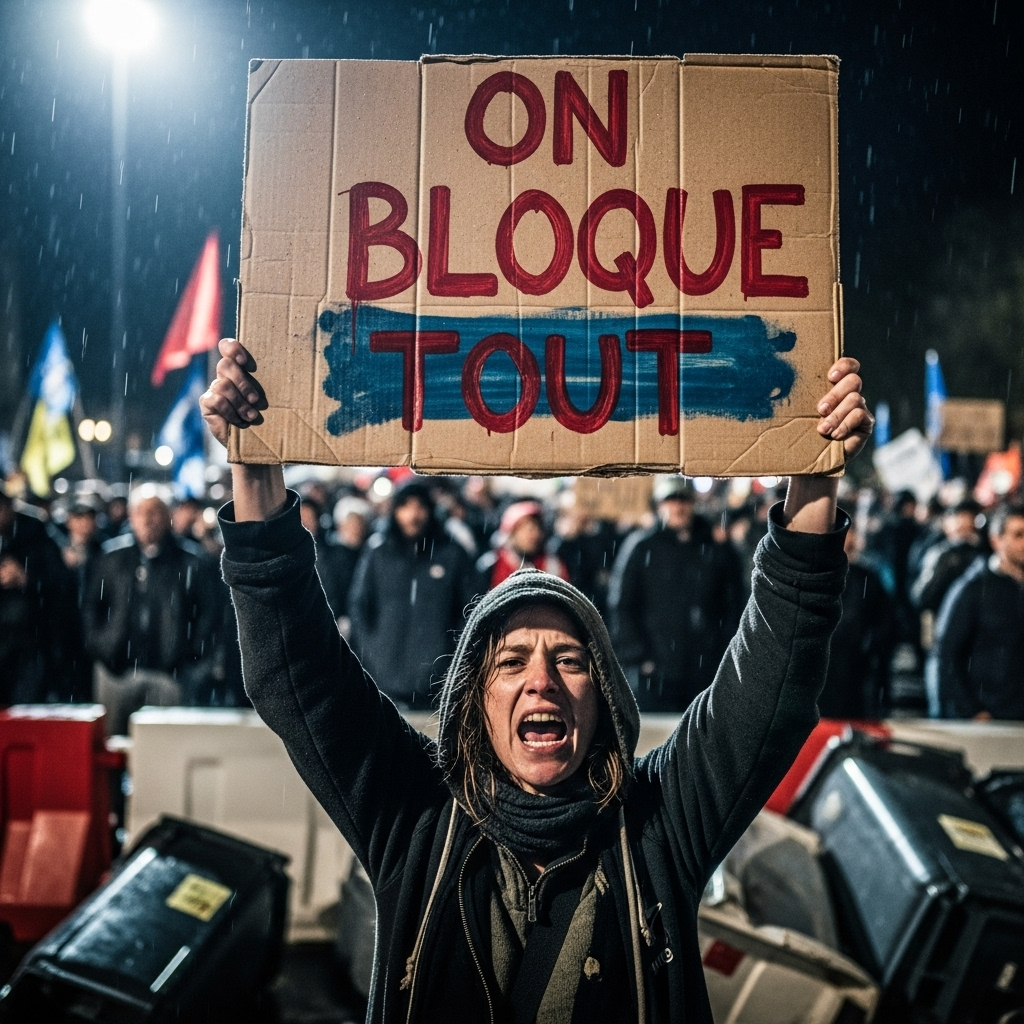
The “Opération Tout Bloquer” strategy is exactly what its name implies. The core tactic of the ‘block everything’ protests is to cause maximum economic and logistical disruption to force the government to the negotiating table. This has been achieved through several coordinated actions across the country.
Key tactics include:
- Highway Blockades: Convoys of tractors and trucks have created “go-slow” operations (opérations escargot) or complete blockades on major autoroutes like the A1, A6, and A7, causing miles-long traffic jams and paralyzing goods distribution.
- Fuel Depot Sieges: Protesters have blocked access to critical fuel refineries and distribution depots, raising fears of fuel shortages for the general public and emergency services.
- Dumping Manure/Produce: In highly symbolic acts of defiance, farmers have dumped tons of manure, hay, or unsold produce in front of prefectures and government buildings.
This strategy is not new in France, echoing the methods of the “Gilets Jaunes” (Yellow Vests) movement. However, the level of coordination and the specific focus on crippling supply chains marks a significant escalation. The goal is to make the economic cost of ignoring the protests greater than the political cost of repealing the tax.
Government Crackdown: Clashes and Mass Arrests
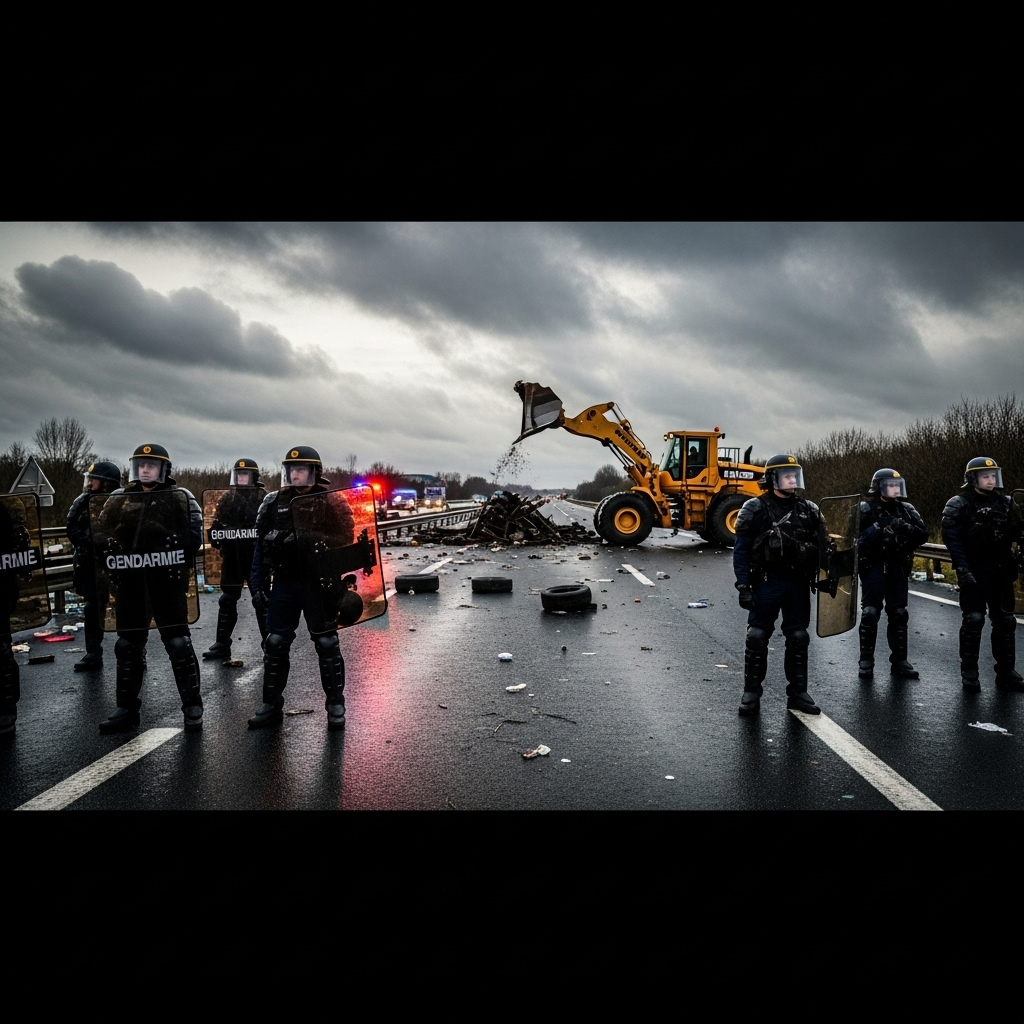
The government’s initial response was to call for calm, but as disruptions mounted, its stance hardened. Interior Minister Gérald Darmanin announced a “zero tolerance” policy for blockades that endanger public safety or impede emergency services. This led to a major police mobilization, with riot police (CRS) and gendarmes deployed to clear key blockades.
In cities like Nantes, Marseille, and outside Paris, these interventions led to clashes. Protesters reportedly threw projectiles at police, who responded with tear gas and water cannons. The Ministry of the Interior confirmed that 328 arrests had been made nationwide as of Thursday morning, mostly for “obstructing traffic” and “violence against public authority.”
The government has defended its firm response. A statement from the Prime Minister’s office insisted that “the right to protest does not mean the right to paralyze the country or endanger fellow citizens.” For official updates, the French Ministry of the Interior website provides regular press releases. However, protest sympathizers and some opposition politicians have accused the government of an excessively heavy-handed approach.
The Economic and Social Fallout
The economic impact of the ‘block everything’ protests is already being felt. The national road transport federation, FNTR, estimates the daily cost of the blockades to the logistics sector to be in the tens of millions of Euros. Shelves in some supermarkets are beginning to show gaps as supply chains are severed, and numerous businesses have reported staff being unable to get to work.
Public opinion remains divided. While many commuters and city-dwellers are frustrated by the chaos, polls suggest a significant portion of the population is sympathetic to the protesters’ grievances, seeing it as a broader struggle against the rising cost of living and government overreach. The hashtags #ToutBloquer and #ColèreAgricole (Farmers’ Anger) have been trending on social media, filled with a mix of support and condemnation.
The crisis has created a deep social fracture, pitting the government’s long-term environmental ambitions against the immediate economic survival of a vocal and vital segment of its population. This is the central challenge President Macron’s government must now navigate.
What’s Next for the Protesters and the Government?
With hundreds arrested and no sign of the government backing down on the eco-levy, France is at a tense impasse. Protest leaders have called for an escalation, vowing to “block everything until we are heard” and threatening to blockade Paris itself if their demands are not met.
The government is walking a tightrope. A complete capitulation would undermine its entire environmental platform and invite further protests on other issues. However, allowing the ‘block everything’ protests to continue indefinitely risks severe economic damage and could alienate the broader public if shortages and disruptions worsen.
The most likely path forward involves back-channel negotiations. Observers expect the government to offer concessions, such as a phased implementation of the tax, exemptions for the smallest businesses, or new subsidies to help truckers and farmers purchase cleaner vehicles. Whether these potential compromises will be enough to placate the protesters and clear the roads remains the critical question. For now, the nation holds its breath, bracing for another day of disruption.


