
‘Block Everything’ Protests: 100s Arrested in France
Table of Contents
- What Sparked the ‘Block Everything’ Protests?
- A Day of Widespread Disruption
- The Government’s Response and Mass Arrests
- Who Are the Protesters? A Diverse Coalition of Discontent
- Economic and Political Implications
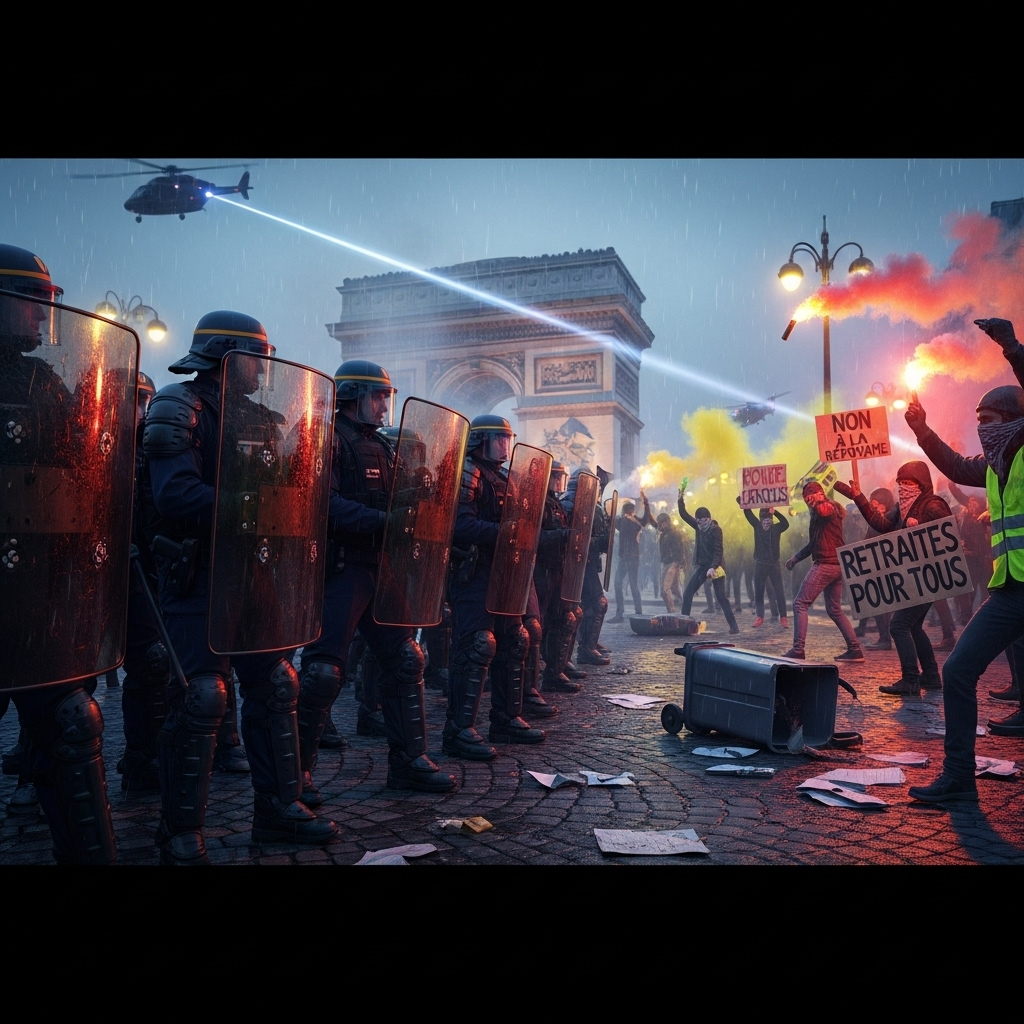
France was brought to a standstill on Thursday as the nationwide ‘block everything’ protests erupted in major cities and on key transport routes, leading to violent clashes with police and hundreds of arrests. Demonstrators, fueled by anger over a new package of economic reforms, erected barricades, blocked highways, and disrupted public services in Paris, Marseille, Lyon, and beyond in a powerful show of civil disobedience.
The protests, organized largely on social media under the hashtag #BlocageTotal, represent the most significant challenge to President Emmanuel Macron’s government this year. Authorities reported that by late evening, over 850 individuals had been arrested, with the situation remaining tense in several urban centers.
What Sparked the ‘Block Everything’ Protests?
The immediate catalyst for the widespread unrest is the government’s newly proposed “Future and Sustainability Act.” While framed as a forward-looking economic package, two key provisions have drawn immense public backlash. The first is a significant increase in fuel taxes, aimed at funding green energy initiatives. The second is a controversial reform to the pension system that would raise the retirement age by two years.
Critics argue these measures disproportionately harm low and middle-income families, farmers, and transportation workers who are already struggling with the rising cost of living. “This isn’t an environmental plan; it’s a tax on the working poor,” said one union leader in a statement. The sentiment that the government is out of touch with the daily struggles of ordinary citizens has become a powerful rallying cry for the ‘block everything’ protests.
The movement gained momentum rapidly through encrypted messaging apps and social media platforms, bypassing traditional union and political leadership. This decentralized organization allowed for swift, coordinated actions that caught authorities by surprise with their scale and intensity. It echoes the organizational tactics seen in earlier French protest movements, such as the Yellow Vests (Gilets Jaunes).
A Day of Widespread Disruption
The “block everything” moniker was taken literally. From the early hours of the morning, protesters mobilized to create maximum disruption. In the greater Paris region, major arteries like the A1 and A6 motorways were rendered impassable by barricades of burning tires and abandoned vehicles. Farmers used convoys of tractors to block access to major food distribution centers, threatening the capital’s supply chain.
In the southern port city of Marseille, dockworkers walked off the job, effectively halting all shipping traffic. In Lyon, students occupied university buildings and joined marches that swelled into the tens of thousands. Public transportation was severely affected nationwide, with many train and bus services canceled preemptively or halted by blockades on the tracks.
The economic cost of the one-day protest is estimated to be in the hundreds of millions of euros, according to the French Chamber of Commerce. The scenes of chaos and confrontation were broadcast across the globe, with international news outlets like Reuters and the BBC providing live coverage of the escalating events.
The Government’s Response and Mass Arrests
The French government took a hard-line stance against the demonstrations. Interior Minister Gérald Darmanin condemned the “unacceptable violence and degradation,” vowing that law and order would be restored. A massive police presence, numbering over 45,000 officers nationwide, was deployed to manage the crowds and dismantle the blockades.
Clashes were reported in multiple cities. In Paris, police used tear gas and water cannons to disperse crowds near the Champs-Élysées. Protesters responded by throwing projectiles and setting trash cans ablaze. The Interior Ministry confirmed that at least 120 police officers were injured in the confrontations.
The number of arrests climbed steadily throughout the day. By the evening, official figures cited over 850 arrests across France, with nearly 400 of those occurring in Paris alone. The government’s firm response has been criticized by some opposition politicians as overly aggressive, potentially escalating the conflict rather than de-escalating it. The heavy-handed tactics seen during the ‘block everything’ protests are likely to become a major point of political debate in the coming days.

Who Are the Protesters? A Diverse Coalition of Discontent
Unlike many traditional protests led by specific unions, the ‘block everything’ movement is characterized by its broad and diverse base. Participants include farmers angry about fuel costs and foreign competition, truck drivers facing new regulations, students worried about their future, and a significant number of people who identify with the Yellow Vests movement.
This coalition of the discontented is united by a shared sense of economic precarity and a belief that the political establishment is ignoring their needs. “We come from different jobs, different regions, but we are all being squeezed,” a protester from Normandy, who identified herself as a nurse, told a local news crew. “We have to block everything because that is the only language this government understands.”
This broad appeal is both a strength and a potential weakness for the movement. While it allows for massive mobilization, the lack of a central leadership or a single, unified set of demands could make it difficult to negotiate with the government or formulate a long-term strategy beyond disruption.
Economic and Political Implications
The political fallout from the ‘block everything’ protests is just beginning. President Macron’s government now faces a critical choice: push forward with its reforms and risk further, more intense protests, or back down and appear weakened. The government has so far insisted it will not be deterred by “the violence of a few.”
Economically, the disruption to supply chains and commerce, even for a single day, will have a tangible impact. If the protests continue, the damage could be severe, affecting France’s reputation as a stable place for investment. For more information on the French economy, you can consult data from organizations like the OECD.
As France cleans up from a day of chaos, the underlying anger that fueled the demonstrations remains. The arrests of hundreds of citizens and the images of street battles have deepened the divisions within the country. The ‘block everything’ protests have sent a clear and powerful message to the Élysée Palace, setting the stage for a tense and uncertain political autumn.


