
‘Block everything’ protests: Hundreds arrested in France
Major cities across France were brought to a standstill this week as the escalating ‘block everything’ protests saw demonstrators clash with police, leading to hundreds of arrests. The movement, fueled by a potent mix of economic grievances and environmental policy frustrations, has paralyzed key infrastructure and posed a significant challenge to the government of President Emmanuel Macron.
This article delves into the causes, impact, and future of these widespread demonstrations. We’ll explore what the ‘block everything’ protests are, how the government is responding, and the deep-seated issues driving ordinary citizens into the streets.
Table of Contents
What Exactly Are the ‘Block Everything’ Protests?
The ‘block everything’ protests, known in French as “opération blocage total,” are a series of decentralized demonstrations organized primarily through social media channels. Lacking a single formal leadership structure, the movement is a coalition of farmers, truckers, students, and disaffected citizens who share a common goal: to cause maximum disruption to force government concessions.
Their tactics are straightforward and effective. Protesters use vehicles, tractors, hay bales, and their own bodies to block major highways (autoroutes), ring roads around cities like Paris and Lyon, and access to strategic locations such as oil refineries, ports, and major distribution centers. This strategy aims to choke the nation’s economic arteries, making the cost of ignoring their demands too high for the government to bear.
Unlike previous organized labor strikes, the ‘block everything’ movement’s strength lies in its unpredictability and grassroots nature. Groups coordinate locally, making it difficult for authorities to anticipate and prevent blockades. Slogans seen on banners range from “End of the month, end of the world: same struggle” to “Macron, listen to the people, not the lobbyists.”
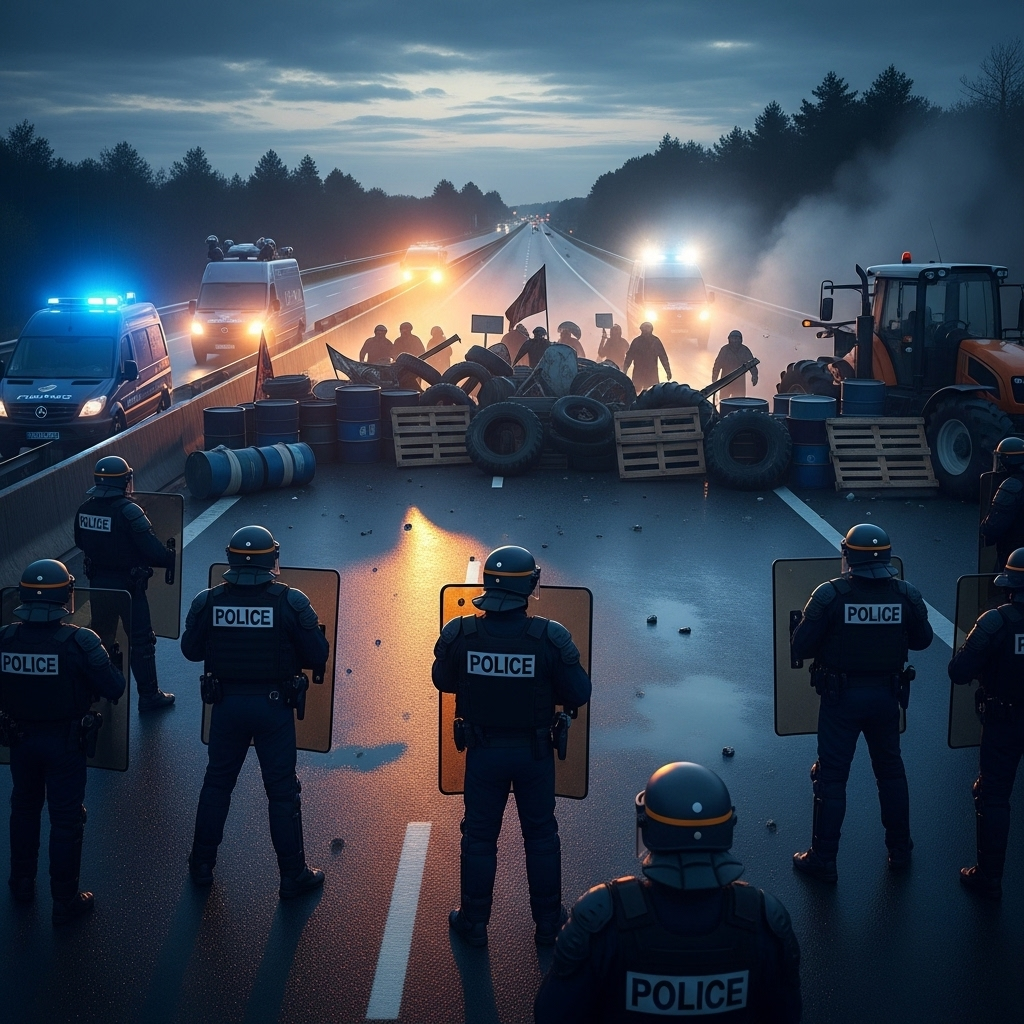
The Government’s Response: Clashes and Mass Arrests
The French government’s initial response was one of cautious observation, but as the blockades tightened their grip, the stance hardened significantly. Interior Minister Gérald Darmanin announced a “zero-tolerance” policy for blockades that endanger public safety or completely paralyze essential services.
Over the past 48 hours, this policy has been put into action. Riot police (CRS) have been deployed in large numbers to dismantle barricades, often using tear gas and water cannons to disperse crowds. The most intense confrontations have occurred on the A1 motorway leading to Paris and near the Port of Marseille.
According to the Interior Ministry, over 450 people have been arrested nationwide in connection with the ‘block everything’ protests. Charges range from obstructing traffic to violence against law enforcement officers. In a televised address, a government spokesperson condemned the “unacceptable violence and chaos,” while urging for a return to “republican order and dialogue.” However, protesters argue that their attempts at dialogue have been consistently ignored, leaving disruption as their only viable tool.
For more context on recent French social movements, you can read our previous coverage on the pension reform strikes.
Root Causes: Economic Pain and Policy Backlash
The ‘block everything’ protests are not a sudden outburst but the culmination of simmering discontent. The primary drivers are economic pressures felt by a large segment of the population.
- Cost of Living: Persistent inflation has eroded purchasing power. The rising cost of fuel, energy, and basic groceries is a central complaint, with many families feeling they can no longer make ends meet.
- Agricultural Crisis: Farmers are a major force in the protests. They are protesting low food prices set by supermarket chains, overwhelming environmental regulations they say are impossible to meet, and competition from cheaper, less-regulated imports. You can find detailed data on this from France’s National Institute of Statistics and Economic Studies (INSEE).
- Environmental Policies: While many protesters are not against environmentalism, they feel that government “green” policies disproportionately burden the working and middle classes. Taxes on diesel fuel and new regulations on vehicle emissions are seen as punitive measures against those who live outside urban centers and rely on cars for their livelihood.
This perfect storm of economic hardship and perceived policy injustice has created a broad, if sometimes fractured, coalition of protesters who feel left behind by the political establishment in Paris.
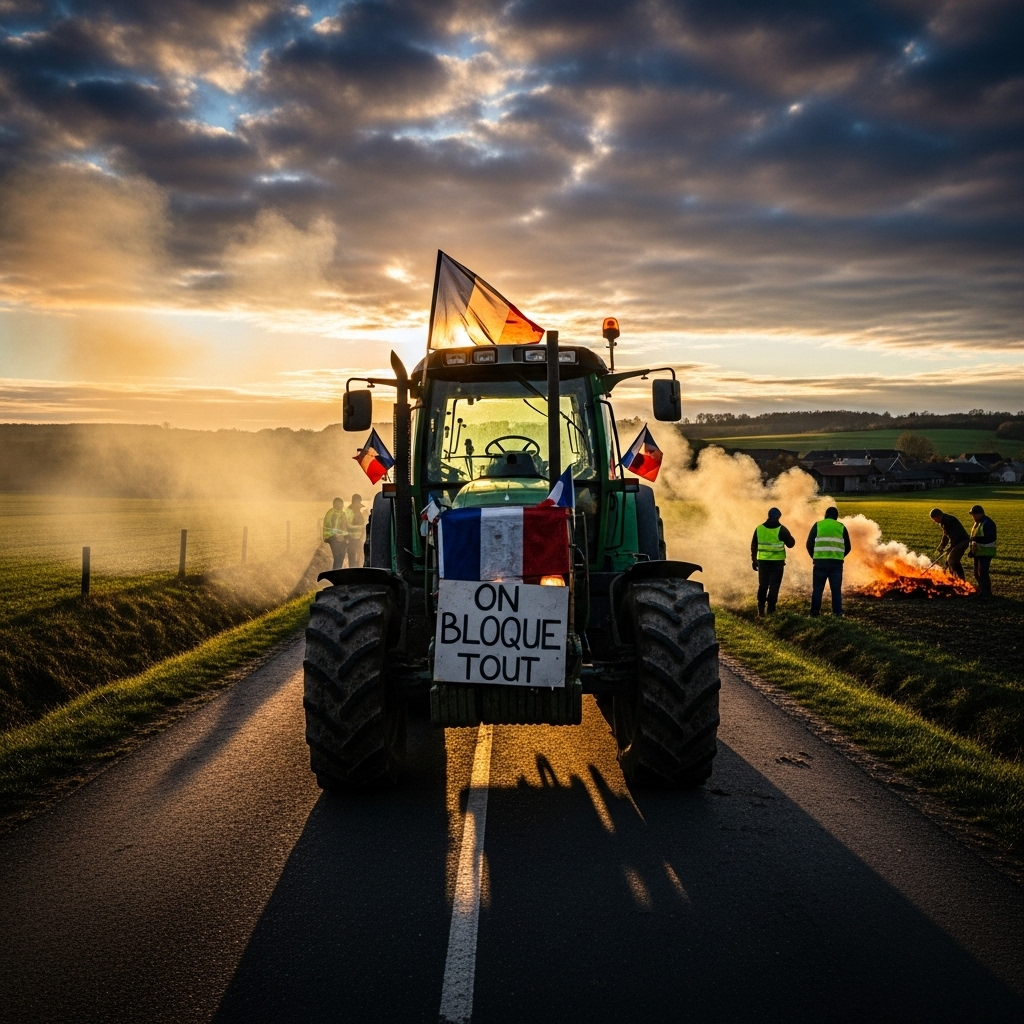
Impact on Daily Life and the French Economy
The effects of the blockades are being felt across the country. Commuters have faced hours-long traffic jams, forcing many to work from home or miss work entirely. Supermarket shelves in some areas are beginning to show gaps as supply chains are disrupted, with fresh produce and dairy being particularly affected.
The economic cost is mounting rapidly. The MEDEF, France’s largest employer federation, has warned that the protests are costing the economy hundreds of millions of euros per day. Industries reliant on just-in-time logistics, such as the automotive sector, have had to slow or halt production. The blockades at ports and refineries also raise the specter of fuel shortages if they continue for an extended period.
Public opinion remains divided. While many sympathize with the economic pain expressed by the protesters, the widespread disruption is testing the patience of the general population. A recent poll indicated that 55% of the public supports the protesters’ demands, but 65% want the blockades to end immediately due to the inconvenience.
What’s Next for the Movement?
The government is in a difficult position. A heavy-handed crackdown risks further inflaming the situation and creating martyrs for the movement, potentially drawing even more people to the streets. However, allowing the ‘block everything’ protests to continue threatens to cause severe economic damage and create a perception of a lawless state.
President Macron has called for emergency meetings with key ministers and has indicated a willingness to meet with representatives from some of the protesting groups, though the movement’s decentralized nature makes formal negotiations complex. The key question is whether the government can offer concessions significant enough to placate the core grievances without appearing to capitulate to disruptive tactics.
For now, protest organizers on social media are calling for an intensification of the blockades. With hundreds already in custody and tensions running high, the coming days will be a critical test of resilience for both the French state and the determined citizens who have decided to ‘block everything’.
“`


