
‘block everything’ protests’: Hundreds Arrested in France
This article covers the ongoing disruptive protests in France, the government’s response, and the reasons behind the civil unrest.
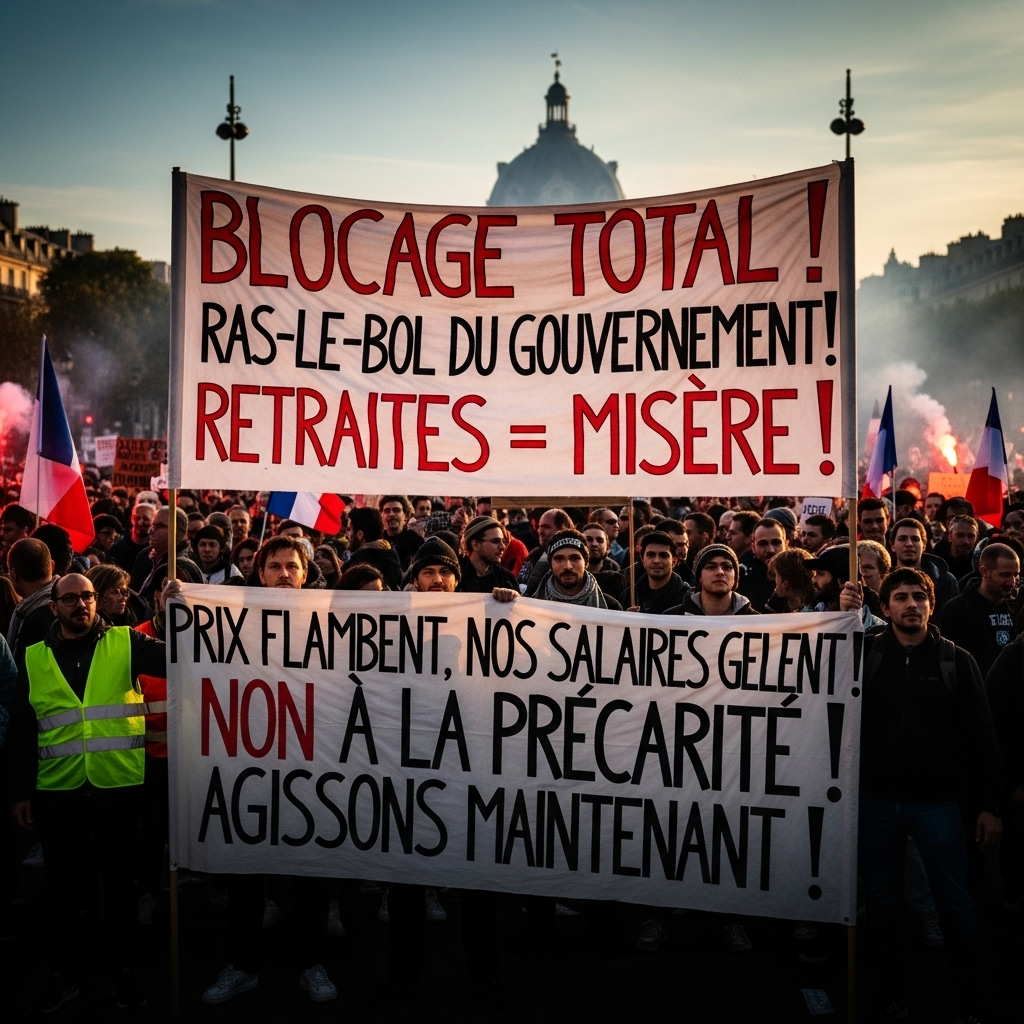
France has been brought to a virtual standstill as the nationwide ‘block everything’ protests erupted into chaos, leading to the arrest of hundreds of individuals across the country. Major cities, including Paris, Lyon, and Marseille, experienced severe disruptions as demonstrators blocked key infrastructure in a coordinated effort to voice their deep-seated frustrations with government policies.
The movement, known locally as “Opération Tout Bloquer,” has seen highways, distribution centers, and public transport hubs become focal points for dissent, creating a logistical nightmare and a significant challenge for President Macron’s government.
What Are the ‘Block Everything’ Protests?
The ‘block everything’ protests are a decentralized, grassroots movement characterized by disruptive civil disobedience tactics. Unlike traditional, union-led marches, this movement’s primary strategy is to cause maximum economic and logistical disruption to force the government’s hand.
Participants, ranging from farmers and truck drivers to students and public sector workers, are united under the simple but powerful banner of “tout bloquer” — to block everything. Their goal is to paralyze the nation’s economic arteries to compel the government to address a wide range of grievances.
This tactic echoes previous protest movements in France, such as the “Gilets Jaunes” (Yellow Vests), but with a more focused and disruptive intent. The movement’s coordination primarily happens through encrypted messaging apps and social media, making it difficult for authorities to predict and contain its next move.

Escalation in Major Cities
The protests reached a fever pitch over the last 48 hours, with major urban centers bearing the brunt of the action.
In Paris, demonstrators successfully blocked several rings of the Périphérique, the critical ring road surrounding the capital, causing miles-long traffic jams that stretched for hours. Access to Charles de Gaulle Airport was also severely hampered, forcing many travelers to abandon their vehicles and proceed on foot with their luggage.
In Marseille, the country’s largest port was a primary target. Protesters used tractors and makeshift barricades to block access to the port terminals, halting the flow of goods and creating a significant backlog of shipping containers. The economic impact of this single action is estimated to be in the millions of euros per day.
Similarly, in Lyon, a key logistical hub for central France, major motorways like the A6 and A7 were rendered impassable. Public transport systems in these cities were also heavily affected, with tram and bus lines either suspended or severely delayed, impacting millions of commuters and residents.
Government Response and Mass Arrests
The French government has taken a hardline stance against the disruptions. Interior Minister Gérald Darmanin condemned the actions as “unacceptable” and a threat to public order and the economy. He authorized a massive police response, deploying thousands of officers from the national police and the Gendarmerie to dismantle the blockades.
Clashes were reported in several locations as police used tear gas and water cannons to disperse crowds who refused to clear the roads. According to the Ministry of the Interior, over 800 arrests have been made nationwide in connection with the ‘block everything’ protests in just two days.
The government has vowed to prosecute those involved in property damage and obstructing traffic, stating that while the right to protest is protected, “paralyzing the country is not.” This firm response aims to restore order but risks further inflaming tensions with the protesters and their supporters.

The Core Grievances Fueling the Unrest
The ‘block everything’ movement is not centered on a single issue but is a powerful expression of widespread discontent. Several key factors are fueling the anger:
- Cost of Living Crisis: Many protesters cite the soaring costs of fuel, food, and housing as their primary motivation. They argue that government measures have been insufficient to protect household purchasing power, and that inflation is eroding their quality of life.
- Agricultural Policies: Farmers are a significant contingent within the protests. They are demanding better pay, protection from cheap foreign imports that don’t meet French standards, and a reduction in what they see as crippling environmental regulations. The sentiment is that they are being asked to do more for less.
- Pension and Labor Reforms: Lingering anger over recent pension reforms, which raised the retirement age, continues to simmer. Protesters feel that the government is dismantling social protections in favor of corporate interests without proper public consultation.
- Perceived Disconnect: A common theme is the feeling that the political elite in Paris is completely disconnected from the realities faced by ordinary people in provincial France. Protesters often express a sense of being ignored and unheard by policymakers.
These grievances have created a perfect storm of social unrest, uniting disparate groups under a common banner of opposition to the current government’s direction. For more information on the specific economic pressures, a report from France’s national statistics agency, INSEE, provides detailed data on inflation and household income.
What’s Next for France?
With hundreds in custody and the government refusing to back down, the future of the ‘block everything’ protests hangs in the balance. Organizers on social media are calling for an escalation, promising further “surprise actions” in the coming days to maintain pressure.
The key question is whether the mass arrests will intimidate the movement into submission or galvanize even more support from a public sympathetic to its underlying causes. The government’s challenge is to project strength and maintain order without appearing tyrannical or dismissive of legitimate public anger.
President Macron’s administration faces a delicate balancing act. The coming days will be critical in determining whether France is heading for a prolonged period of social conflict or if a path to dialogue can be found. The one certainty is that the deep-seated issues that sparked this firestorm will not be extinguished easily, regardless of how many roads are cleared.
“`


