
‘Block Everything’ Protests: Over 200 Arrested in France
Widespread civil disobedience brings major French cities to a standstill as a new wave of activism, dubbed the ‘block everything’ protests, results in significant police action and over 200 arrests nationwide.
What Are the ‘Block Everything’ Protests?
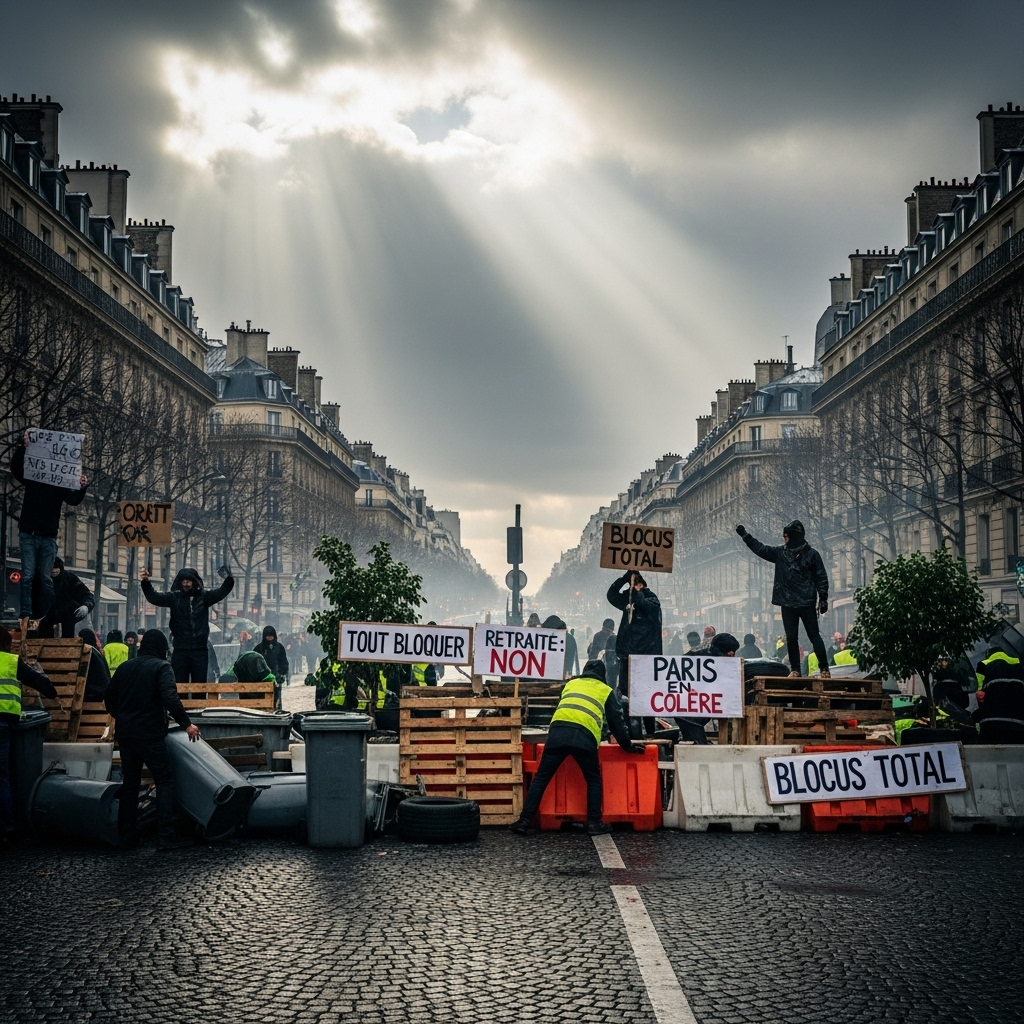
The ‘block everything’ protests, or “tout bloquer” in French, represent a new and disruptive chapter in France’s long history of social activism. Unlike traditional marches that follow a designated route, this movement’s core tactic is to cause maximum disruption to daily economic life. Protesters aim to shut down key infrastructure, including major highways, distribution centers, university campuses, and public squares, to force the government’s hand on a range of issues.
The grievances fueling the movement are multifaceted and deeply rooted in current societal anxieties. Core demands include:
- Aggressive Climate Action: Activists, many of whom are young students, accuse the government of “greenwashing” and failing to meet its own environmental targets. They demand a radical shift away from fossil fuels and immediate, binding policies to combat climate change.
- Cost of Living Crisis: The protests have drawn significant support from individuals struggling with soaring inflation, stagnant wages, and high energy prices. They are calling for price controls on essential goods and a substantial increase in the minimum wage.
- Pension Reform Opposition: Lingering anger over the government’s controversial decision to raise the retirement age remains a powerful motivator, with many seeing it as an unjust burden on the working class.
This coalition of environmental activists, students, and workers has created a potent, if loosely organized, force. Their strategy is simple: if the system won’t listen, bring the system to a halt. They believe that by impacting commerce and creating logistical chaos, they can exert pressure that traditional protests no longer achieve.
Escalation in Major French Cities
The protests escalated dramatically this week, moving from sporadic blockades to coordinated actions across France. In Paris, activists blocked several access points on the Périphérique ring road, the city’s vital automotive artery, causing miles-long traffic jams that lasted for hours. Makeshift barricades constructed from shopping carts, garbage bins, and scaffolding material appeared in central districts, effectively paralyzing local traffic.
In Marseille, protesters targeted the city’s bustling port, a critical hub for Mediterranean trade. Small groups on inflatable boats attempted to disrupt shipping lanes while others blocked access roads for cargo trucks. In Lyon, students occupied the main administrative buildings of several universities, unfurling banners and declaring a “climate emergency strike.”
Eyewitnesses described scenes of organized chaos. “It was impressive and intimidating,” said one Parisian commuter. “They weren’t just marching; they were strategically shutting things down. One group would block an intersection, and as soon as police arrived, another group would pop up three blocks away.” This “cat-and-mouse” tactic proved highly effective at stretching police resources thin and maximizing disruption.
Government Response and Mass Arrests
The French government’s response has been swift and severe. Interior Minister Gérald Darmanin condemned the actions as “unacceptable infringements on the freedom of movement and a danger to public order.” He authorized a forceful police crackdown, vowing to restore order and ensure that “the economy is not taken hostage by a radical minority.”
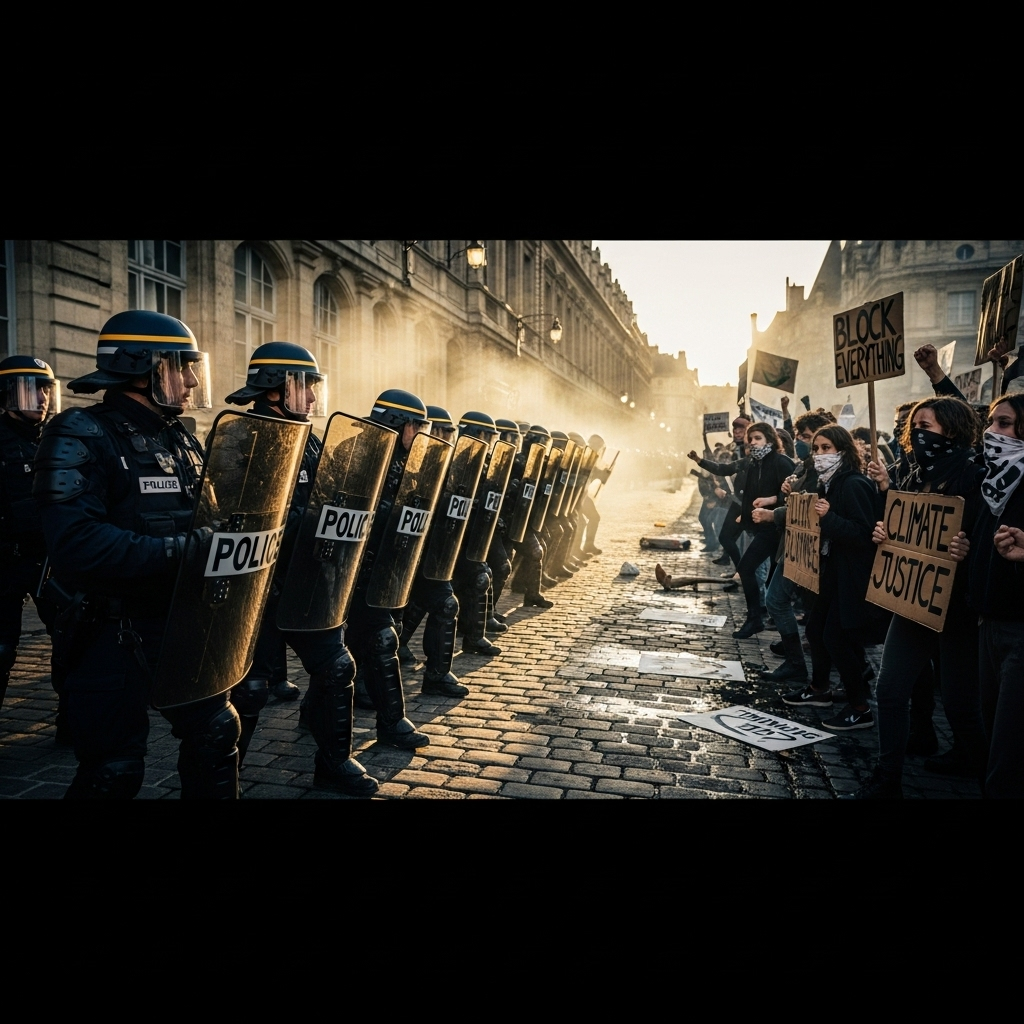
Over the past 48 hours, authorities have confirmed that more than 200 people have been arrested in connection with the ‘block everything’ protests. The charges range from obstructing traffic and refusing to disperse to destruction of public property and violence against law enforcement officers. Riot police, equipped with shields, batons, and tear gas, were deployed in large numbers to dismantle barricades and clear occupied areas.
Human rights organizations have already begun to voice concerns over the scale of the arrests and reports of heavy-handed police tactics. “While the need to maintain public order is understood, the response must be proportionate,” said a spokesperson for Amnesty International France. “The right to peaceful protest is a fundamental freedom, and mass arrests risk having a chilling effect on legitimate dissent.”
The Broader Context: A Wave of Discontent
These protests do not exist in a vacuum. They are the latest manifestation of a deep-seated social unrest that has been simmering in France for years, echoing the famous “gilets jaunes” (Yellow Vests) movement that began in 2018. Like their predecessors, the ‘block everything’ activists feel ignored by a political elite they see as detached from the realities of everyday life.
The movement also taps into a wider European trend of climate and social activism. From farmer protests in Germany and the Netherlands to climate strikes across the continent, citizens are increasingly turning to direct action to voice their frustrations. The combination of economic hardship, detailed in reports about the European cost-of-living crisis, and perceived government inaction on existential threats like climate change has created a fertile ground for such disruptive movements.
Analysts suggest that the ‘block everything’ protests are a modern evolution of French protest culture, adapted for the 21st century. They leverage social media for rapid coordination and focus on economic choke points, understanding that in a “just-in-time” economy, even minor disruptions can have major consequences.
What’s Next for the Movement?
The critical question now is whether the government’s crackdown will succeed in extinguishing the movement or simply galvanize its supporters. The mass arrests could serve as a deterrent, scaring off potential participants. Conversely, they could be seen as proof of the state’s oppressive nature, breeding more anger and attracting more recruits to the cause.
Organizers have already called for another day of action next week, promising even more widespread disruption. “Every arrest makes us stronger,” one anonymous activist collective wrote on social media. “They can’t arrest an entire generation that is fighting for its future.”
As France heads into a tense autumn, the standoff between the government and the activists of the ‘block everything’ protests is set to define the country’s social and political landscape. The outcome will depend on the resilience of the protesters, the resolve of the authorities, and the mood of a public caught in the middle. For a deeper dive into this phenomenon, read our analysis on the future of French protest movements.


