
‘Block everything’ protests: Hundreds arrested in France
Nationwide chaos erupted across France this week as the “‘block everything’ protests” escalated, leading to significant travel disruptions, economic strain, and the arrest of over 400 individuals. Demonstrators, organized under a decentralized social media banner, have targeted major highways, ports, and city centers, demanding government action on the soaring cost of living and controversial new environmental policies. The French government has responded with a massive police presence, vowing to restore order.
The movement, known in French as “Action blocage total,” has gained rapid momentum, drawing parallels to the “gilets jaunes” (yellow vests) protests that shook the country years prior. This article breaks down the key developments, the government’s response, and what could happen next.
What Are the ‘Block Everything’ Protests?
The “‘block everything’ protests” are a grassroots movement without a single formal leader or union affiliation. Participants are a diverse coalition of citizens, including farmers, truckers, students, and low-income workers, united by a shared frustration with economic pressures. Their primary grievances center on three key issues:
- Fuel Prices: A recent surge in fuel taxes, part of the government’s green transition plan, has been a major catalyst.
- Inflation: Protesters claim that wages have not kept pace with the rising costs of food, energy, and housing.
- Agricultural Policies: Farmers are angry over what they describe as unfair competition from imports and burdensome environmental regulations. You can read more about this in our previous coverage of France’s economic outlook.
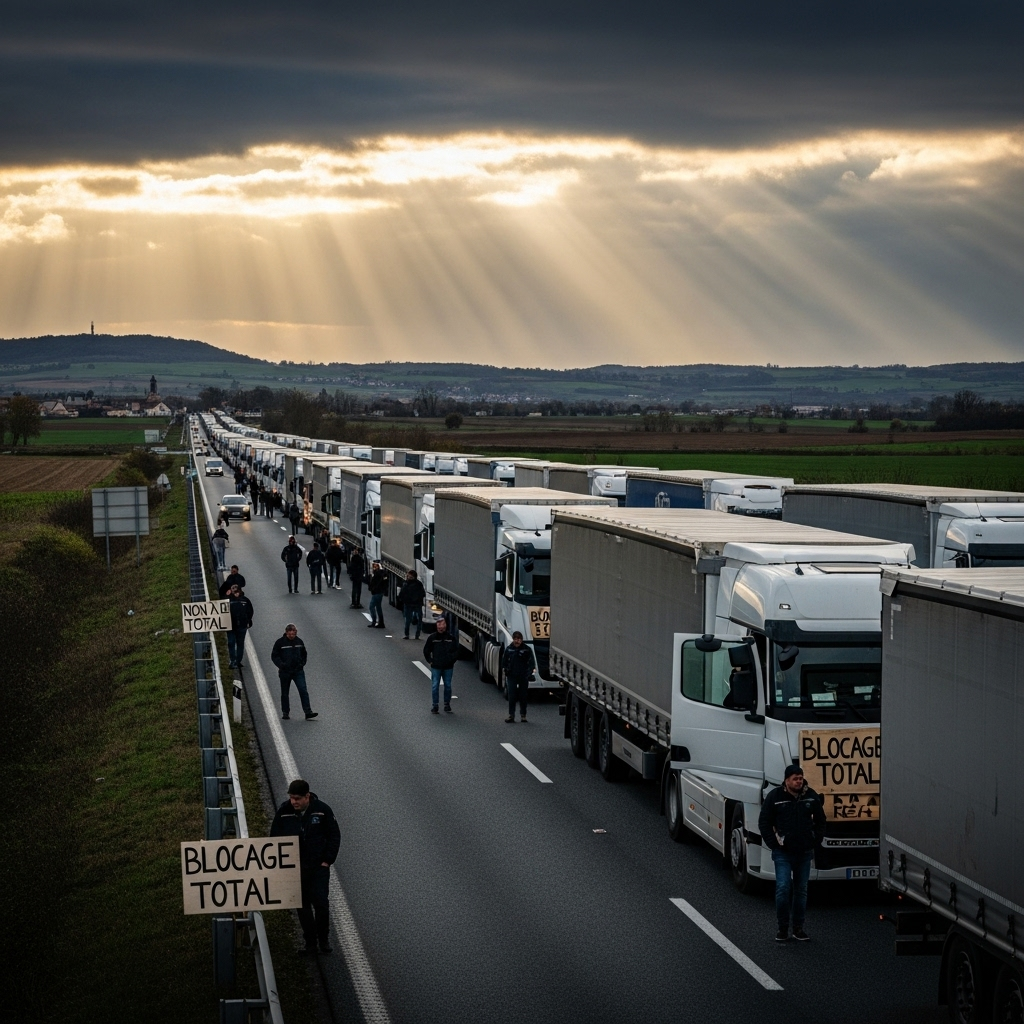
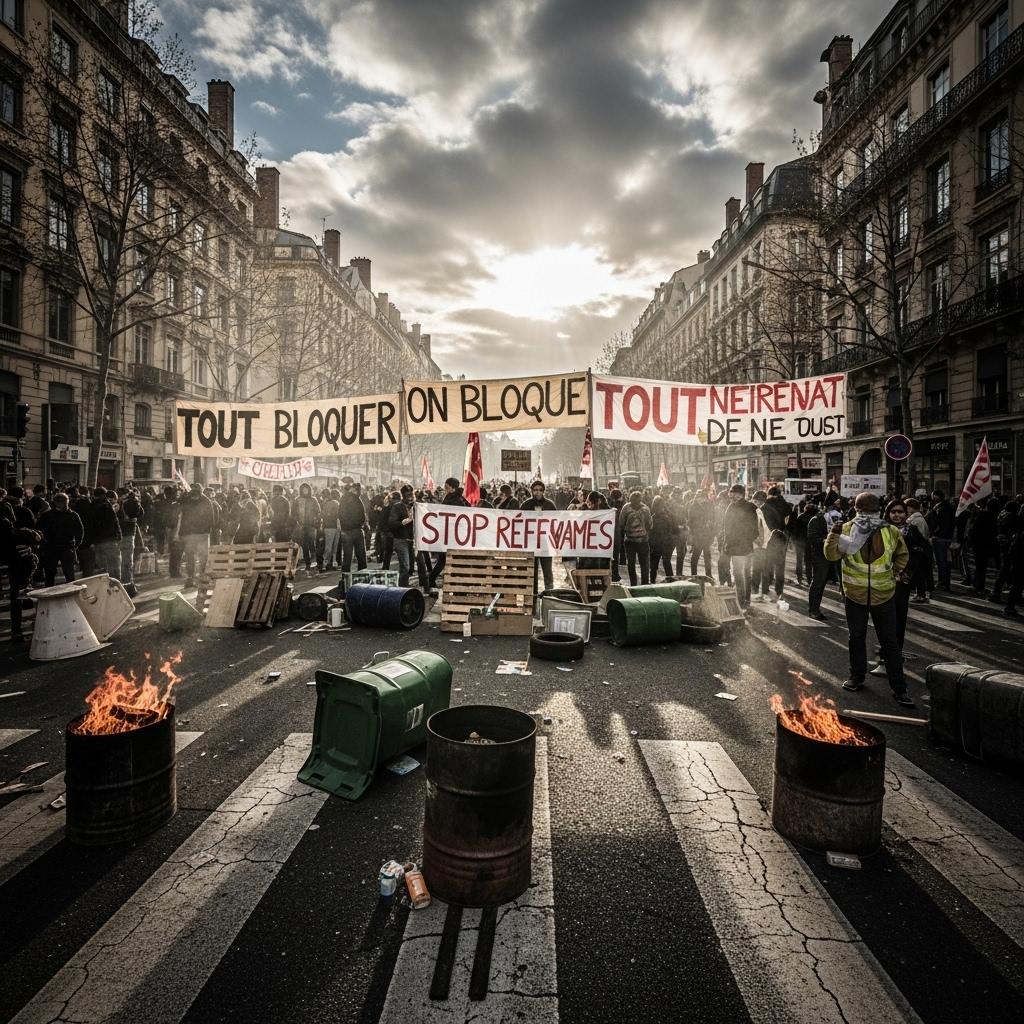
Unlike traditional demonstrations, the movement’s strategy is explicitly aimed at causing maximum economic disruption. Using messaging apps and social media, groups coordinate “snail operations” on highways, set up blockades at strategic logistics hubs like ports and oil refineries, and obstruct access to major city centers. Their stated goal is to bring the economy to a standstill until their demands are met.
Major Disruptions in Paris, Lyon, and Marseille
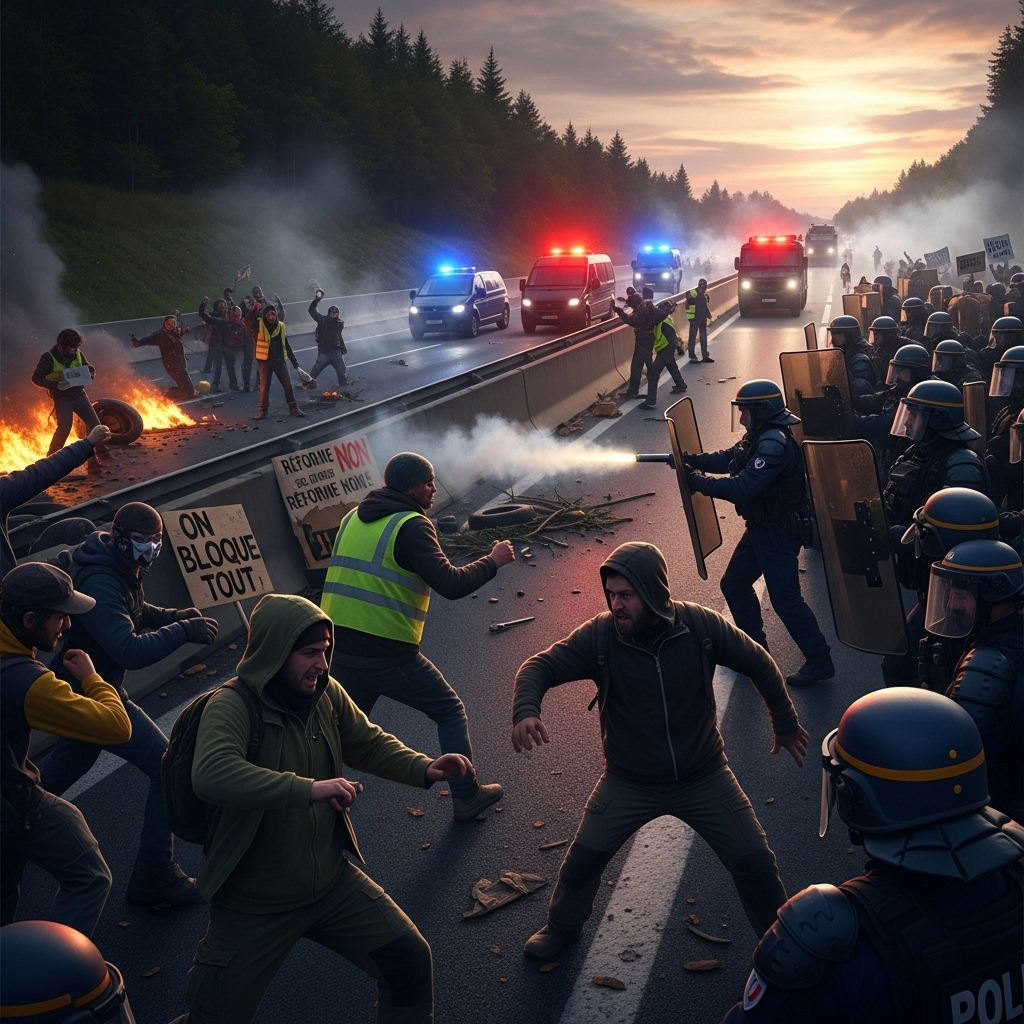
The impact of the protests has been felt most acutely in France’s largest cities. In Paris, key ring roads like the Boulevard Périphérique were brought to a complete halt for hours. Protesters on foot and in vehicles created human and vehicular barricades, leading to gridlock that trapped thousands of commuters. Scenes of burning tires and confrontations with riot police were widespread.
In Lyon, access to the main train station, Part-Dieu, was severely restricted, and blockades were reported on the A7 motorway, a crucial artery connecting northern and southern France. Local businesses reported a sharp decline in customers, with many owners expressing sympathy for the protesters’ cause but frustration with the methods.
Meanwhile, the port of Marseille-Fos, one of the largest in the Mediterranean, experienced significant disruption. Protesters, primarily dockworkers and local farmers, blocked access roads, preventing trucks from entering or leaving the facility. This has created a growing backlog of goods, raising concerns about supply chain integrity for the entire region. The tactics are a modern example of civil disobedience, a topic well-documented by institutions like Stanford University’s research centers.
The Government’s Firm Response and Mass Arrests
The French government, led by President Emmanuel Macron, has taken a hardline stance against the “‘block everything’ protests.” Interior Minister Gérald Darmanin condemned the blockades as “unacceptable” and “a danger to public safety.” He authorized a significant deployment of the Gendarmerie and the CRS riot police to dismantle the blockades and restore traffic flow.
In a press conference, the Interior Minister stated, “The right to protest does not mean the right to paralyze the lives of millions of French people.” According to official figures released by the Ministry of the Interior, over 420 people have been arrested nationwide since Monday. The charges range from obstructing traffic to destruction of public property and violence against law enforcement officers.
Legal experts suggest that those convicted could face hefty fines and even prison sentences, a deterrent the government hopes will quell the movement. However, these arrests have also served to galvanize many protesters, who view the government’s actions as heavy-handed and an infringement on their democratic rights.
Economic Fallout and Public Sentiment
The economic impact of the blockades is becoming more apparent each day. The French National Federation of Road Haulage (FNTR) has estimated daily losses in the tens of millions of euros due to stalled trucks and broken supply chains. Supermarkets are beginning to report shortages of fresh produce, and manufacturing plants are warning of potential shutdowns if they cannot receive necessary parts.
Public opinion remains deeply divided. Polls show that while a majority of the French public sympathizes with the core complaints about the cost of living, they are split on the tactics of the “‘block everything’ protests.” Many urban residents, whose daily lives have been thrown into chaos, are growing increasingly impatient. “I understand they are angry, but I need to get to work,” one Parisian office worker told a Reuters journalist. “Blocking everyone is not the solution.”
Conversely, in rural areas and among blue-collar communities, support for the movement is strong. Protesters are often seen as heroes fighting for the common person against an out-of-touch political elite. This urban-rural divide is a recurring theme in French social movements and poses a significant challenge for the government.
What’s Next for the Movement?
The future of the “‘block everything’ protests” hangs in the balance. The government is betting that its firm police response and the growing public frustration with the disruptions will cause the movement to lose steam. However, protest organizers are calling for an escalation, with plans for a “Black Saturday” of even larger-scale blockades this weekend.
Key questions remain:
- Will the government offer concessions, such as a temporary freeze on fuel taxes, to de-escalate the situation?
- Can the movement maintain its momentum in the face of mass arrests and potential legal consequences?
- Will the internal divisions within the protesters—between different sectors and regions—weaken their collective bargaining power?
As of this report, both sides appear to be digging in for a protracted conflict. The coming days will be critical in determining whether France is heading for a resolution or a deeper, more prolonged period of social and economic turmoil.


