
‘block everything’ protests: 100s arrested in France
A day of widespread civil disobedience swept across France on Wednesday as the so-called ‘block everything’ protests led to significant disruption and resulted in the arrest of hundreds of activists. The coordinated actions, aimed at paralyzing key economic and transport infrastructure, represent a dramatic escalation for the environmental and anti-consumerist movement.
What Are the ‘Block Everything’ Protests?
The “‘block everything’ protests” are not orchestrated by a single organization but are part of a decentralized movement known in France as “Tout Bloquer.” Participants are primarily young activists who believe that conventional methods of protest, such as marches and petitions, have failed to produce meaningful government action on climate change and economic inequality.
Their strategy is one of direct, non-violent disruption. By targeting critical infrastructure—highways, distribution centers, and corporate headquarters—they aim to create an economic cost so significant that political and business leaders are forced to address their demands. Their core message is that the system of endless growth and consumption is unsustainable and must be halted.
This movement has been gaining momentum over the past year, drawing inspiration from similar direct-action groups across Europe. While their tactics are controversial, supporters argue that the escalating climate crisis justifies such radical measures. They see their actions not as vandalism but as a necessary defense of the future. For more background, you can read our previous coverage on the brewing debate over French environmental policy.
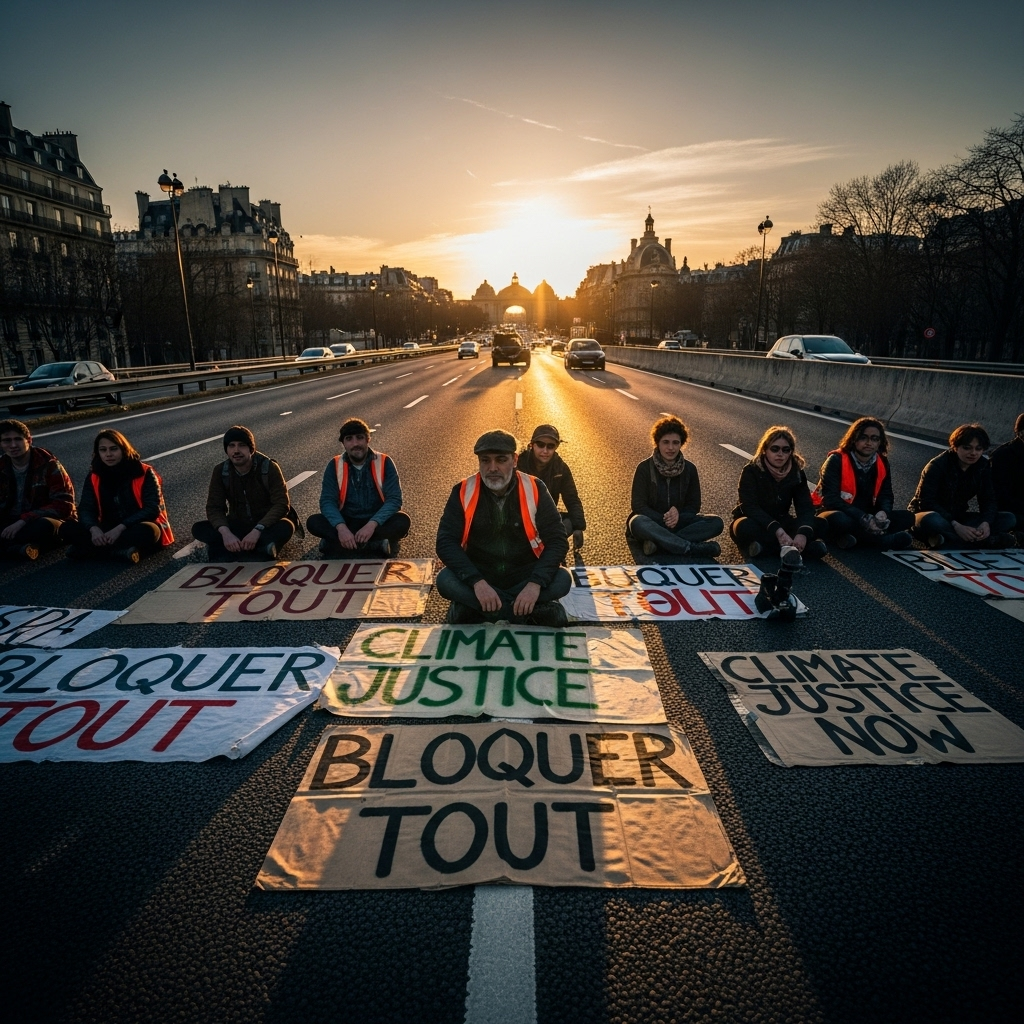
A Day of Disruption Across Major Cities
The actions began in the early hours of Wednesday morning. In Paris, activists managed to shut down several key entry points on the Périphérique ring road, the busiest urban motorway in Europe. Using reinforced chains and sitting in the road, they caused immediate gridlock that stretched for miles, impacting tens of thousands of commuters.
Simultaneously, similar scenes unfolded in other major hubs:
- Lyon: Protesters blockaded the entrances to a major Amazon logistics hub, preventing trucks from entering or leaving the facility.
- Marseille: Activists used kayaks and small boats to block access to parts of the commercial port, a critical artery for trade in the Mediterranean.
- Bordeaux: The main bridge, Pont de Pierre, was occupied, severing a key transport link in the city center during morning rush hour.
The coordinated nature of the protests demonstrated a high level of planning. Police forces were deployed in large numbers, often using cutting equipment to remove protesters chained to objects. The French Interior Ministry confirmed that over 450 arrests were made nationwide throughout the day, primarily for obstructing traffic and refusing to disperse.
Official Response and Voices from the Ground
The government’s response was swift and uncompromising. Interior Minister Gérald Darmanin condemned the actions, stating, “While the right to protest is a fundamental freedom, the right to paralyze the country, to prevent people from going to work or seeking medical care, is not. These irresponsible actions will be met with the full force of the law.” Information on public order laws can be found on the French Ministry of the Interior’s website.
However, participants in the “‘block everything’ protests” remain defiant. Chloé, a 22-year-old student arrested in Paris, told reporters before being led away, “We are blocking traffic for a few hours. The government’s inaction is blocking our entire future. Which is more violent? We have tried everything else. This is all we have left.”

Public opinion remains sharply divided. While many citizens expressed frustration over the disruptions, polls in recent weeks show a growing sympathy, particularly among younger generations, for the motivations behind the protests. The economic impact of Wednesday’s actions is still being calculated but is expected to be in the tens of millions of euros due to lost productivity and supply chain delays.
What’s Next for the Movement?
The high number of arrests poses a significant challenge for the movement. Legal defense funds are being mobilized, but the threat of criminal records and heavy fines could deter future participation. However, leaders within the movement often see such crackdowns as a tool for radicalization and recruitment, arguing that it exposes the government’s priorities: protecting commerce over the environment.
Experts are watching closely to see if the government will open any channels for dialogue or stick to a purely punitive approach. The “‘block everything’ protests” have successfully forced their agenda into the national spotlight, but the question remains whether their disruptive tactics will build a broader coalition of support or alienate the wider public.
For now, activist channels are buzzing with calls for solidarity and plans for future actions. The events of this week suggest that the tension between environmental activists and state authorities in France is far from over. The movement has proven its capacity for large-scale, coordinated disruption, and it is unlikely that Wednesday’s arrests will be the final chapter in this unfolding story.
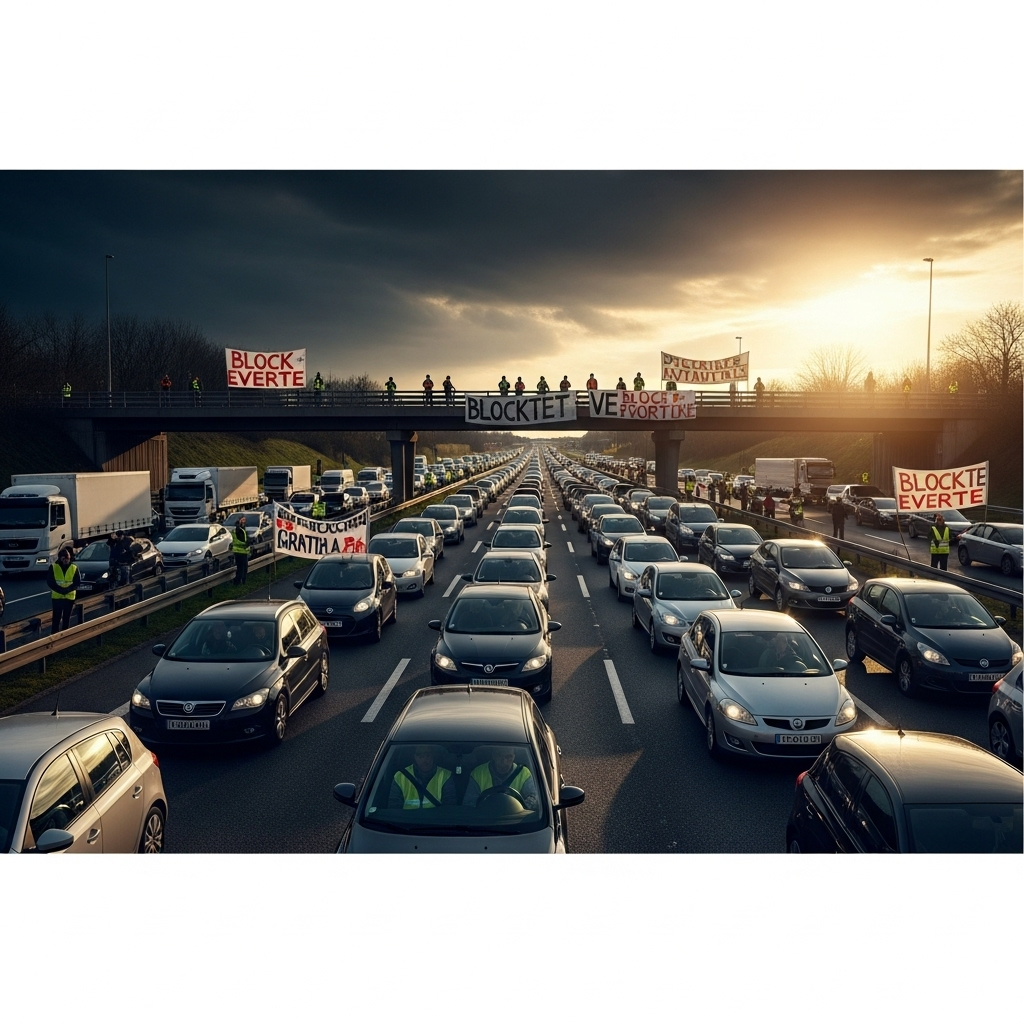
In conclusion, the ‘block everything’ protests have marked a new phase in French activism, where strategic economic disruption has become the primary weapon. As hundreds of activists face legal consequences, the nation is left to grapple with the profound questions they raise about climate justice, economic models, and the very nature of legitimate protest in a democracy on the brink of environmental crisis.
“`


