
His Conviction: 1 Nation Divided by Bolsonaro’s Trial
The final verdict has been rendered, and for former President Jair Bolsonaro, his conviction marks a stunning chapter in Brazil’s turbulent political history. In a decision that reverberated from the Amazon to the streets of São Paulo, Brazil’s Superior Electoral Court (TSE) found the former leader guilty of abuse of political power and misuse of public media, a judgment that has irrevocably split the nation into two fiercely opposing camps.
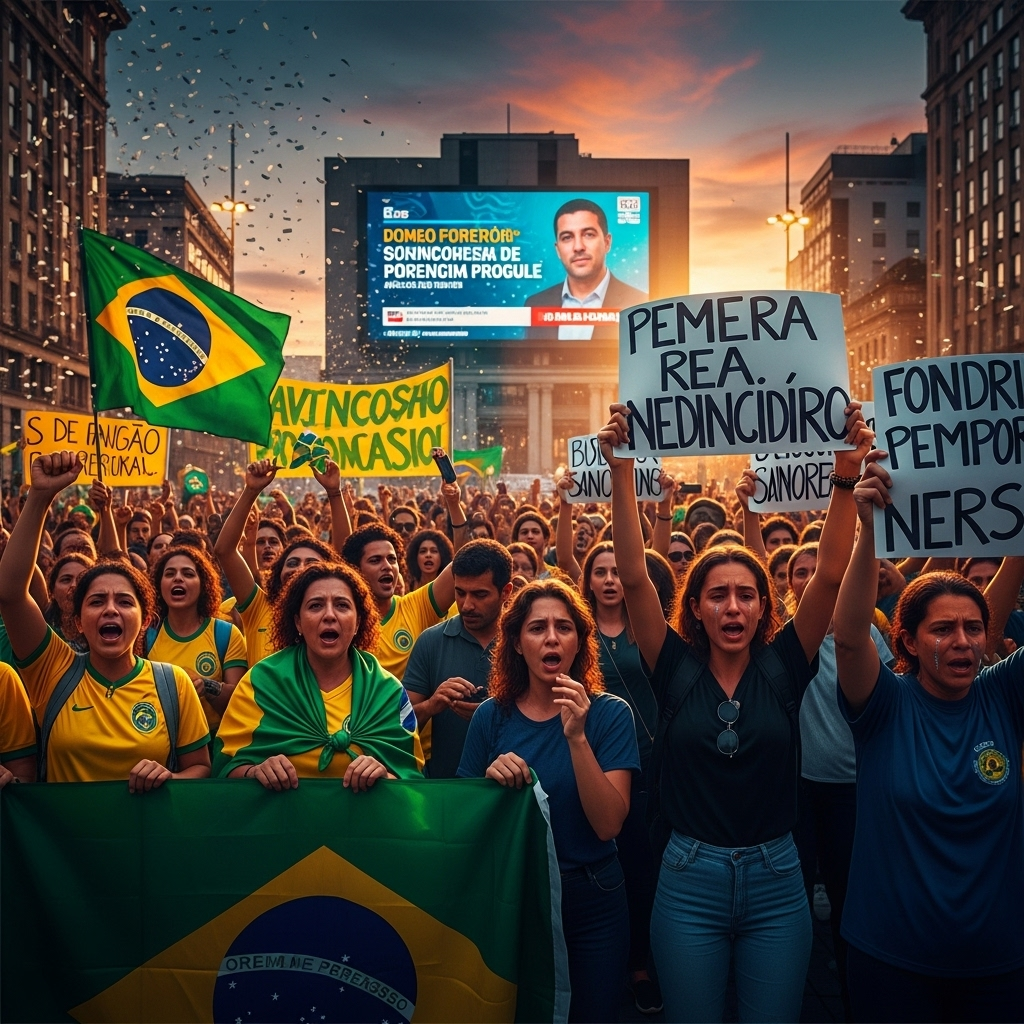
The ruling not only bars Bolsonaro from holding public office for eight years but also serves as a potent symbol for a country grappling with its democratic identity. As news of the verdict spread, scenes of jubilation erupted in some city centers, while in others, staunch supporters gathered in protest, decrying the decision as a political witch hunt. The deep-seated polarization that defined Bolsonaro’s presidency has now crystallized around this single, monumental event.
The Verdict and Its Immediate Aftermath
The seven-member panel of the TSE delivered a 5-2 majority vote, cementing a decision that had been anticipated for months. The central charge revolved around a meeting Bolsonaro held with foreign ambassadors in July 2022, during which he used government communication channels and facilities to broadcast unsubstantiated claims about the vulnerability of Brazil’s electronic voting system. Prosecutors argued this constituted a clear abuse of presidential power aimed at undermining faith in the democratic process.
Justice Benedito Gonçalves, the lead rapporteur for the case, stated in his lengthy reading of the verdict that the event was “not a mere expression of opinion, but a deliberate and calculated strategy to sow doubt and instability.” He emphasized that the actions went far beyond acceptable political discourse and represented a “grave threat” to the foundations of the electoral system.
Immediately following the announcement, the area surrounding the courthouse in Brasília became a microcosm of the national divide. Opponents of the former president cheered, waving flags and chanting slogans celebrating what they called “the defense of democracy.” Meanwhile, a few blocks away, supporters clad in the national colors of green and yellow gathered to voice their outrage, holding signs that read “Justiceiro Político” (Political Justice) and vowing to continue their fight.
What Led to His Conviction? A Timeline of Events
Understanding this landmark ruling requires looking back at a series of events that paved the way for the trial. While the ambassador’s meeting was the focal point, it was the culmination of years of rhetoric and actions that legal experts argued laid the groundwork for his conviction.
- 2021-2022: The Sustained Campaign – Throughout his final years in office, Bolsonaro relentlessly questioned the integrity of the electronic voting machines, a system in use since 1996. Despite a lack of evidence, he claimed they were susceptible to fraud, a narrative that energized his base.
- July 18, 2022: The Ambassador Meeting – The key event. Bolsonaro used the presidential palace and the state-run TV Brasil to broadcast his presentation to dozens of foreign diplomats, a move that the opposition party, PDT, cited in their formal complaint to the TSE.
- October 2022: The Election – After a narrow loss to Luiz Inácio Lula da Silva, Bolsonaro and his allies continued to challenge the results, fueling protests and encampments across the country.
- January 8, 2023: The Brasília Riots – Thousands of his supporters stormed the capital, invading Congress, the Supreme Court, and the presidential palace. While not the direct subject of this trial, investigators have drawn a clear line from his rhetoric to the riots, as explored in our related piece on Brazil’s democratic challenges.
- June 2025: The Trial Begins – After years of preliminary investigations and legal maneuvering, the trial at the TSE commenced, focusing specifically on the abuse of power charge.
This timeline illustrates a pattern of behavior that the court majority found to be a deliberate attempt to destabilize democratic norms, providing the legal foundation for the verdict.
The Political Fallout: A Nation on Edge
The conviction effectively removes Brazil’s most prominent right-wing figure from electoral contention until 2033. This creates a massive power vacuum on the right and sets the stage for a scramble to find a successor who can unify the “Bolsonarismo” movement. Names like São Paulo Governor Tarcísio de Freitas are already being floated, but none possess the same charismatic, albeit polarizing, appeal as Bolsonaro himself.
For the current government under President Lula, the ruling is a double-edged sword. On one hand, it neutralizes their chief political rival. On the other, it risks turning Bolsonaro into a political martyr, a figurehead for a powerful and aggrieved opposition movement. The government must now navigate a landscape where a significant portion of the population views the judicial system as a partisan tool.

“A Travesty of Justice”: The View from His Supporters
For millions of Brazilians, the court’s decision is not about justice; it’s about persecution. On social media and in protest gatherings, the narrative is clear: his conviction was a pre-ordained political hit job designed to eliminate a leader who threatened the established order. They argue that he was simply exercising his freedom of speech by questioning the voting system.
“They couldn’t beat him at the ballot box, so they used the courts,” said one supporter interviewed in Brasília. “This isn’t democracy. This is a dictatorship of the judiciary.” This sentiment is echoed widely, with many believing the Supreme and Electoral Courts have overstepped their constitutional bounds. As noted in a recent analysis by the Reuters news agency on judicial activism, such perceptions can dangerously erode public trust in key institutions.
“A Victory for Democracy”: The Perspective of His Opponents
Conversely, those who opposed Bolsonaro see the verdict as a vital moment of accountability. For them, it is proof that no one, not even a former president, is above the law. Legal scholars and human rights organizations have largely praised the decision as a necessary step to safeguard Brazil’s young democracy.
“The TSE has sent a clear message,” stated a representative from a Brazilian civil rights group. “Attacking the electoral process from the highest office in the land has consequences. This is a victory for the rule of law and for every Brazilian who believes in free and fair elections.” They see his conviction not as a political act, but as a legal and constitutional one, essential for deterring future attempts to subvert democratic processes. More details on the role of the judiciary can be found in our guide to Brazil’s democratic institutions.

What’s Next for Brazil After This Conviction?
Jair Bolsonaro’s legal team has already announced its intention to appeal the decision to the Supreme Federal Court (STF). However, legal experts give the appeal a low probability of success, given the STF’s own history of ruling against the former president on matters related to democratic norms.
The more significant question is what happens to the deeply fractured nation. Will this conviction allow for a period of political healing, or will it pour fuel on the fires of polarization? The path forward for Brazil is uncertain. The country stands at a crossroads, forced to confront the legacy of its most divisive modern leader and decide what kind of nation it wants to be. The fallout from his conviction will undoubtedly shape the political, social, and cultural landscape of Brazil for years to come.


