
Free Speech: 100s of Students Defend Charlie Kirk’s Rights
In an era of polarized campus politics, a recent event featuring conservative activist Charlie Kirk became an unexpected flashpoint for a robust defense of free speech, with hundreds of students rallying not for the speaker’s message, but for his fundamental right to deliver it.
The Scene on Campus: A Clash of Ideals
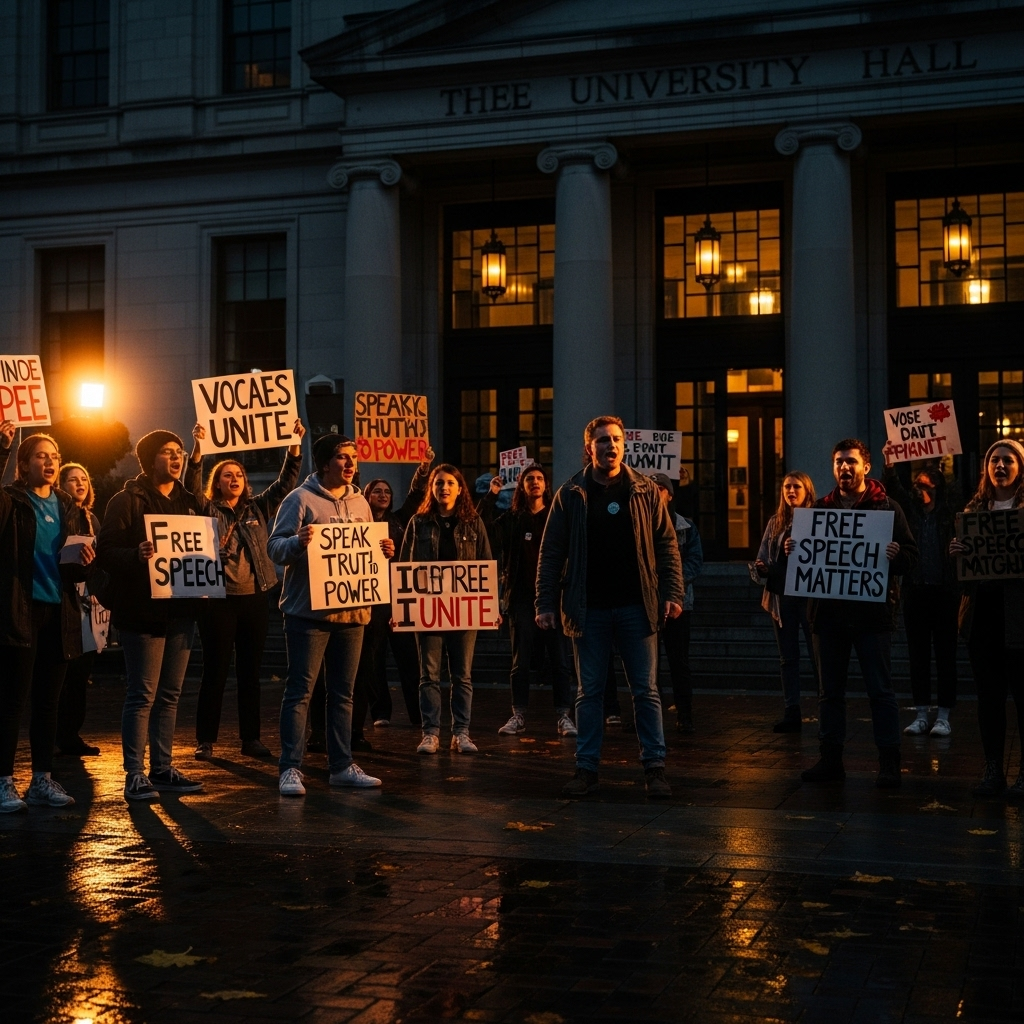
The atmosphere outside the Harrison Auditorium at Northwood University was tense. On one side of the main plaza, nearly 200 students gathered to protest the scheduled appearance of Charlie Kirk, the founder of Turning Point USA. Chants of “Hate speech is not free speech” echoed as students held signs denouncing Kirk’s past statements on various social and political issues.
The protest was organized by a coalition of student groups who argued that Kirk’s rhetoric was harmful and had no place on their campus. “We’re here to show that this kind of divisive language isn’t welcome,” said Sarah Jenkins, a junior and one of the protest organizers. “A university should be a safe and inclusive space, and we feel that speakers like Kirk directly undermine that mission.”
Campus security had established a clear perimeter, ensuring pathways remained open and that the protest, while loud, remained peaceful. The administration had previously released a statement acknowledging the students’ right to protest while affirming the university’s commitment to allowing a diversity of viewpoints to be heard.
A Surprising Turnout for Free Speech
What began as a standard campus protest, however, soon evolved into something far more nuanced. As the anti-Kirk demonstration grew, another group of students began to assemble on the opposite side of the plaza. This was not, as some first assumed, a group of Kirk supporters. Instead, it was a diverse and vocal coalition of students who had come together for a different reason: to defend the principle of free speech itself.
Numbering well over 100, this counter-demonstration was organized organically through social media chats and word of mouth. Their signs carried a different message: “You Don’t Have to Agree to Listen,” “Free Speech is For Everyone,” and “Sunlight is the Best Disinfectant.”
“I fundamentally disagree with about 90% of what Charlie Kirk says,” explained David Chen, a political science major holding one of the signs. “But I came out here today because the moment we start deciding who is and isn’t allowed to speak on campus based on whether we like their ideas, we’ve lost the entire purpose of a university. Bad ideas are defeated by better ideas, not by censorship.”
This sentiment was widespread among the group. Many students explicitly stated they were not there to endorse Kirk or Turning Point USA. Their presence was a stand against what they see as a growing trend of “de-platforming” and the use of the “heckler’s veto” to silence unpopular opinions. They argued that the best way to confront ideas one finds objectionable is through open debate and critical questioning, not by preventing them from being heard in the first place.

What Does “Free Speech” Mean on College Campuses Today?
The events at Northwood University highlight a critical and ongoing debate across the nation’s academic institutions. While the First Amendment protects speech from government censorship, the application of free speech principles at both public and private universities is a complex legal and ethical matter. You can read more about the core principles in our guide on understanding free speech.
University administrators are often caught in a difficult position, attempting to balance two competing values:
- Fostering an inclusive and non-hostile environment for all students.
- Upholding the principles of academic freedom and open inquiry, which require exposure to a wide range of ideas, even those considered offensive or wrong by many.
Critics of speakers like Kirk argue that certain forms of speech can cross the line into harassment or create an environment where marginalized students feel unsafe, thus hindering their ability to learn. They argue that protecting these students should be the university’s primary concern.
On the other hand, free speech advocates argue that the term “safety” has been expanded from meaning protection from physical harm to meaning protection from emotional or intellectual discomfort. This, they contend, is a dangerous road that ultimately infantilizes students and prevents them from developing the critical thinking skills needed to engage with and refute ideas they oppose. The students at Northwood who rallied for Kirk’s right to speak clearly fell into this latter camp.
The Broader Implications for Academic Freedom
This incident is not an isolated one. Across the country, similar scenes have played out as institutions grapple with how to handle controversial speakers and student-led protests. Organizations like the Foundation for Individual Rights and Education (FIRE) have documented hundreds of cases of speech-related controversies on campuses, from speaker disinvitations to restrictive speech codes.
What made the Northwood University event so noteworthy was the significant and visible student-led defense of speech rights for an opposing viewpoint. It suggests a potential shift, or at least a growing counter-movement, among students who are concerned that the climate on campus is becoming too intellectually restrictive.
“We’re tired of the shouting matches where no one listens,” one student from the free speech rally commented. “I want to hear what the other side is thinking, even if it’s infuriating. How can I argue against it if I’m not allowed to even hear it? Silencing people just makes their ideas more attractive to some.”
The university’s administration ultimately allowed the event to proceed, and while Kirk’s speech was interrupted by a few shouted questions during the Q&A, it was not shut down. Both student groups eventually dispersed peacefully. For many who witnessed it, the day was a powerful, real-world lesson in constitutional principles and the messy, complicated, but vital practice of free speech in a democratic society.
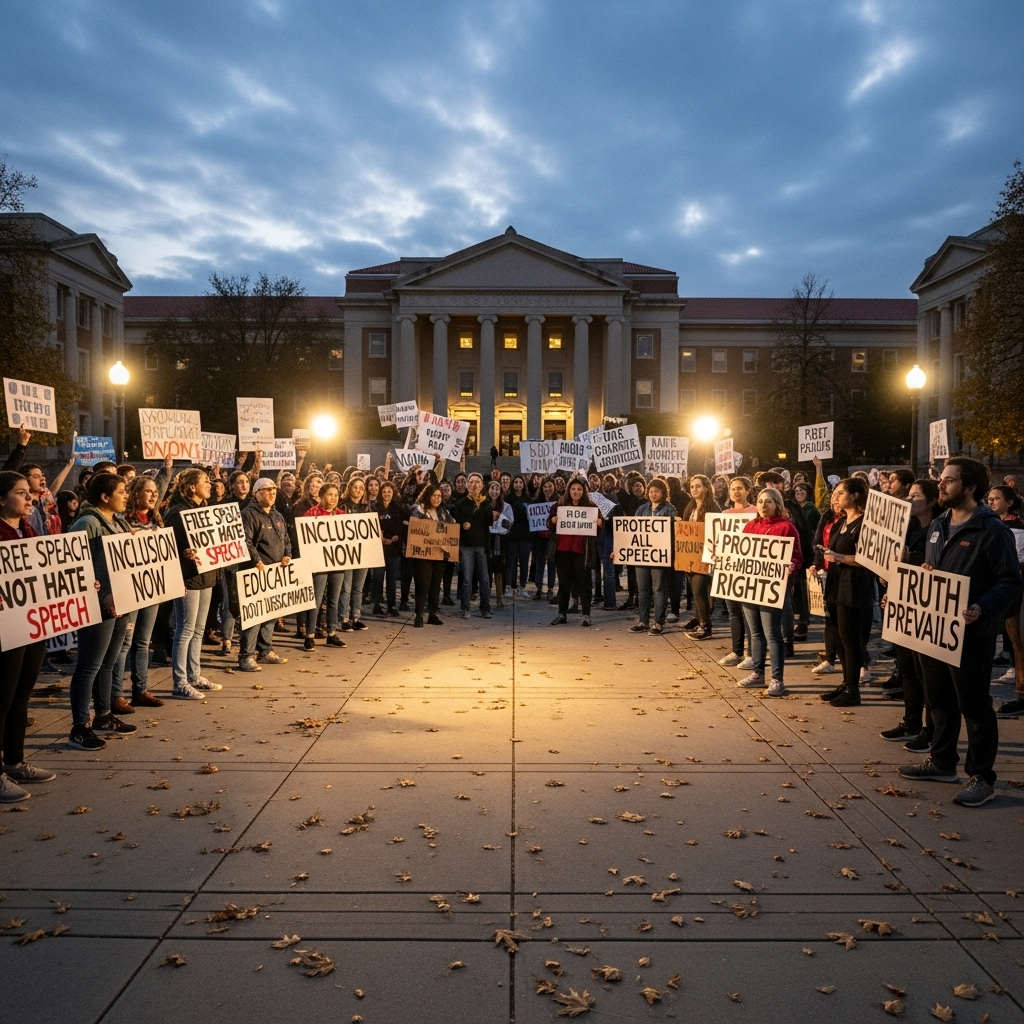
The clash at Northwood serves as a potent reminder that the debate over free speech is not just an abstract legal concept. It is a lived experience, continually being negotiated on the quads and in the auditoriums of America’s universities, often by the very students whose intellectual development is at stake.


