Top investors: 5 later-stage raise strategies for 2025
The fundraising climate has shifted dramatically. As we look toward 2025, securing a Series B, C, or beyond requires more than just a strong growth curve. To attract the attention of top investors, founders must demonstrate a sophisticated understanding of capital efficiency, market positioning, and long-term sustainability. The days of “growth at all costs” are firmly in the rearview mirror.
Today’s venture capitalists are placing a premium on resilient, well-managed companies with a clear and defensible path to profitability. This guide outlines five essential strategies that will resonate with the most sought-after investment partners in the current landscape.
In This Article
1. Master the Profitability Narrative
The single most significant shift in the later-stage fundraising market is the focus on profitability over pure hypergrowth. While impressive top-line revenue growth is still important, it’s no longer the only metric that matters. Top investors in 2025 are dissecting unit economics with unprecedented scrutiny.
To succeed, you must move beyond vanity metrics. Your pitch needs to be built on a foundation of solid financial health.
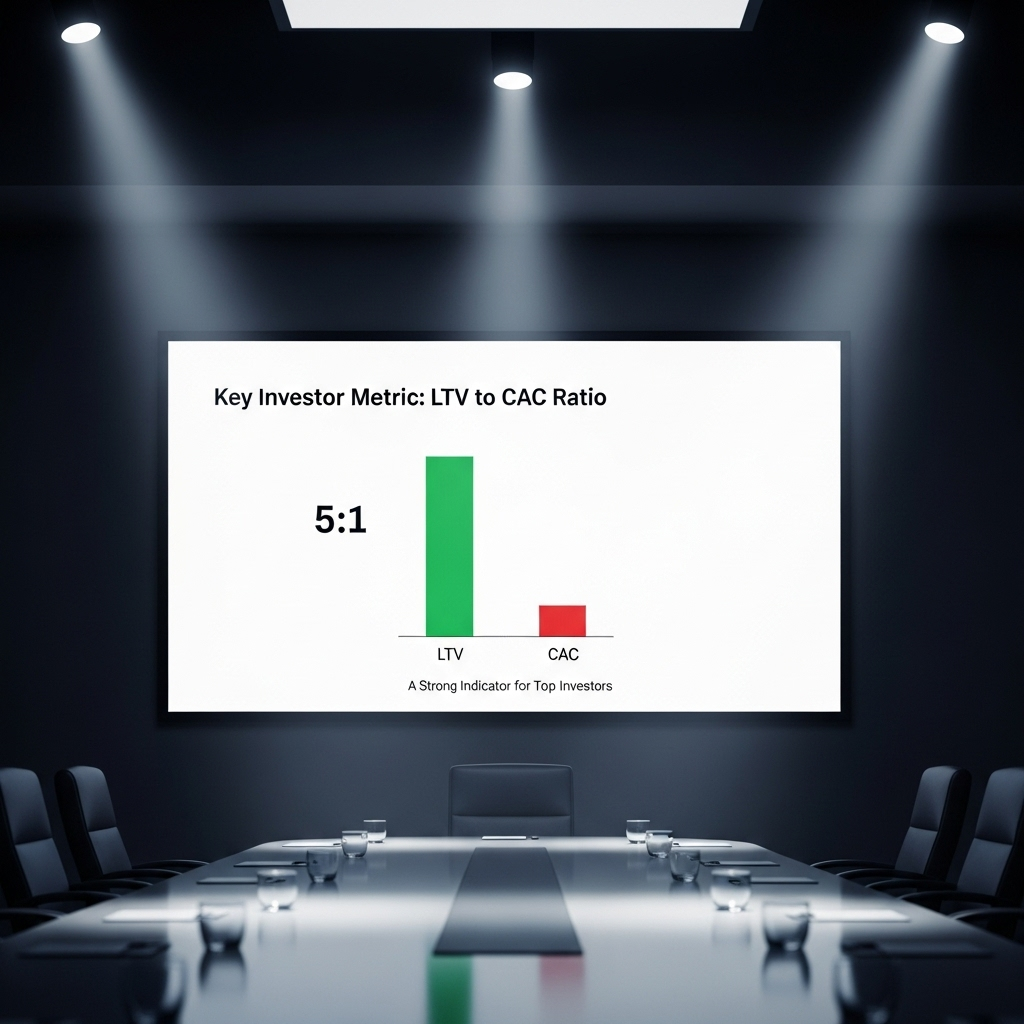
- LTV:CAC Ratio: Demonstrate not just that you can acquire customers, but that you can do so profitably. An LTV (Lifetime Value) to CAC (Customer Acquisition Cost) ratio of 3:1 or higher is often considered the gold standard.
- Net Revenue Retention (NRR): Show that your existing customers are spending more over time. An NRR above 120% indicates a sticky product with strong upsell or cross-sell potential.
- Burn Multiple: This metric, which measures how much you spend to generate each new dollar of annual recurring revenue (ARR), is a key indicator of capital efficiency. A lower multiple is always better.
The takeaway: Frame your growth story within the context of efficiency. Show investors a clear, believable timeline to break-even and profitability, even if it’s still 18-24 months away. This demonstrates discipline and foresight, qualities highly valued by today’s leading venture capital firms.
2. Embrace Hybrid Financing Models
An equity-only round is no longer the default option for savvy founders. The market has matured, offering a diverse range of financing instruments that can be blended to optimize your capital structure. Presenting a hybrid model shows investors that you are a sophisticated operator focused on minimizing dilution and maximizing shareholder value.
Consider incorporating non-dilutive or less-dilutive options alongside your equity raise:
- Venture Debt: Taking on debt from specialized lenders can extend your runway without giving up more ownership. It’s an excellent tool to bridge your company to the next major milestone before a larger equity round.
- Revenue-Based Financing (RBF): Companies with predictable, recurring revenue can receive capital in exchange for a small percentage of future revenues. This aligns the cost of capital directly with business performance.
By combining a $20M equity check with $5M in venture debt, for example, you raise the $25M you need while protecting your cap table. This strategic approach is increasingly appealing to top investors, as it shows you are a responsible steward of capital. For more on this, see our guide on cap table management.
3. Leverage Strategic Secondaries
In a later-stage company, you have early employees and angel investors who have been on the journey for years. Providing them with partial liquidity can be a powerful tool in your fundraising arsenal. A secondary sale, conducted alongside your primary raise, allows these stakeholders to sell a portion of their shares.
This isn’t just about “cashing out.” It has several strategic benefits:
- Cleans Up the Cap Table: It can consolidate smaller shareholders and make the cap table more attractive to new institutional investors.
- De-risks the Round: New investors see that the company is mature enough to provide liquidity, and it reduces the pressure on them to be the sole source of it in the future.
- Boosts Morale: Allowing loyal, long-term employees to realize some of the value they’ve helped create is a massive morale and retention booster.
Proactively manage this process. Don’t wait for investors to ask. Present a structured plan for a small, controlled secondary as part of your overall fundraising strategy. This maturity will set you apart.

Court Top Investors Through Corporate Venture Arms
Corporate Venture Capital (CVC) arms of major corporations like Salesforce, Google, and Microsoft have become essential players in the later-stage ecosystem. While they were once viewed as slower and more complex than traditional VCs, they now offer unique advantages that top investors from financial firms respect.
Engaging a CVC as a strategic investor in your round offers more than just capital. It provides a powerful validation of your technology and market position. The benefits are threefold:
- Distribution Channels: A partnership with a major corporation can unlock access to their vast customer base, dramatically accelerating your go-to-market strategy.
- Product Integration: Integrating your product into a larger platform can create a deep, defensible moat around your business.
- Acquisition Pathway: While not the primary goal, a CVC investment can serve as a “first date,” establishing a relationship that could lead to a future strategic acquisition.
Having a well-known corporate name in your funding announcement signals to the market—and other potential investors—that you are not just a feature, but a foundational platform. As Harvard Business Review notes, the strategic value can often outweigh the capital itself.
5. Build a Data-Driven, Unassailable Pitch
Your narrative is everything, but in 2025, that narrative must be bulletproof and backed by irrefutable data. The best founders are now using advanced analytics and business intelligence tools not just to run their business, but to craft their fundraising story.
Go beyond surface-level dashboards. Prepare a “due diligence” room before you even start your outreach. This should include:
- Cohort Analysis: Detailed breakdowns of customer behavior over time, proving retention and expansion.
- Market Penetration Data: A bottom-up analysis of your Total Addressable Market (TAM) and a clear, data-supported plan for how you will capture more of it.
- Competitive Intelligence: A sober, data-backed assessment of the competitive landscape, showing exactly where you win and why.
Use your data to preemptively answer the tough questions. Show investors that you understand your business at a granular level, better than anyone else. This level of preparation demonstrates operational excellence and builds immense trust, making it easier for them to write a check.

Conclusion: The New Mandate for Founders
Securing later-stage funding in 2025 and beyond is less about dazzling investors with growth projections and more about earning their confidence through operational rigor and strategic foresight. The top investors are rewarding founders who can build resilient, efficient, and sustainable businesses.
By focusing on profitability, employing smart financing structures, managing stakeholders through secondaries, courting strategic CVCs, and building a data-fortified narrative, you position your company not just to survive, but to thrive and command the valuation it deserves in a discerning market.