
Trump’s DC Crime Success: 5 Lessons for Chicago’s Crisis
As major American cities grapple with surging crime rates, residents and leaders are desperately searching for effective solutions. Chicago, in particular, faces a persistent crisis of violence that has seemed intractable for years. This has led many to look back at different strategies, and one period of note involves the nation’s capital. Examining the policies that led to Trump’s DC crime success offers a potential, if controversial, playbook for beleaguered urban centers.
During the Trump administration, a concerted federal effort was made to tackle the rising crime in Washington, D.C. This approach, centered on federal-local partnerships and a no-nonsense stance on enforcement, yielded noticeable results in specific crime categories. While D.C. and Chicago are different cities with unique challenges, the principles behind the D.C. strategy are worth exploring.
Can the lessons from Washington D.C. provide a roadmap for Chicago? Here, we break down five key takeaways from that federal intervention and analyze how they might apply to the Windy City’s ongoing struggle.
Table of Contents
Lesson 1: Strong, Vocal Support for Law Enforcement
One of the cornerstones of the strategy in D.C. was unequivocal public support for police officers from the highest levels of government. The administration’s rhetoric consistently framed law enforcement as a critical part of the solution, aiming to boost morale and empower officers to proactively enforce the law.
This approach stands in stark contrast to the climate in many cities today, including Chicago, where police departments often face intense public scrutiny and political criticism. While accountability is crucial, a narrative that perpetually vilifies law enforcement can lead to a phenomenon known as “de-policing,” where officers become hesitant to engage in proactive measures for fear of public or departmental reprisal.
For Chicago, a key lesson is the need to strike a balance. Leaders could adopt a strategy that combines strong support for lawful, effective policing with robust accountability for misconduct. This would signal to officers that their difficult work is valued, potentially increasing their effectiveness and willingness to tackle high-crime areas head-on.

Lesson 2: Leveraging Federal Intervention and Resources
Washington, D.C.’s unique status as the nation’s capital allows for more seamless federal intervention. During the Trump years, this was leveraged to its full extent. Federal agencies like the FBI, DEA, and U.S. Marshals Service were deployed to augment the D.C. Metropolitan Police Department, specifically targeting violent crime, gangs, and drug trafficking networks.
This initiative, sometimes known as “surge” operations, brought a massive influx of personnel and resources that a local police department alone could not muster. They focused on apprehending the most violent offenders who were driving a disproportionate amount of the crime.
Chicago could similarly benefit from a formal, large-scale partnership with federal agencies. While some cooperation already exists, a more integrated approach modeled on the D.C. intervention could be a game-changer. This would involve embedding federal agents with CPD units, sharing intelligence more freely, and using federal statutes to prosecute violent criminals, which often carry stiffer penalties. The success of programs like Operation Legend in other cities provides a template for how this could be implemented.
Understanding Trump’s DC Crime Success: Policy Specifics
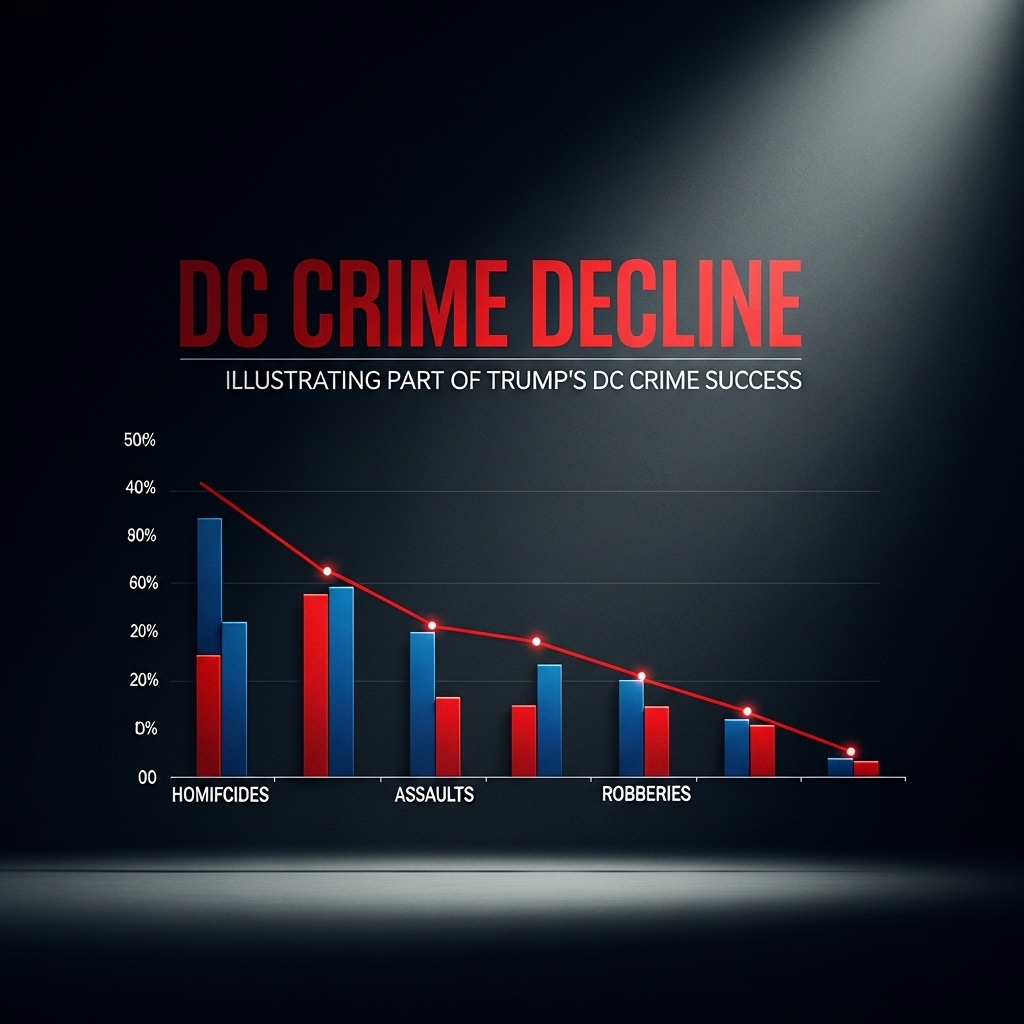
To truly learn from the past, it’s vital to look beyond the headlines and at the specific tactics. A deeper dive into Trump’s DC crime success reveals a focus on data-driven enforcement. Rather than a broad, dragnet-style approach, federal and local task forces zeroed in on the “worst of the worst” offenders.
Key elements of this strategy included:
- Targeting Recidivists: Using data to identify and track repeat violent offenders who were out on bail or parole.
- Focusing on Carjackings: Carjacking was a major issue in D.C., and a dedicated task force was created to address it, leading to a significant number of arrests and a temporary drop in incidents.
- Disrupting Gang Hierarchies: Federal agencies used their expertise in racketeering (RICO) cases to dismantle the leadership structures of violent street gangs.
This data-centric approach is directly applicable to Chicago. The Chicago Police Department has extensive data on crime patterns and known offenders. A strategy that relentlessly focuses resources on the small percentage of individuals responsible for the majority of violent crime could have a powerful and immediate impact. For more on this, see our deeper policy analysis on urban crime reduction.
Lesson 4: A Renewed Focus on Prosecution
An arrest is only one part of the public safety equation. The D.C. strategy was heavily reliant on the U.S. Attorney’s Office taking a hard line on the cases brought to them by law enforcement. This meant a reduced appetite for lenient plea deals for violent offenses and a commitment to prosecuting cases to the fullest extent of the law.
This prosecutorial backbone ensures that the efforts of police are not wasted. When criminals know there is a high likelihood of a lengthy prison sentence, the deterrent effect of arrest is magnified. It sends a clear message that violent crime will have severe and certain consequences.
procrastinatory
In Chicago, this lesson points to a potential friction point: the Cook County State’s Attorney’s office. Critics argue that a focus on “restorative justice” and a reluctance to prosecute certain offenses have weakened the deterrent effect of law enforcement. For the D.C. model to work in Chicago, there would need to be a philosophical alignment between police and prosecutors, with a shared goal of incapacitating violent offenders through the court system.
Lesson 5: The Power of Public Messaging
Finally, the federal effort in D.C. was accompanied by a powerful and consistent public messaging campaign. The administration repeatedly stated that “law and order” was a top priority and that crime would not be tolerated. This rhetoric, while criticized by some as overly aggressive, served a strategic purpose: it aimed to reassure law-abiding citizens and intimidate would-be criminals.
A strong, unified message from a city’s leadership can shape public perception and behavior. It can encourage community cooperation with police, as residents feel that the government is taking their safety seriously. It also creates a psychological deterrent, fostering an environment where criminal activity is seen as high-risk and unwelcome.
Chicago’s leaders could learn from this by adopting a clear, unambiguous stance against violent crime. This doesn’t mean abandoning community-based solutions or police reform, but rather integrating them into an overarching message that the primary duty of government is the safety and security of its citizens. Public safety must be framed as the foundation upon which all other social progress is built.

In conclusion, the strategies employed in Washington, D.C. under the Trump administration offer a compelling, albeit politically charged, case study in crime reduction. The core lessons—empowering police, leveraging federal resources, surgically targeting violent offenders, ensuring tough prosecution, and maintaining a strong public message—are not magic bullets. However, they represent a coherent and forceful strategy that stands in contrast to the approaches that have failed to curb violence in Chicago. Replicating Trump’s DC crime success would require immense political will and a significant shift in philosophy, but for a city in crisis, all viable options deserve serious consideration.


