2050 – report: 1.5M Australians at Risk From Rising Seas
A landmark new analysis reveals the staggering scale of the climate threat to Australia’s coastal communities, with hundreds of thousands of properties facing inundation.
In This Article
A sobering new 2050 – report has painted a stark picture of Australia’s future, projecting that by mid-century, over 1.5 million Australians will be living in properties at high risk from coastal flooding and rising sea levels. The comprehensive analysis, conducted by the Climate Futures Institute, combines the latest sea-level rise projections with high-resolution property data to identify the homes, infrastructure, and communities most exposed to the escalating climate crisis.
The findings suggest that without immediate and significant intervention, the iconic Australian coastal lifestyle is under direct threat. The report warns of “uninsurable” postcodes, mass displacement, and trillions of dollars in property value at risk, urging policymakers to move beyond discussion and into a phase of decisive action.

The Core Findings of the 2050 – report
The 2050 – report goes into granular detail, moving beyond abstract percentages to name specific suburbs and even individual street-level risks. Its conclusions are built on the Intergovernmental Panel on Climate Change (IPCC) moderate emissions scenario, meaning the reality could be even more severe if global emissions are not curbed more aggressively.
Key statistics from the report include:
- 1.5 Million People Affected: This figure encompasses individuals whose primary residence is projected to be at high risk of at least one coastal flooding event per year by 2050.
- Over 700,000 Properties at Risk: The analysis identified approximately 715,000 individual properties, including homes, businesses, and public assets, facing significant threat.
- $2.1 Trillion in Asset Value: The combined value of the threatened residential and commercial properties represents a monumental economic vulnerability for the nation.
- Increased Frequency: Events once considered “once-in-a-century” floods are projected to occur multiple times a year in some of the worst-affected zones by 2050.
The report emphasizes that this is not a distant, futuristic problem. The effects are already being felt through increased insurance premiums, development restrictions in coastal zones, and more frequent damage from storm surges. The 2050 projection represents a critical tipping point where the situation becomes systemic and potentially irreversible for many communities.
Which Australian Regions are Most Vulnerable?
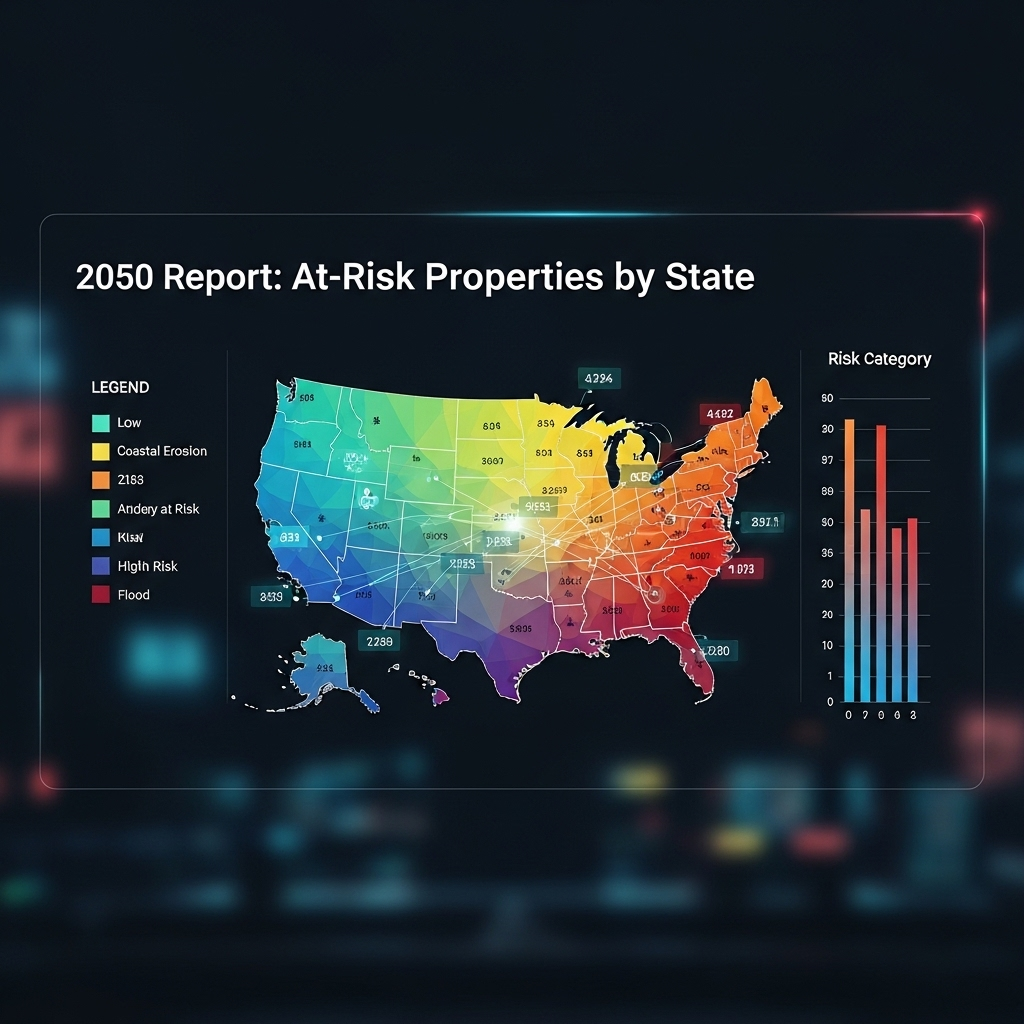
While the threat is national, the risk is not evenly distributed. The low-lying, densely populated coastal plains of Queensland and New South Wales are home to a significant portion of the at-risk properties.
The report identifies several key hotspots:
- The Gold Coast, QLD: Known for its canals and waterfront properties, the Gold Coast is listed as the single most vulnerable area in the country. Thousands of homes in suburbs like Surfers Paradise, Broadbeach, and Mermaid Waters are at extreme risk.
- Sydney’s Northern Beaches, NSW: Areas around Narrabeen and Manly, which have already experienced significant coastal erosion, are projected to face chronic inundation.
- Melbourne’s Bayside Suburbs, VIC: Suburbs from Port Melbourne down to Mordialloc face a dual threat from rising Port Phillip Bay levels and increased flooding from rivers and creeks.
- Adelaide’s Coastal Strip, SA: Areas like Port Adelaide and Glenelg are particularly susceptible due to their low elevation.
Experts warn that this geographic concentration of risk has profound implications for state governments and local councils, who are on the front lines of infrastructure planning, emergency response, and difficult conversations about managed retreat. For more information on government responses, see our article on Australia’s current climate policy.
The Economic and Social Ripple Effect
The direct cost of property damage is only the beginning. The 2050 – report highlights a cascade of secondary impacts that will affect all Australians, not just those on the coast.
The Insurance Crisis: As risk escalates, insurance premiums in vulnerable postcodes are predicted to become unaffordable for the average homeowner, leading to the creation of “uninsurable” red zones. This effectively deletes the wealth tied up in a family’s primary asset, creating a social and financial crisis.
Infrastructure Failure: Roads, rail lines, ports, and utilities located in coastal zones are all at risk. The cost of relocating or reinforcing this critical infrastructure will run into the hundreds of billions of dollars, a cost that will ultimately be borne by taxpayers. Damage to a major port like the Port of Melbourne could have significant impacts on national supply chains.
Social Dislocation: The report warns of “climate gentrification,” where wealthier residents can afford expensive mitigation measures while lower-income residents are forced to abandon their homes and communities. This raises profound questions of equity and social justice that the nation must address.
Urgent Calls for Mitigation and Adaptation
The report is not merely a forecast of doom; it is a call to action. It outlines a two-pronged approach necessary to manage the crisis: mitigation and adaptation.
Mitigation involves reducing the root cause of the problem: greenhouse gas emissions. The authors stress that every fraction of a degree of warming avoided will save thousands of homes. This requires aggressive national and global policies to transition to renewable energy.
Adaptation involves preparing for the sea-level rise that is already locked in. The report suggests several strategies:
- Protective Infrastructure: Building sea walls, levees, and storm surge barriers can protect high-value areas, though they are expensive and can have environmental downsides.
- Nature-Based Solutions: Restoring mangroves, salt marshes, and dunes can create natural buffers that absorb wave energy and reduce flooding.
- Planning and Policy Reform: Updating building codes and preventing new development in high-risk zones is a critical, common-sense first step.
- Managed Retreat: In some areas, the report concludes that the only viable long-term option will be a planned and equitable relocation of communities away from the shoreline. This is the most socially and politically challenging option, but one that must be on the table.
The 2050 – report makes it clear that a business-as-usual approach is no longer tenable. A coordinated effort involving federal, state, and local governments, as well as the private sector and individual homeowners, is the only path forward to safeguard Australia’s coastal communities for future generations.
“`