
Block Everything: 100s Arrested as Protests Grip France
Table of Contents
- What is the “Block Everything” Movement?
- The Roots of Unrest: Why France is Protesting
- Economic Fallout from Nationwide Blockades
- Government Response: Clashes and Mass Arrests
- What’s Next for the Protests?
France has been brought to a standstill as a powerful new protest movement, rallying under the defiant slogan “Block Everything” (Bloquer Tout), has erupted across the nation. Major highways, fuel depots, ports, and city centers have become impassable, leading to widespread disruption and culminating in hundreds of arrests as authorities attempt to regain control. The movement, a convergence of various grievances from farmers, union workers, and students, represents one of the most significant challenges to President Emmanuel Macron’s government to date.
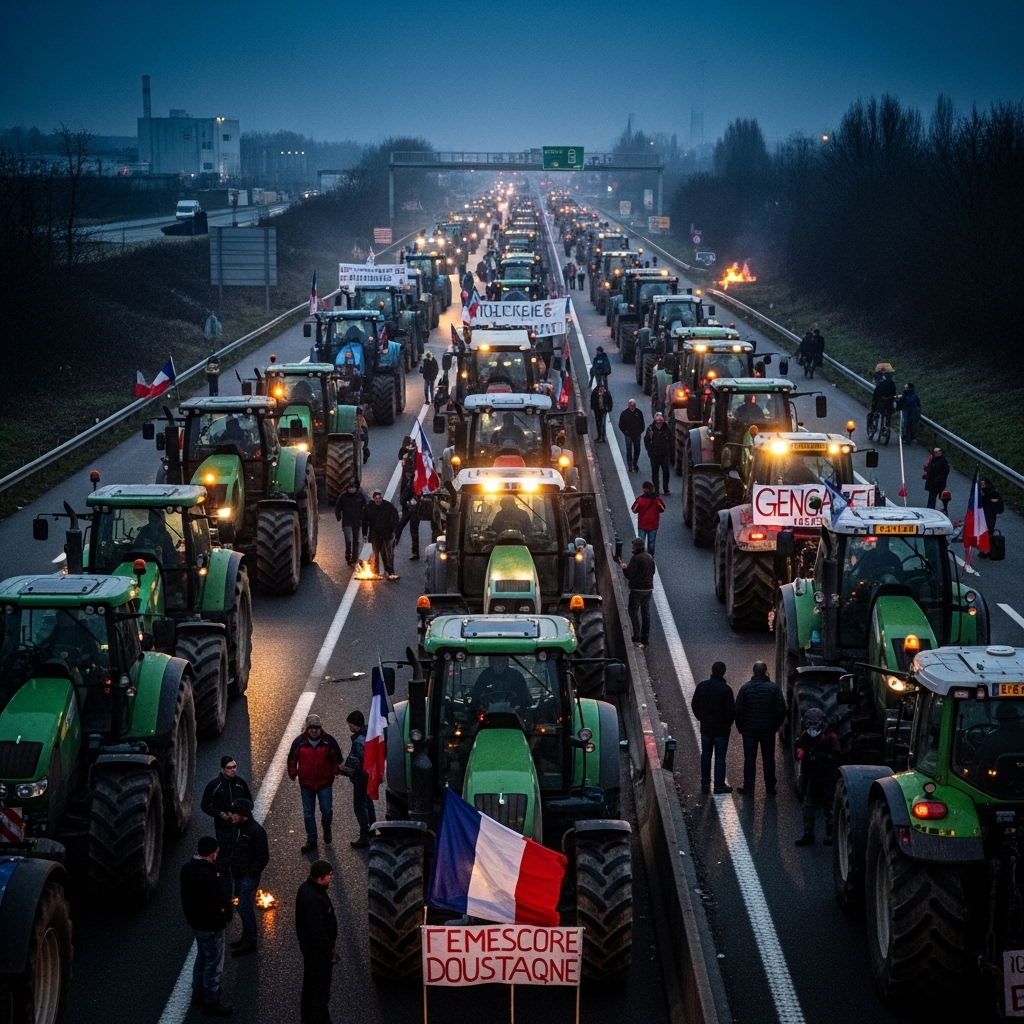
The protests have paralyzed key economic arteries, with demonstrators using tractors, burning tires, and human barricades to enforce their blockades. This coordinated effort to block everything is a visceral display of public anger over a range of issues, from soaring inflation and controversial pension reforms to agricultural policies and environmental regulations perceived as punitive and out of touch.
What is the “Block Everything” Movement?
The “Block Everything” strategy is exactly what it sounds like: a decentralized but highly effective tactic aimed at causing maximum disruption to the country’s economy and daily life. Unlike traditional marches that are often confined to specific routes and times, these protests are fluid and widespread. The goal is to create enough economic and logistical pain that the government is forced to listen and concede to demands.
Activists are targeting critical infrastructure. In the south, farmers have used convoys of tractors to seal off major autoroutes connecting France and Spain. In the north, port workers in Le Havre and Calais have slowed commercial shipping to a crawl. Near major cities like Paris, Lyon, and Marseille, protesters have established blockades at strategic roundabouts and fuel distribution centers, leading to long lines at gas stations and growing concerns about supply shortages.
This approach signifies a tactical evolution from previous protest movements. It leverages social media for rapid coordination, allowing disparate groups to unite under a single, powerful banner. The visual impact of these actions—smoldering barricades on a silent highway or a sea of tractors parked outside a government building—has dominated news cycles and amplified the protesters’ message globally.
The Roots of Unrest: Why France is Protesting
The “Block Everything” movement is not born from a single issue but is a cauldron of simmering discontent. Several key factors are fueling the flames:
- Agricultural Anger: French farmers are at the forefront of many blockades. They are protesting low pay, crushing debt, cheap imports from countries with laxer environmental standards, and what they call a mountain of bureaucratic red tape from both Paris and the EU. They argue that policies designed to protect the environment are making it impossible for them to compete and make a living.
- Cost of Living Crisis: Like many countries, France is grappling with high inflation. The rising cost of food, fuel, and energy has squeezed household budgets, and many feel the government’s support measures are insufficient. This economic anxiety is a powerful motivator for many joining the protests. For more information on European economic trends, you can refer to reports from the European Central Bank.
- Pension Reforms: Lingering anger over the government’s decision to raise the retirement age from 62 to 64 continues to fuel union participation. The reform was pushed through without a final parliamentary vote, a move that critics decried as undemocratic and which has deeply eroded public trust.
- Environmental Policy Backlash: While some protesters are environmental activists, others are pushing back against green policies they believe unfairly burden workers and rural communities. This includes taxes on fuel and regulations on farming practices, creating a complex and sometimes contradictory set of demands.
Economic Fallout from Nationwide Blockades
The economic impact of the “Block Everything” strategy is significant and growing daily. The MEDEF, France’s main employer federation, has warned of “catastrophic consequences” for businesses if the blockades continue. Supply chains have been severely disrupted, leaving supermarket shelves empty in some regions and halting production at factories reliant on just-in-time deliveries.
The transportation and logistics sectors are among the hardest hit. Trucking companies report losses in the millions of euros each day, with drivers stuck for hours or even days in massive traffic jams. The blockades have also impacted cross-border trade, causing friction with neighboring countries like Spain, Italy, and Germany.
Retail and hospitality businesses, still recovering from the pandemic, are also suffering. With city centers difficult to access and a general atmosphere of uncertainty, consumer spending has dropped. The government has estimated that the disruptions are costing the economy hundreds of millions of euros per day, a figure that will only climb as the protests persist.

Government Response: Clashes and Mass Arrests
Initially, the government adopted a cautious approach, expressing sympathy for the farmers’ plight while calling for calm. However, as the blockades intensified and began to threaten essential supplies and public order, the tone shifted. Interior Minister Gérald Darmanin has deployed tens of thousands of police and gendarmes to dismantle the most disruptive barricades and secure strategic sites like Paris’s Rungis International Market, a critical food hub for the capital region.
This has led to tense confrontations and clashes. Police have used tear gas and water cannons to disperse protesters, who have responded by throwing projectiles and reinforcing their barricades. Over the past week, authorities have confirmed that more than 800 people have been arrested in connection with the protests nationwide. The government has stated that while the right to protest is protected, actions that endanger lives and cripple the national economy will not be tolerated.
President Macron is in a difficult position, attempting to project an image of strength while also trying to de-escalate the crisis through dialogue. The government has announced a series of emergency measures, particularly for farmers, including financial aid and a promise to cut regulatory burdens. Yet, for many protesters, these concessions are seen as too little, too late. You can read our previous coverage on the government’s initial response to farmer discontent.
What’s Next for the Protests?
The future of the “Block Everything” movement is uncertain. The government hopes its concessions and a firm police response will peel away moderate protesters and isolate the more radical elements. However, the deep-seated anger fueling the movement will not be easily assuaged.
Protest leaders and unions have called for continued mobilization, promising to maintain pressure until their core demands are met. The key question is whether the movement can maintain its momentum and unity as the economic and social costs of the blockades mount. Public opinion, while initially supportive of the farmers, may begin to wane if widespread shortages and disruptions continue for an extended period.
For now, France remains on edge. The “Block Everything” slogan has proven to be a potent rallying cry, uniting a diverse coalition of the disgruntled. How the government navigates this crisis will not only determine the immediate future of the nation’s economy but could also define the political landscape for years to come.


