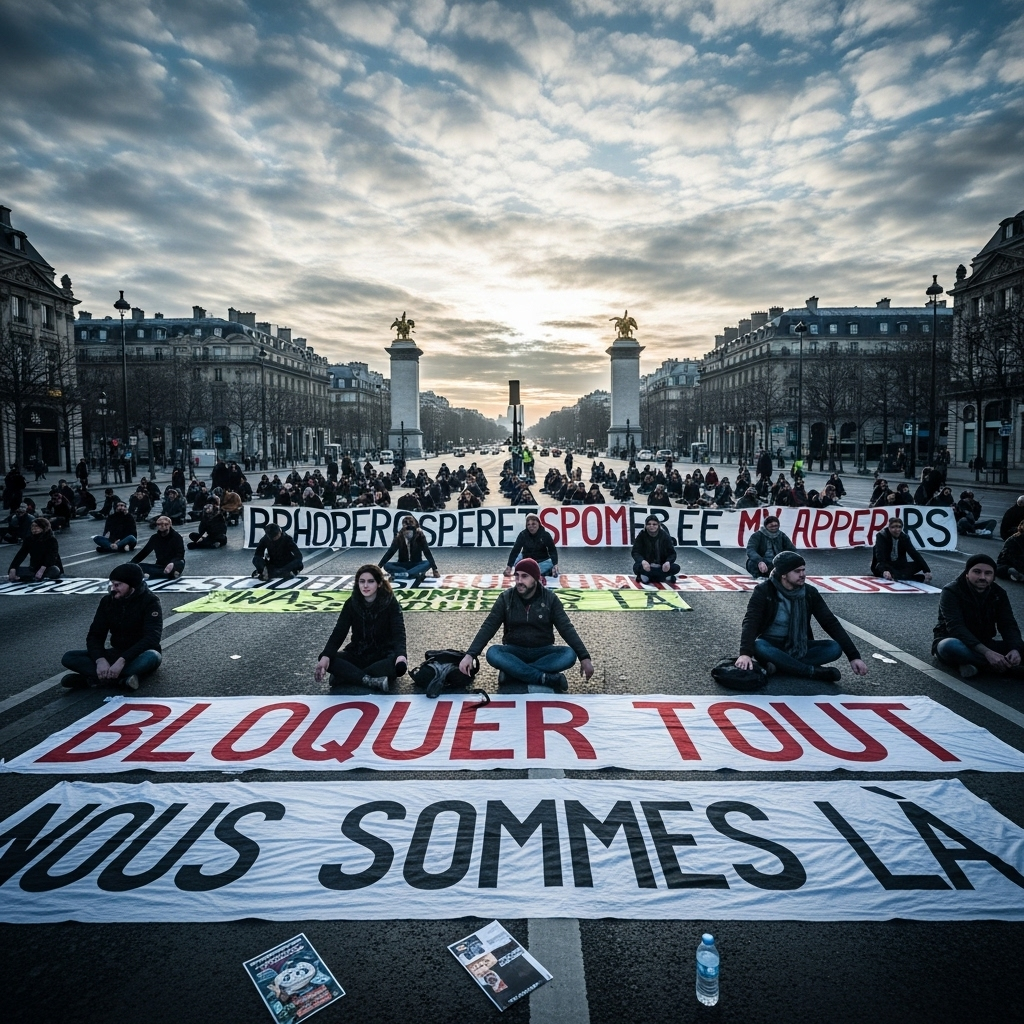
Major cities across France were brought to a standstill this week as environmental activists launched a series of coordinated demonstrations dubbed the ‘block everything’ protests . The disruptive actions, aimed at forcing government action on climate change, resulted in significant travel chaos and culminated in the arrest of several hundred individuals, according to the French Interior Ministry.
The protests represent a significant escalation in tactics by climate groups, who argue that years of peaceful marches and petitions have failed to produce the urgent policy changes needed to address the environmental crisis. By targeting critical infrastructure, they hope to create a level of disruption that politicians can no longer ignore.
Table of Contents nav>
What Sparked the ‘Block Everything’ Protests? The catalyst for the nationwide ‘block everything’ protests appears to be a combination of simmering frustrations over France’s perceived climate inaction and a recent controversial government report. The report, which activists claim significantly downplayed the country’s carbon emissions and delayed key environmental targets, was described by one protest organizer as “the final straw.”
Groups like Dernière Rénovation (Last Renovation) and Extinction Rebellion have been at the forefront of the movement. They argue that the French government, despite its public commitments to the Paris Agreement, continues to subsidize fossil fuels and fails to implement policies that would lead to a meaningful reduction in greenhouse gas emissions. “We are acting out of necessity,” a spokesperson for Dernière Rénovation stated in a press release. “When the house is on fire, you don’t politely ask for a glass of water; you sound the alarm by any means necessary.”
Their demands are clear: an immediate and legally binding plan for the thermal renovation of all buildings in France, a halt to all new fossil fuel infrastructure projects, and what they call “climate justice” for communities most affected by environmental degradation.
The Anatomy of the Disruption The strategy was simple yet effective: cause maximum disruption with a minimal number of people. Activists, often working in small, agile groups, targeted key arterial routes during the morning rush hour. In Paris, protesters chained themselves together on the Périphérique ring road, instantly creating miles of gridlock. Similar scenes played out in Lyon, Marseille, Bordeaux, and Strasbourg, where demonstrators blocked bridges, major intersections, and access to government buildings.
These actions were meticulously planned. Participants were trained in non-violent civil disobedience, prepared for arrest, and used social media to coordinate their movements and broadcast their message live from the blockades. The ‘block everything’ protests were not just about stopping traffic; they were a media spectacle designed to capture public attention.
The economic impact was immediate. Commuters were left stranded, delivery services were paralyzed, and businesses reported significant losses due to staff and supply chain disruptions. This disruption, organizers argue, is a small taste of the chaos that will be wrought by unchecked climate change. For more information on civil disobedience tactics, you can review the history of non-violent movements .
Government Response and Mass Arrests The French government’s response was swift and forceful. Interior Minister Gérald Darmanin condemned the actions as “unacceptable” and “dangerous,” vowing to restore public order. He authorized a heavy police presence at protest sites, with officers from the Compagnies Républicaines de Sécurité (CRS) riot police deployed to clear the blockades.
Videos shared online showed tense standoffs, with police physically carrying protesters off the roads. In some instances, tear gas was used to disperse crowds that had gathered in support of the blockades. The Interior Ministry confirmed that over 450 arrests had been made nationwide on charges including “hindering traffic,” “endangering the lives of others,” and “failure to disperse.”
“While the right to protest is a fundamental freedom, the right to work and move freely is also essential,” Minister Darmanin said at a press conference. “We will not allow a radical minority to take the country hostage.” Legal experts are now debating the proportionality of the response, with some human rights organizations expressing concern over the scale of the arrests. The official government statements can be found on the French Ministry of the Interior’s website .
Public Reaction and Future Implications Public opinion is sharply divided. Many citizens, particularly those caught in the traffic jams, expressed intense frustration. “I support their cause, but this is not the way,” one motorist told a local news crew. “I was late for work, and my child was late for school. They are turning people against them.” Business owners have also been highly critical, citing the economic damage.
However, the ‘block everything’ protests have also garnered significant support, especially among younger generations. Online polls show a growing number of people believe that such drastic measures are justified given the scale of the climate emergency. Supporters praise the activists’ courage and see the disruption as a necessary wake-up call for a complacent society and government.
The key question now is what comes next. The mass arrests may deter some, but organizers have already promised further, more disruptive actions. The government is under immense pressure to demonstrate that it is in control, while also addressing the root causes of the activists’ anger. These events have pushed the climate debate to the forefront of French politics, ensuring that the tension between public order and environmental urgency will continue to define the national conversation for the foreseeable future.
“`