
‘Block Everything’ Protests: France Sees 100s Arrested
France has been rocked by a wave of widespread civil disobedience, with the disruptive ‘block everything’ protests leading to chaotic scenes in major cities and resulting in the arrest of hundreds of individuals. Authorities are struggling to contain the demonstrations, which have targeted critical infrastructure, including major highways, public transport hubs, and government buildings across the nation.
The movement, a decentralized coalition of activists, union members, and frustrated citizens, has brought parts of Paris, Lyon, Marseille, and Bordeaux to a standstill. Their core strategy, as the name implies, is to create maximum disruption to force the government to address a long list of grievances, ranging from the soaring cost of living to controversial environmental policies.
Article Contents
What Exactly Are the ‘Block Everything’ Protests?
Unlike traditional, centrally organized marches, the ‘block everything’ protests are characterized by their spontaneous and widespread nature. Participants coordinate through encrypted messaging apps and social media to identify and blockade strategic points. The goal is not just to be seen and heard, but to fundamentally interrupt the economic and social functioning of the country.
Tactics have included:
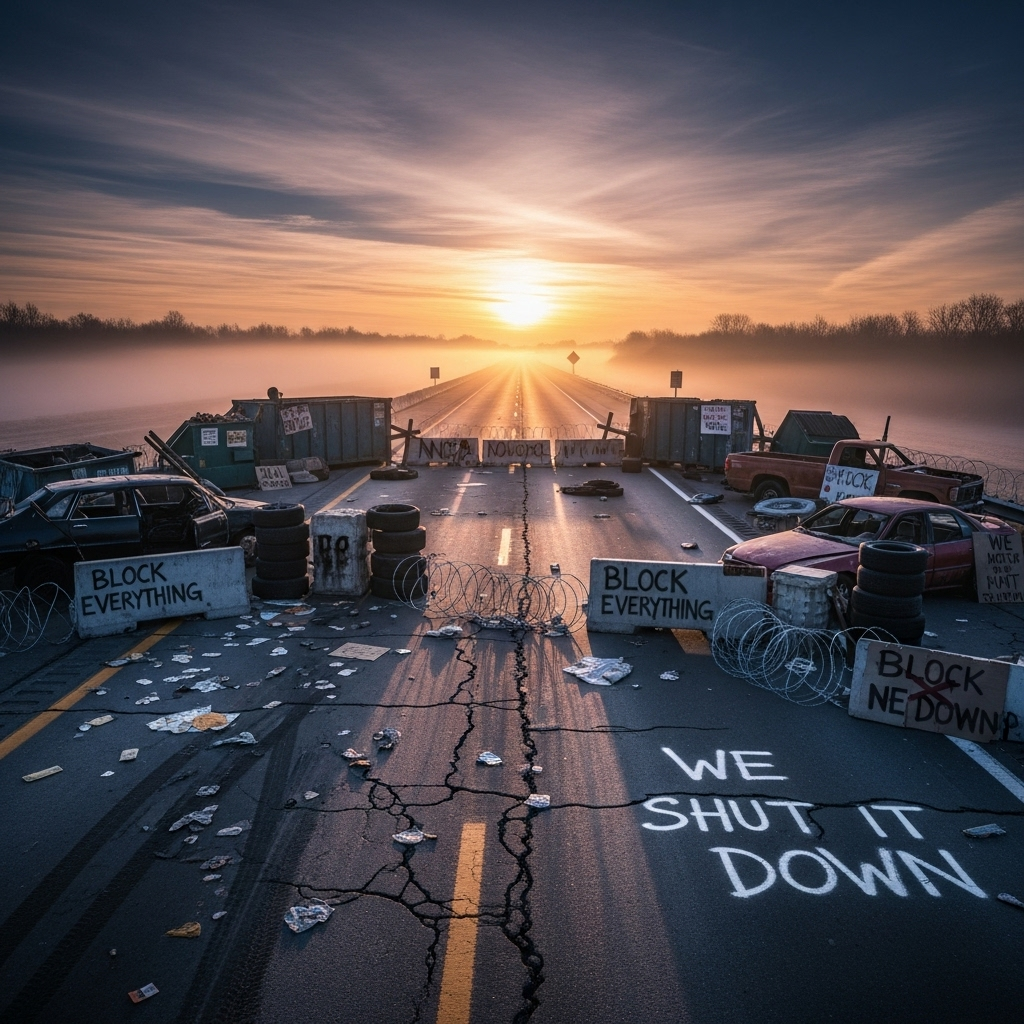
- Parking vehicles across major motorways during rush hour.
- Forming human chains to block access to train stations and airports.
- Staging “die-ins” and occupations of government ministry buildings.
- Organizing slow-moving convoys of tractors and trucks, a nod to earlier farmer protests.
Analysts note that this movement has learned lessons from previous demonstrations, such as the Yellow Vest (gilets jaunes) movement, by adopting a more fluid and less predictable structure. This makes it significantly harder for law enforcement to preemptively counter their actions.
The Government’s Response and Mass Arrests
The French government has taken a hardline stance against the disruptions. In a press conference, Interior Minister Gérald Darmanin stated, “The right to protest is a cornerstone of our Republic, but the right to sow chaos and paralyze the nation is not. We will not tolerate it.”
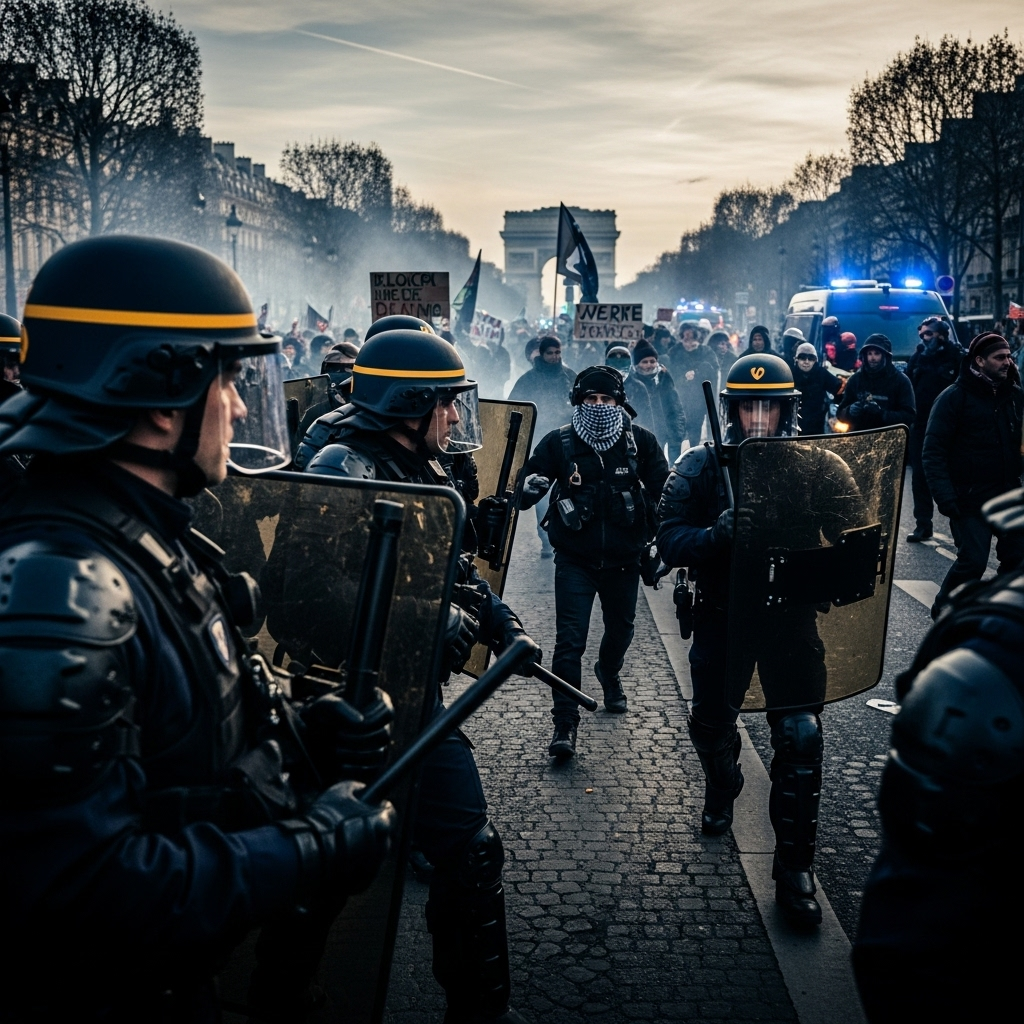
Over the past 48 hours, this has translated into significant police action. Official figures from the Ministry of the Interior report that over 750 arrests have been made nationwide. The majority of these are for offenses such as obstructing traffic, refusal to disperse, and vandalism. Eyewitness accounts and videos circulating online show tense standoffs, with riot police using tear gas and water cannons to clear blockades.
Human rights organizations have already begun to voice concerns over the scale of the arrests and reports of heavy-handed police tactics. Critics argue that the government’s forceful response is only escalating tensions and further radicalizing protesters.
Core Grievances Fueling the Unrest
The ‘block everything’ movement is not a single-issue protest. It represents a convergence of deep-seated frustrations that have been simmering within French society for years. The primary drivers can be broken down into three main categories.
Economic Pressures
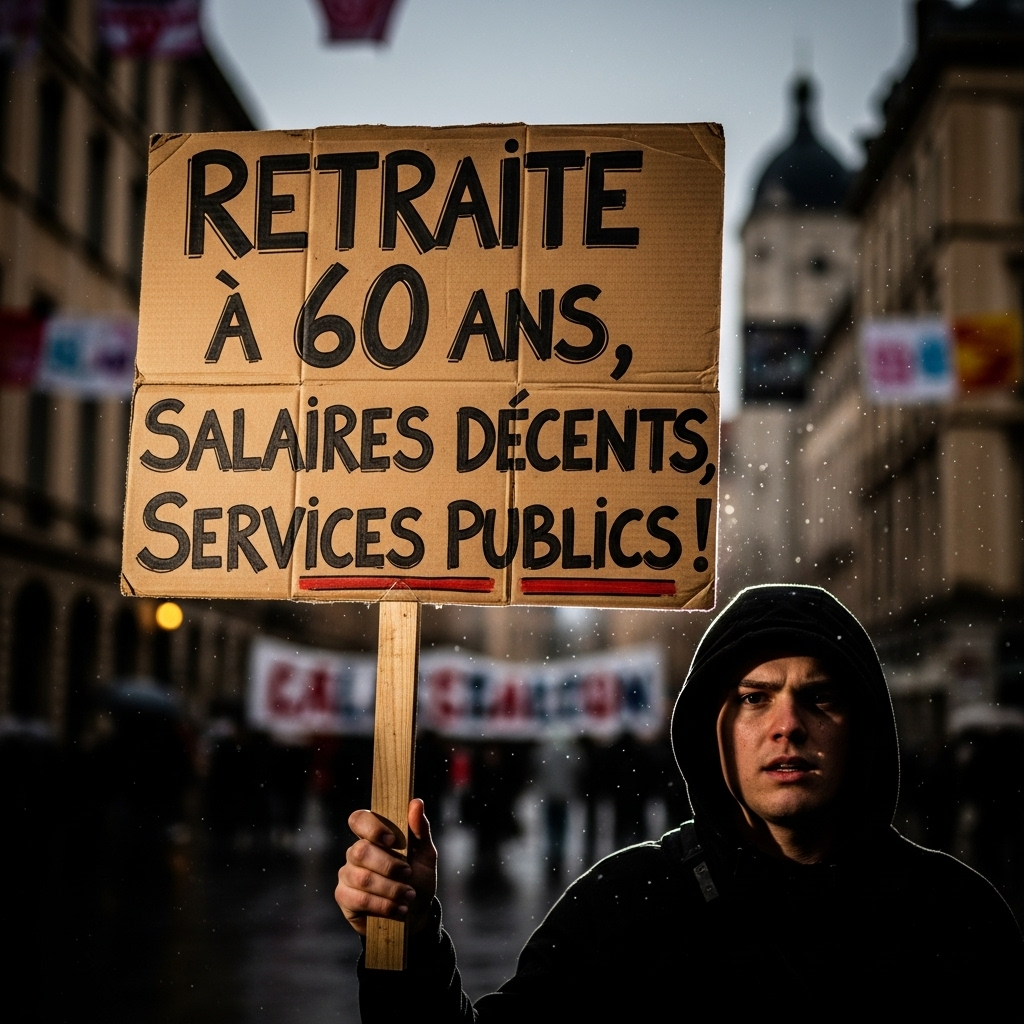
At the heart of the unrest is the persistent cost of living crisis. Protesters cite stagnant wages failing to keep pace with soaring inflation on essentials like food, fuel, and housing. Recent government pension reforms, which raised the retirement age, remain a significant point of contention and a symbol of a government perceived as being out of touch with the struggles of ordinary people.
Controversial Environmental Policies
While many protesters are environmentally conscious, they are fiercely opposed to what they call “punitive ecology.” These are green taxes and regulations, such as fuel levies or restrictions on older vehicles in urban centers, that they argue disproportionately burden the working and lower-middle classes without providing viable, affordable alternatives. “They want us to save the planet while we can’t even save for groceries,” one protester’s sign in Marseille read.
General Political Discontent
There is a broader undercurrent of deep dissatisfaction with the current political establishment. Many participants feel that the democratic process is failing them and that protest is the only language the government understands. This sentiment fuels the radical nature of the ‘block everything’ protests and their rejection of more conventional forms of demonstration.
Historical Context: A French Tradition of Protest
To understand today’s events, one must look at France’s long and storied history of social upheaval. From the 1789 revolution to the student-led riots of May 1968 and the more recent Yellow Vest movement, mass protest is deeply woven into the nation’s political fabric.
The ‘block everything’ protests share DNA with these past events. They echo the disruptive road-blocking tactics of the Yellow Vests and the anti-establishment fervor of May ’68. For many French citizens, taking to the streets is not just a right but a civic duty when the government is perceived to be overstepping its bounds or ignoring the will of the people. This cultural acceptance of protest as a legitimate political tool helps explain the scale and intensity of the current demonstrations.
However, the current movement’s reliance on decentralized, tech-enabled coordination marks a clear evolution in the methods of French social contestation. This makes it a uniquely 21st-century iteration of a very old tradition.
What’s Next for France?
The immediate future remains highly uncertain. Protest organizers have called for an intensification of the blockades in the coming days, promising a “Black Tuesday” of complete shutdown. Unions, which have so far played a supporting role, are meeting to decide whether to call for a general strike, which would escalate the crisis dramatically.
The government is in a difficult position. Conceding to the protesters’ demands could be seen as a sign of weakness and may embolden future movements. However, continuing the current strategy of mass arrests and forceful dispersal risks further inflaming public anger and could lead to more violent confrontations. All eyes are on President Macron, who has yet to publicly address the crisis in detail.
The ‘block everything’ protests have pushed France to a critical juncture. The coming days will determine whether the country descends further into chaos or if a path toward dialogue and de-escalation can be found. For now, the blockades continue, and the nation holds its breath.
“`


