
‘Block Everything’ Protests: 100s Arrested in France
Major cities across France were brought to a standstill this week as environmental activists launched a series of coordinated demonstrations dubbed the “‘block everything’ protests.” The disruptive actions, aimed at forcing government action on climate change, resulted in significant travel chaos and led to the arrest of hundreds of individuals in Paris, Lyon, and Marseille.
The protests represent a dramatic escalation in tactics by climate groups who argue that conventional methods of petitioning and marching have failed to produce meaningful policy changes. By targeting critical infrastructure, they hope to create an unavoidable economic and social crisis that compels leaders to respond.
What Are the ‘Block Everything’ Protests?
The “‘block everything’ protests,” or “blocage total” as they are known in French, are a form of non-violent civil disobedience characterized by coordinated efforts to shut down the normal flow of daily life. The strategy is simple yet effective: activists simultaneously obstruct multiple key points in a city’s infrastructure network.
These targets often include:
- Major Highways: Activists have glued their hands to the asphalt on ring roads and motorways.
- Public Transportation Hubs: Metro stations and major train lines have been disrupted.
- Distribution Centers: Access to large commercial warehouses and logistics hubs has been blocked.
- Government Buildings: Symbolic blockades have been set up outside ministries and public offices.
Organizers, primarily from radical environmental groups like “Dernière Rénovation” (Last Renovation) and “Extinction Rebellion,” state that their goal is to highlight society’s dependence on a fossil fuel-based economy that is, in their view, leading to planetary collapse. “We are not blocking traffic,” one protester’s banner read, “we are the traffic jam in a system leading us off a cliff.” This sentiment captures the core justification for the disruptive nature of the ‘block everything’ protests.
The Escalation in Paris and Lyon
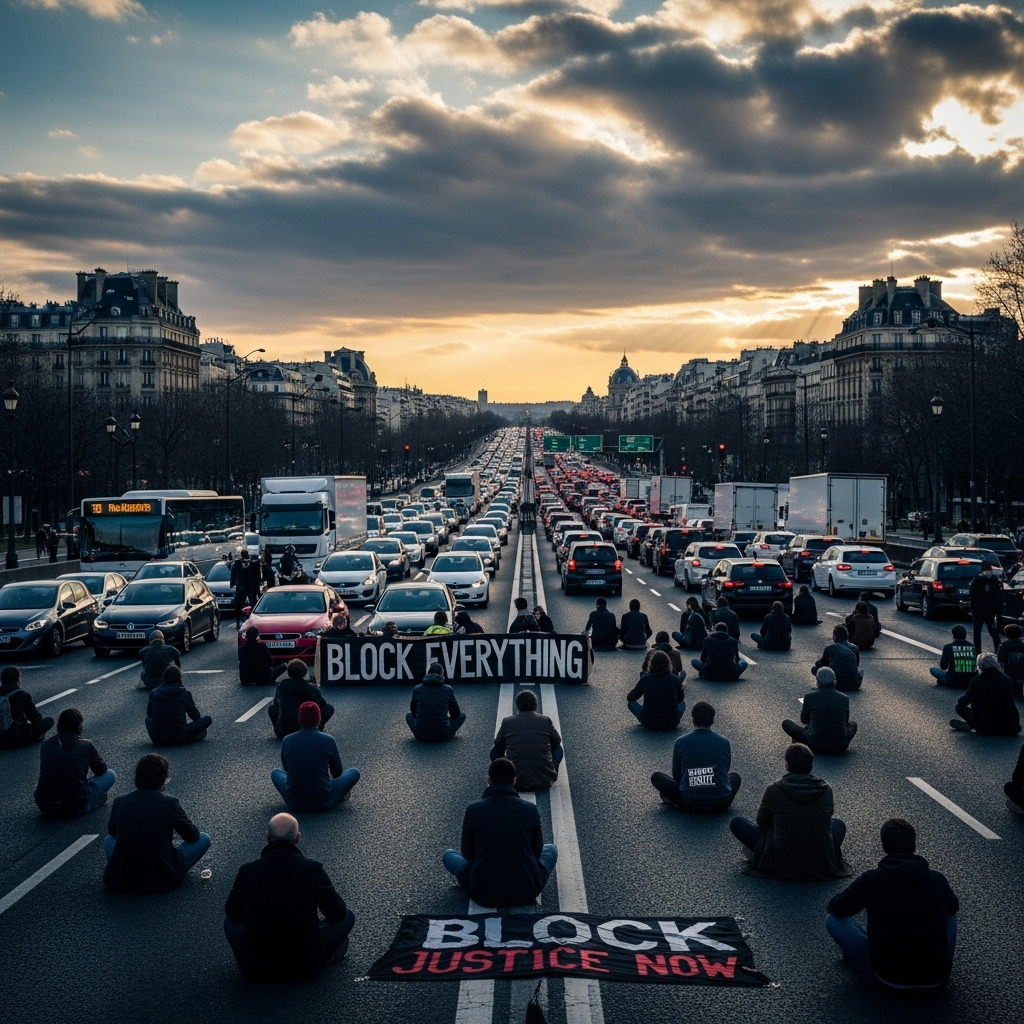
While smaller actions have occurred over the past year, this week marked a significant and coordinated escalation. In Paris, the day began before sunrise as hundreds of activists converged on the Boulevard Périphérique, the critical ring road that encircles the capital. Using chains, reinforced pipes, and quick-drying cement, they established multiple blockades, bringing morning traffic to a complete halt for hours.
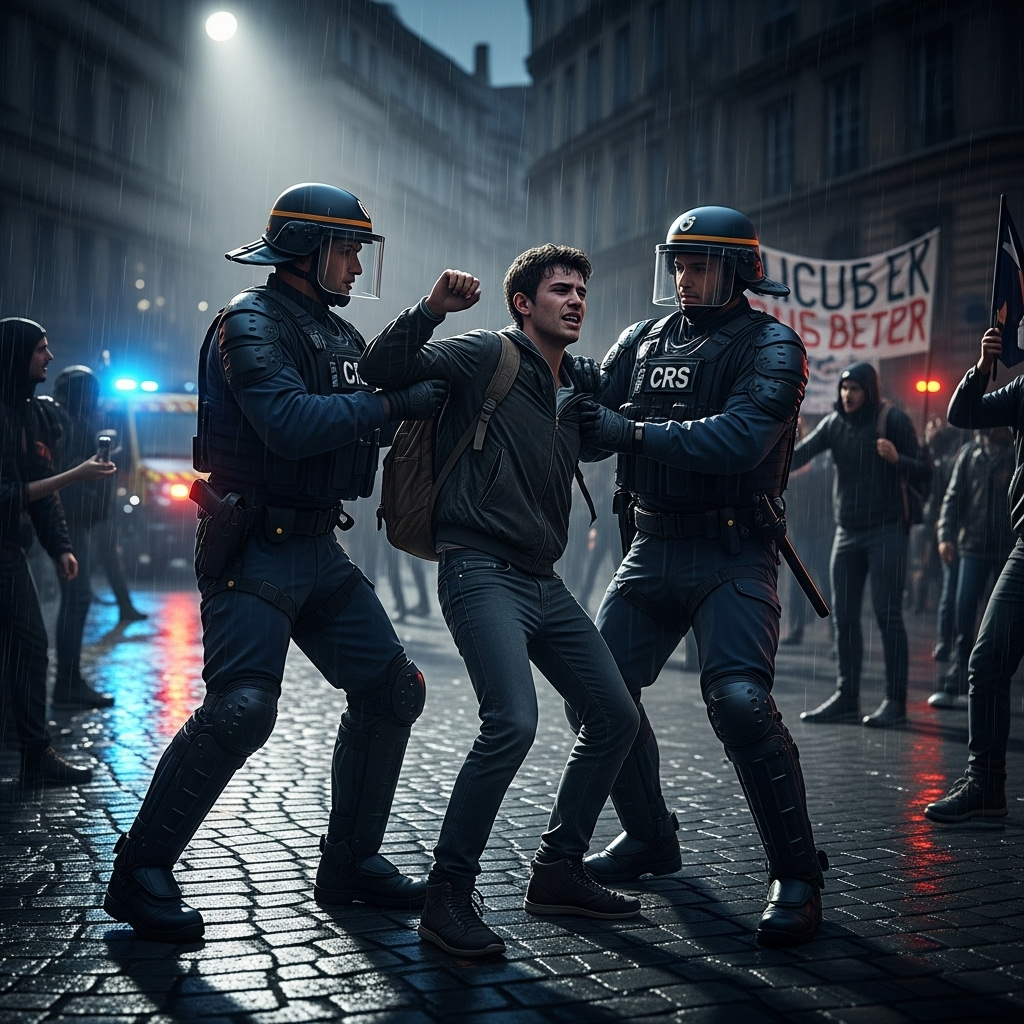
Police forces were deployed en masse, with specialized units working to cut protesters free. The resulting scenes were tense, with frustrated motorists confronting activists. French Interior Minister Gérald Darmanin reported that over 450 arrests were made in the Paris region alone by midday. He condemned the actions as “unacceptable and dangerous,” vowing a firm response.
Simultaneously, in Lyon, protesters targeted the Place Bellecour, one of Europe’s largest public squares, and blocked key bridges over the Rhône and Saône rivers. Similar scenes unfolded, with around 150 arrests reported. In Marseille, activists focused their efforts on the city’s port, temporarily disrupting access to one of the Mediterranean’s busiest commercial hubs. The synchronized nature of the demonstrations across multiple cities showcased a high level of planning and commitment from the participants.
Why the “‘Block Everything’ Protests” Are Happening Now
The timing of this new wave of “‘block everything’ protests” is not accidental. It comes just weeks after a government report revealed that France is set to miss its 2030 carbon emissions targets by a significant margin. For activists, this was the final straw, proving that the government’s promises on climate are mere “greenwashing.”
“We have tried everything else,” said a spokesperson for one of the organizing groups. “We have marched by the millions, we have signed petitions, we have met with politicians. Nothing changes. The system only responds to disruption, so we will give it disruption.”
Beyond the immediate climate trigger, the protests tap into a wider vein of social discontent. Rising inflation and the cost-of-living crisis have left many feeling abandoned by the political establishment. While the protests are explicitly environmental, they attract a broader coalition of individuals frustrated with the status quo. You can read more about the economic pressures in our related article, Economic Pressures in the EU.
The activists’ core demand is for the government to immediately enact a massive, state-funded plan to thermally insulate all buildings in France and transition rapidly to renewable energy, regardless of the cost. They see this as a non-negotiable step to align with the scientific consensus on climate change, as outlined by sources like the Intergovernmental Panel on Climate Change (IPCC).
Government Response and Public Reaction
The French government’s response has been swift and uncompromising. President Emmanuel Macron, speaking from an EU summit, stated that “while the right to protest is fundamental, the right to work, move freely, and live without chaos is also a right.” He fully supported the Interior Minister’s decision to conduct mass arrests, arguing that such actions “go beyond legitimate protest and become a threat to public order.”
Public reaction is deeply divided. Polls show that while a majority of the French public agrees that climate change is a serious threat, they are split on the methods used by the activists. Many commuters and small business owners directly affected by the blockades have expressed intense anger and frustration.
Conversely, supporters praise the activists for their courage and for forcing an uncomfortable but necessary conversation. On social media, the hashtag #BlocageTotal has been trending, with thousands expressing solidarity. The key debate is whether the disruption alienates potential allies or effectively applies the pressure needed to force change. The government is betting on the former, hoping that public backlash will isolate the movement.
What’s Next for the Movement and France?
With hundreds of protesters now facing legal proceedings, the immediate future of the movement is uncertain. The arrests could have a chilling effect, deterring some from participating in future actions. However, for the core members of these groups, arrests are often seen as a badge of honor and a predictable consequence of their strategy. The legal battles ahead will likely become a new front in their campaign, used to garner media attention and highlight their cause.
Organizers have already hinted that this week’s actions were just the beginning. They have threatened to continue the “‘block everything’ protests” with increasing frequency and intensity until their demands are met. The government, in turn, has signaled it is preparing for a long-term struggle, potentially introducing new legislation to more severely punish the obstruction of critical infrastructure.
This sets the stage for a prolonged conflict between a determined activist movement and an intransigent state. The ‘block everything’ protests have successfully thrust the climate debate back to the forefront of French national life, but they have also deepened societal divisions. As France heads into the winter, the question remains whether this strategy of total disruption will lead to a breakthrough or a breakdown. For more on the political landscape, see our guide on Understanding Modern French Politics.


