
‘Block Everything’ Protests: 100s Arrested in France
Major cities across France have been brought to a standstill as a new wave of demonstrations, dubbed the “‘block everything’ protests,” has led to widespread disruption and the arrest of hundreds of individuals. From Paris to Marseille, activists have blocked major highways, ports, and government buildings, creating chaos and placing immense pressure on President Macron’s government. The coordinated actions, fueled by economic discontent and frustration over new environmental policies, represent one of the most significant challenges to civil order in the country this year.
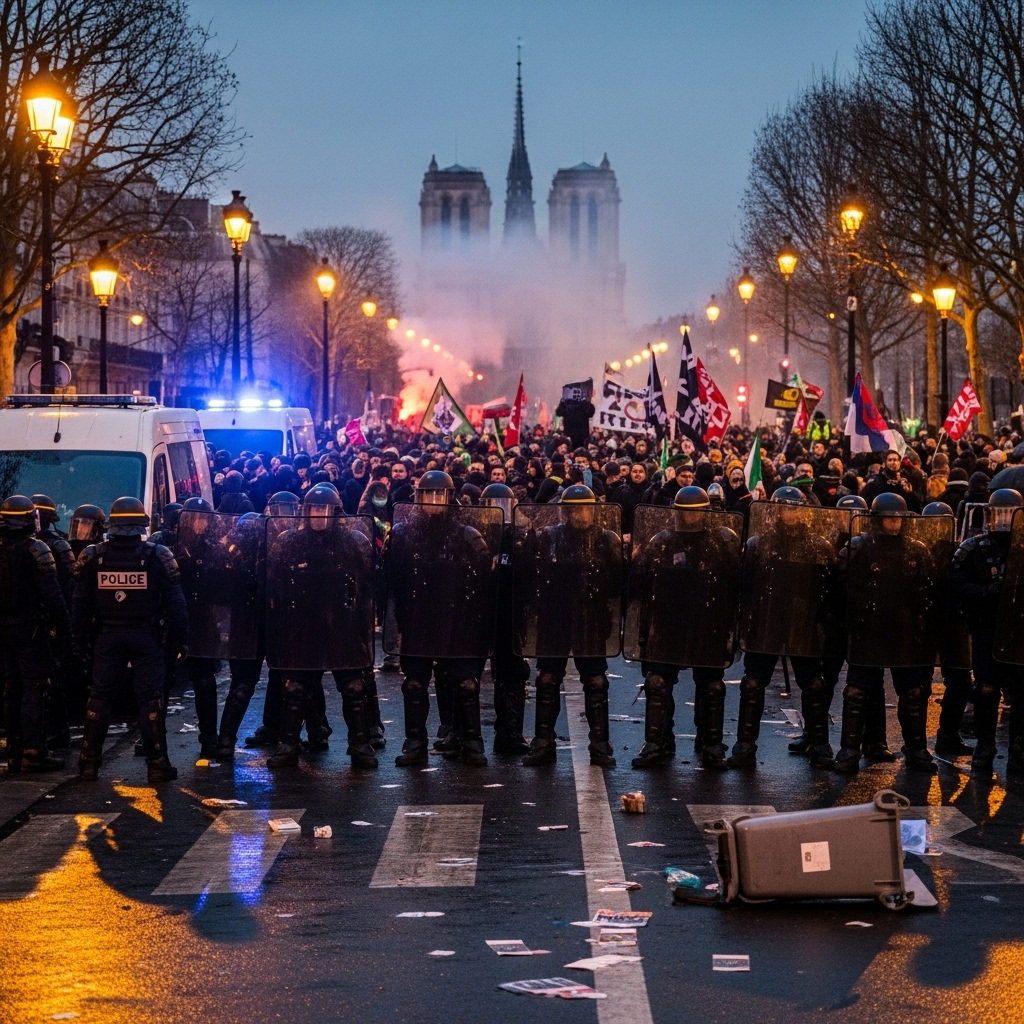
Police in riot gear have been deployed in force, clashing with protestors in several urban centers. Authorities confirmed that over 800 arrests have been made nationwide in the last 48 hours, citing public endangerment and the illegal obstruction of critical infrastructure. The movement, which has no single leader, has gained rapid momentum through social media, uniting a diverse coalition of farmers, students, and workers against what they call an out-of-touch political elite.
In This Article
What Sparked the ‘Block Everything’ Protests?
The immediate trigger for the nationwide demonstrations appears to be the government’s recently announced “Ecological Transition Levy.” This package of measures includes a significant tax increase on diesel fuel for non-commercial vehicles and a new levy on agricultural fertilizers. While the government has framed these policies as essential steps toward meeting France’s climate goals, protestors see them as an unfair burden on the working and middle classes.
“They ask us to save the planet while they take private jets,” one protestor in Lyon told reporters. “This isn’t about the environment; it’s about punishing ordinary people who have to drive to work or farm the land. We have to ‘block everything’ because they have blocked our future.”
This core grievance has resonated deeply, tapping into a well of broader economic anxieties. Years of rising inflation, stagnant wages, and perceived cuts to public services have created a fertile ground for dissent. Farmers, in particular, feel singled out, arguing that the fertilizer levy will make them uncompetitive against foreign imports. They have used their tractors to form formidable blockades on key motorways, becoming a powerful symbol of the movement’s strength.
The Scale of Disruption Across France
The “block everything” moniker is no exaggeration. The protests have been meticulously coordinated to cause maximum disruption. Key choke points targeted include:
- Major Highways: The A1 motorway north of Paris, the A7 connecting Lyon and Marseille, and the A63 near Bordeaux have all been completely blocked by convoys of tractors, trucks, and burning tires.
- Ports and Fuel Depots: Activists have blocked access to major ports like Le Havre and Marseille-Fos, threatening to disrupt supply chains. Several major fuel depots have also been targeted, raising concerns about potential gasoline shortages.
- City Centers: In Paris, demonstrators chained themselves to the gates of the Ministry of Economy and Finance, while in Toulouse, access to the city hall was obstructed for several hours.
The economic impact is already being felt. The National Federation of Road Hauliers has estimated daily losses in the tens of millions of euros. Retail associations are reporting a sharp drop in foot traffic in city centers, and commuters have faced nightmarish delays. The protests have effectively paralyzed large swaths of the country, demonstrating the power of decentralized, grassroots activism in the modern age.
Government Response and Mass Arrests
The French government has adopted a hardline stance. Interior Minister Gérald Darmanin condemned the blockades as “unacceptable” and “a danger to the public.” In a televised address, he stated, “The right to protest does not mean the right to paralyze the lives of millions of French citizens. We will restore public order with determination.”
This determination has been visible on the streets. Over 40,000 police and gendarmes have been mobilized. Videos circulating online show tense standoffs, with security forces using tear gas and water cannons to disperse crowds and dismantle barricades. The high number of arrests—surpassing 800 as of Thursday morning—is a clear signal that the government’s patience has run out. Legal experts are now questioning the long-term viability of prosecuting such a large number of individuals, but for now, the message is one of zero tolerance.
Despite the crackdown, the spirit of the protestors seems unbroken. “Arresting us will only make more people come out,” a student activist in Paris declared. The cycle of protest and response has created a deeply polarized atmosphere, with little room for dialogue or compromise in sight. For more on the government’s economic strategy, see our related article on European economic policy.

A Global Trend of Civil Disobedience
The ‘block everything’ protests in France are not happening in a vacuum. They are part of a growing global trend of disruptive, direct-action protests. From farmers’ demonstrations in Germany and the Netherlands to climate activists from Just Stop Oil blocking traffic in the UK, citizens are increasingly turning to methods of civil disobedience to make their voices heard.
These movements often share common characteristics: they are decentralized, organized primarily online, and focus on highly visible acts of disruption to capture media attention and pressure governments. They reflect a growing sense among certain segments of the population that traditional political channels—voting, petitioning, and organized marches—are no longer effective.
The challenge for governments everywhere is how to balance the fundamental right to protest with the need to maintain public order and a functioning economy. The events unfolding in France are a stark reminder that when a significant portion of the population feels ignored, they may choose to ‘block everything’ to force a response.
As France heads into the weekend, the situation remains volatile. The government is betting that a strong police presence and mass arrests will break the movement’s momentum. The protestors, however, are fueled by a deep sense of injustice and seem prepared to continue their actions. The coming days will be critical in determining whether the ‘block everything’ protests will lead to policy changes or simply a more entrenched and bitter social divide.


