
‘block everything’ protests: Hundreds Arrested in France
A wave of civil disobedience has swept across France, culminating in significant travel chaos and mass arrests. The movement, dubbed the ‘block everything’ protests, has seen demonstrators shut down major highways, ports, and distribution centers in a powerful display of public discontent. French authorities have responded with force, detaining hundreds of individuals as they attempt to restore order to the nation’s critical infrastructure.
What Are the ‘Block Everything’ Protests?
The ‘block everything’ protests, or “blocage de tout” in French, represent a coordinated, grassroots effort to bring the country to a standstill. Unlike traditional marches that are often confined to city centers, this movement’s primary tactic is the strategic obstruction of economic lifelines. Activists, including farmers, truckers, students, and climate protestors, have united under a loose banner to create maximum economic and logistical pressure on the government.
Their goal is simple yet ambitious: to force President Emmanuel Macron’s government to address a long list of grievances by disrupting the flow of goods and people. The protests are characterized by their decentralized nature, often organized through encrypted messaging apps like Telegram and Signal, making it difficult for authorities to predict and preempt their actions.
This form of protest has gained traction due to a shared feeling among various groups that conventional methods of dissent have been ignored. By targeting choke points in the supply chain, they aim to create an impact that is impossible for both the government and the general public to overlook.

Widespread Disruptions Lead to Mass Arrests
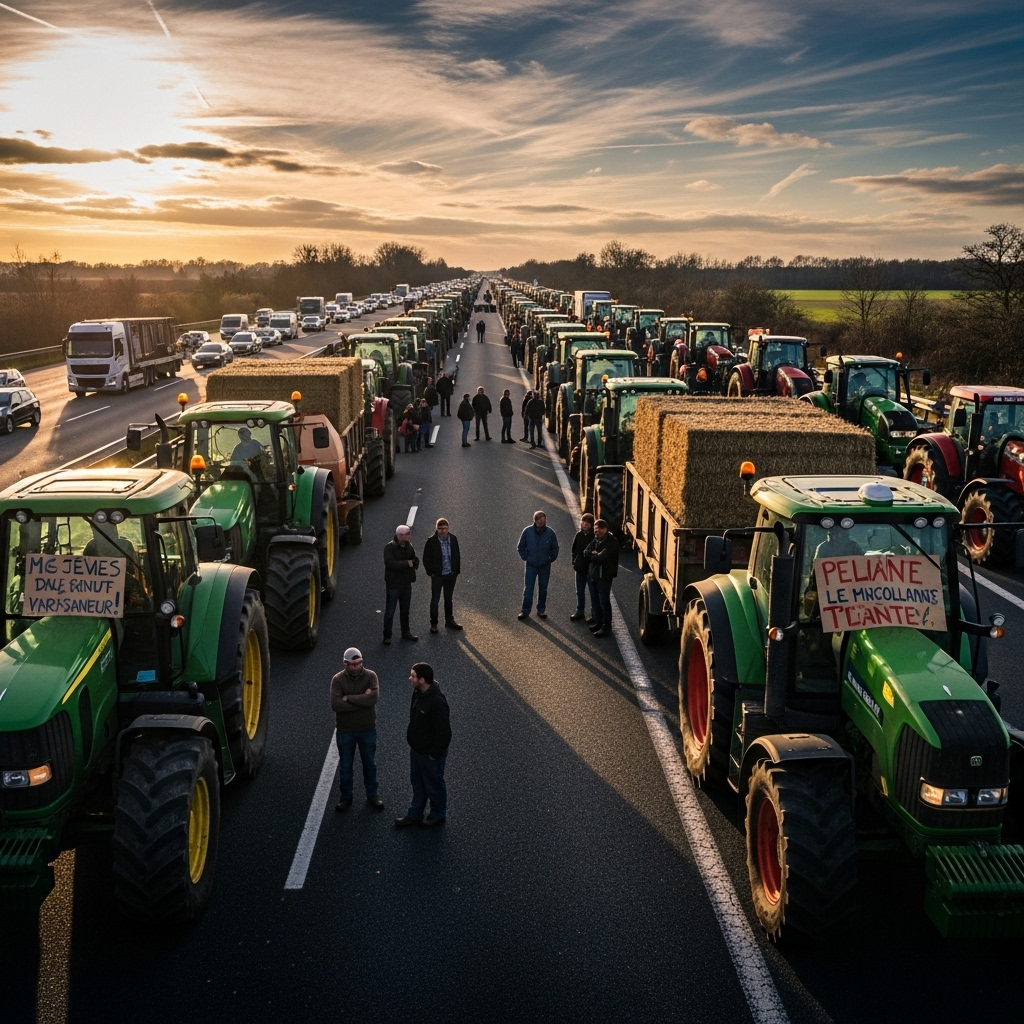
The past 48 hours have seen a dramatic escalation in the ‘block everything’ protests. Major motorways surrounding Paris, Lyon, and Marseille were brought to a halt by convoys of tractors and barricades made of burning tires. Key ports like Le Havre and Calais reported significant disruptions, causing backlogs of freight trucks and threatening supply chains across the English Channel.
In response, French Interior Minister Gérald Darmanin authorized a major police operation to clear the blockades. Eyewitnesses reported tense standoffs between heavily armored police units and protestors. In a statement, the Interior Ministry confirmed that over 400 individuals were arrested for “obstructing traffic and endangering public safety.”
The arrests have been a focal point of the conflict. Protest organizers accuse the police of using heavy-handed tactics and disproportionate force, while the government insists it is acting to protect the “freedom of movement and economic life of the nation.” Clashes were particularly intense near the Rungis International Market outside Paris, a critical food hub for the entire region, where police used tear gas to disperse crowds attempting to shut it down.
The Grievances Fueling the ‘block everything’ protests
The ‘block everything’ protests are not driven by a single issue but by a confluence of deep-seated frustrations. This broad coalition has found common cause in their opposition to current government policies.
Key grievances include:
- Cost of Living: Persistent inflation, especially concerning fuel, energy, and food prices, has pushed many households to a breaking point. Protestors argue that government measures have been insufficient to alleviate the financial burden on ordinary citizens.
- Agricultural Policies: Farmers are a major force within the movement. They are protesting low pay, crushing debt, and what they see as unfair competition from cheap imports that do not have to meet the same strict environmental standards imposed on them. They feel strangled by EU regulations and a lack of government support.
- Environmental Regulations: While some protestors are climate activists demanding faster action, others, particularly in the agricultural and transport sectors, feel that new green policies are being implemented without adequate financial support, placing an unfair burden on their industries.
- Pension Reforms: Lingering anger over the government’s decision to raise the retirement age continues to fuel the anti-government sentiment, contributing to the broader protest movement. You can read more about the initial reaction in our previous coverage of France’s pension reform backlash (internal link example).
This potent mix of economic pain and perceived political indifference has created a fertile ground for the ‘block everything’ protests to flourish, uniting disparate groups against a common target: the state.
Government Response and Public Reaction
The French government is walking a tightrope. On one hand, it has repeatedly stated its respect for the right to protest. On the other, it has vowed zero tolerance for actions that paralyze the country and endanger public safety. President Macron’s office released a statement calling for “dialogue over disorder” and promising to meet with representatives from the agricultural sector.
However, the mass arrests signal a shift towards a more hardline approach. The government’s strategy appears to be to dismantle the blockades physically while offering concessions to specific groups, hoping to fracture the protest coalition. For more details on the official government position, you can refer to reports from international news agencies like Reuters (external link example).
Public opinion remains divided. Polls show a significant degree of sympathy for the protestors’ grievances, particularly those of the farmers. However, patience is wearing thin among commuters and small business owners who are directly impacted by the blockades. The images of confrontation and chaos have led to a polarizing debate about the limits of civil disobedience.
What’s Next for the Movement?
The ‘block everything’ protests have reached a critical juncture. The hundreds of arrests may serve as a deterrent for some, but for others, they could be a radicalizing catalyst, strengthening their resolve to continue the fight. Organizers have already called for new actions, promising that for every blockade cleared, two more will appear.
The government’s next moves will be crucial. If its attempts at dialogue and targeted concessions fail to appease the core groups, France could be heading for a prolonged period of social and economic unrest. The success or failure of the movement will likely depend on its ability to maintain public sympathy while navigating the government’s increasingly forceful response.
As the situation develops, the ‘block everything’ protests serve as a powerful case study in modern dissent, where logistical disruption has become the new language of the unheard. The coming days will determine whether that language leads to meaningful change or a further escalation of conflict.


