
‘block everything’ protests: Hundreds arrested in France
France has been gripped by widespread chaos as the ‘block everything’ protests, known locally as “Opération tout bloquer,” have escalated, leading to significant disruption of major highways, ports, and city centers. The nationwide demonstrations, a volatile coalition of farmers, truckers, and environmental activists, have resulted in a heavy-handed police response, with authorities confirming the arrest of several hundred individuals in the past 48 hours.
The protests aim to bring the country to a standstill to force government concessions on a range of economic and environmental issues. This has created a tense standoff, testing the resolve of both the demonstrators and President Macron’s government.
What Sparked the ‘Block Everything’ Protests?
The current wave of ‘block everything’ protests is not a single-issue movement but a confluence of deep-seated grievances from disparate groups. At its core, the unrest is fueled by a sense of economic despair and frustration with government policies perceived as detached from the reality of working-class citizens.
Farmers, a vocal contingent of the movement, are protesting against what they describe as crippling EU environmental regulations, cheap imports undercutting their products, and insufficient government support. They argue that sustainability goals are being implemented without providing a viable financial path forward for French agriculture. “We are asked to feed the country but are being choked by rules made in Brussels,” said one farmer at a blockade near Lyon.
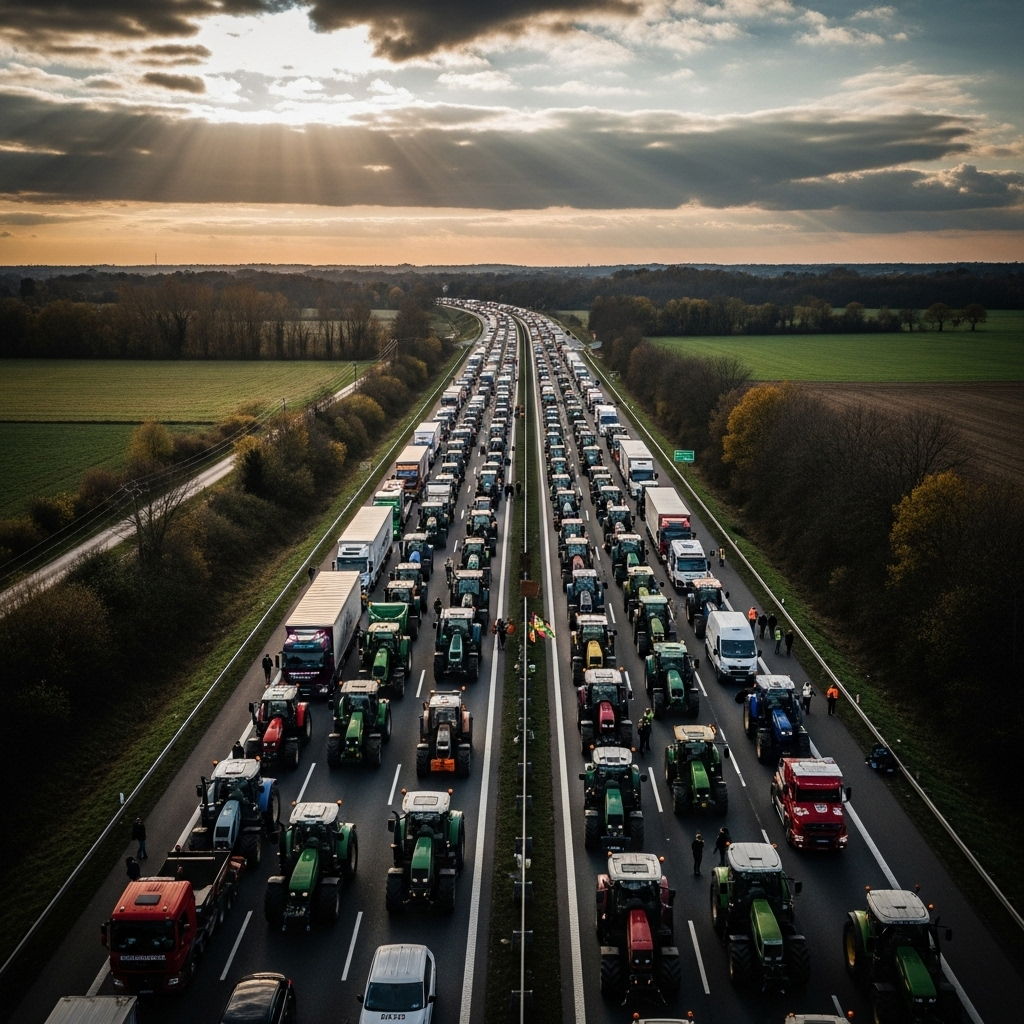
Simultaneously, truck drivers have joined the fray, incensed by soaring fuel costs and what they see as unfair competition from foreign haulers. Their participation has been critical in executing the “block everything” strategy, using their heavy vehicles to create formidable barriers on key logistical arteries. Their demands focus on tax relief for diesel and stricter enforcement of labor laws for international transport companies.
Adding another layer of complexity, climate activists have also joined the protests, albeit with a different agenda. They are blockading corporate and government offices to demand more radical action against climate change, arguing that current policies are inadequate. This has created an uneasy alliance, with some farmers and truckers viewing the environmentalists with suspicion.
The Scale of the Disruption Across France
The impact of the demonstrations has been profound, affecting millions. Major motorways, including the A1 connecting Paris to Lille and the A7 towards Marseille, have been intermittently paralyzed. Protestors have established “go-slow” operations and full blockades, causing miles-long tailbacks and effectively isolating certain regions.
Key infrastructure has been targeted. Access roads to major ports like Le Havre and Marseille have been obstructed, threatening to disrupt the national supply chain. Furthermore, protestors have blocked oil refineries and fuel depots, raising concerns about potential gasoline shortages if the movement continues. For more context on similar events, you can read our analysis on France’s history of powerful social protest movements.
In urban centers, protestors have marched on government buildings, leading to clashes with law enforcement. The scenes in Paris, Nantes, and Bordeaux have been particularly tense, with demonstrators using burning tires and agricultural waste to make their point, blanketing parts of the cities in acrid smoke.
Police Response to the ‘Block Everything’ Protests: Clashes and Mass Arrests
The French government has taken a firm line against the blockades. Interior Minister Gérald Darmanin announced that while the right to protest is protected, “the right to block the lives of millions of French people and our economy is not.” He authorized a massive deployment of gendarmes and CRS riot police to dismantle the most disruptive blockades.
According to the French Ministry of the Interior, over 450 arrests have been made nationwide in connection with the ‘block everything’ protests. The charges range from obstructing traffic to vandalism and violence against law enforcement officers. Authorities have used tear gas, water cannons, and armored vehicles to clear highways, leading to dramatic and often violent confrontations broadcast across national news.
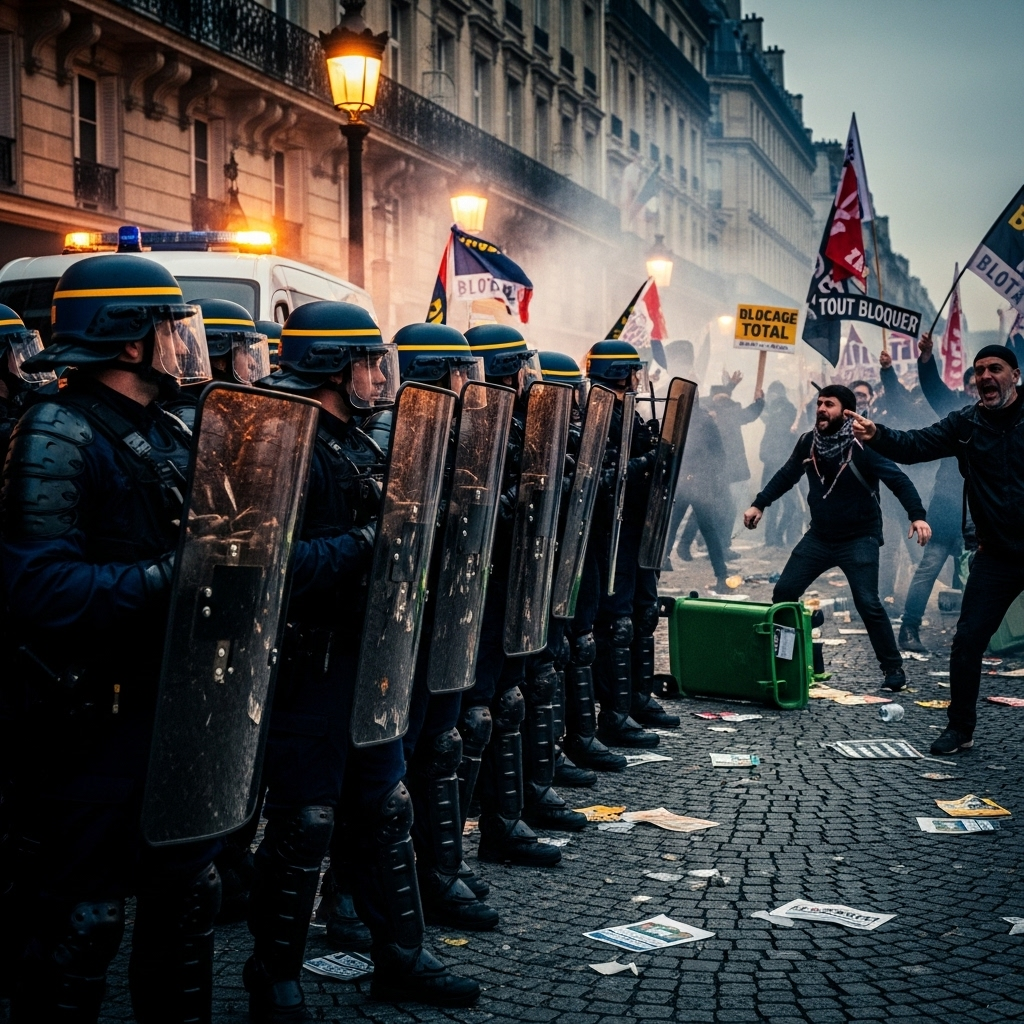
Protest organizers accuse the police of using excessive force. “We are peaceful citizens expressing our desperation, and we are being treated like criminals,” stated a spokesperson for a prominent farmers’ union. The government, however, maintains that its response is necessary to restore public order and ensure the free movement of goods and people.
Economic Impact and Supply Chain Chaos
The economic cost of the blockades is mounting rapidly. The French National Federation of Road Transport (FNTR) estimates that the disruptions are costing the logistics sector alone tens of millions of euros per day. Supermarkets are beginning to report empty shelves for fresh produce and other goods with short shelf lives as deliveries fail to get through.
Manufacturing plants are also feeling the squeeze, with some reporting that they may have to halt production lines due to a lack of parts. The blockades threaten to have a cascading effect on the wider European economy, given France’s central role as a transit hub.
Small business owners, from restaurateurs to shopkeepers, are expressing deep anxiety. With roads blocked and an atmosphere of uncertainty, consumer activity has plummeted in affected areas. “This is worse than the pandemic for us,” a bakery owner in a blockaded town told a local news channel. “At least then we could do deliveries. Now, nothing moves.”

What’s Next for the Movement?
The situation remains highly volatile. The government has shown little sign of backing down, emphasizing law and order. However, President Macron’s administration has opened the door for dialogue, with the Prime Minister scheduled to meet with representatives from major farming and transport unions.
The key question is whether this fractured coalition of protestors can maintain its momentum in the face of mass arrests and public frustration over the disruptions. The success of the ‘block everything’ protests will depend on their ability to maintain pressure without completely alienating the general population whose support they need.
For now, France holds its breath. The coming days will be crucial in determining whether the government offers meaningful concessions or if the country is destined for an even deeper and more protracted period of social and economic turmoil.
“`


