
‘block everything’ protests: Over 300 arrested in France
A wave of coordinated demonstrations has brought France to a standstill, with protestors vowing to “block everything” in response to new economic pressures. The government’s firm response has led to significant clashes and hundreds of arrests.
Paris, France – A wave of massive ‘block everything’ protests has paralyzed key infrastructure across France, leading to the arrest of over 300 individuals as tensions escalate between demonstrators and authorities. The protests, organized by a loose coalition of farmers, truckers, and citizens’ groups, target major highways, ports, and fuel depots in a direct challenge to the government’s latest economic policies.
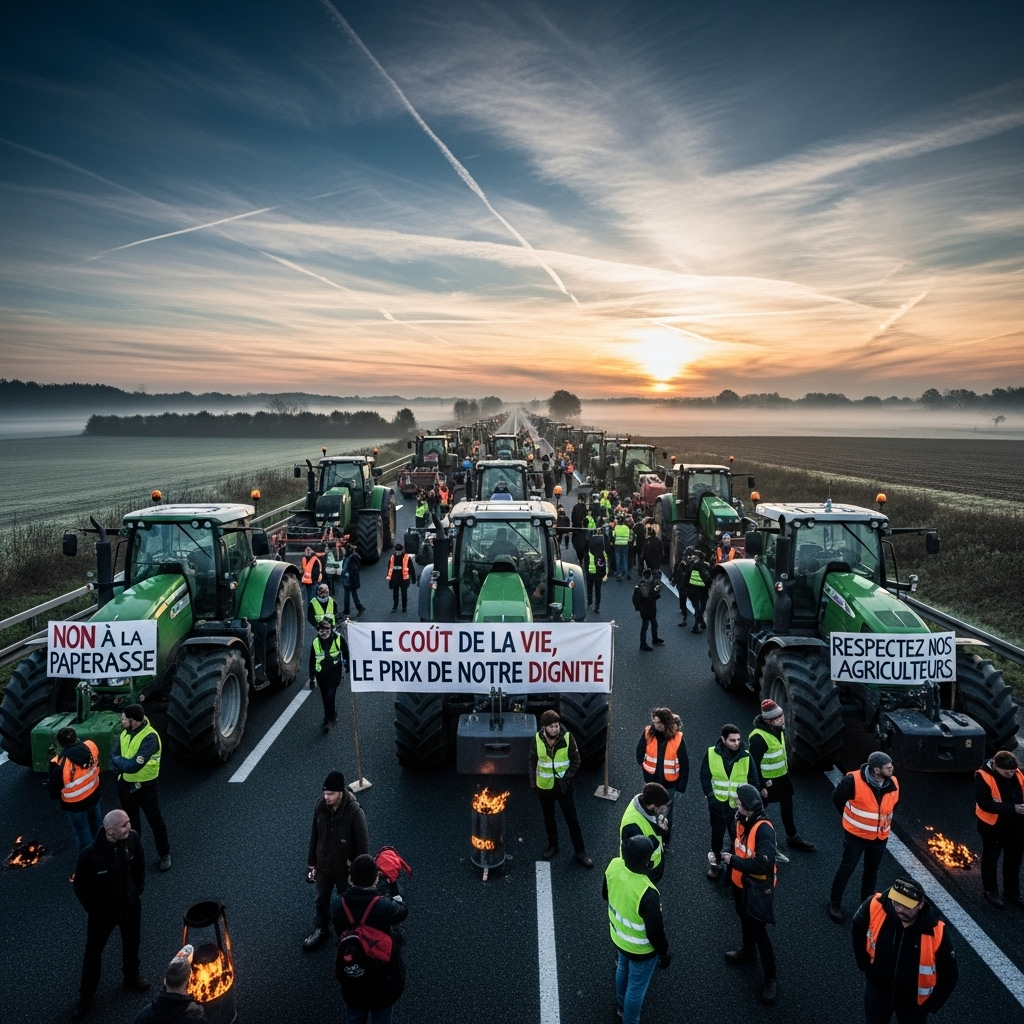
The movement, known as “Opération Tout Bloquer” (Operation Block Everything), began at dawn on Thursday. Convoys of tractors and trucks strategically blocked critical arteries, causing widespread chaos and bringing transportation and commerce to a grinding halt in several regions. This coordinated action represents one of the most significant civil disruptions in the country in recent years.
What Sparked the ‘block everything’ protests?
At the heart of the unrest is the government’s newly announced “Eco-Solidarity Levy.” This controversial tax package is designed to increase taxes on diesel fuel for commercial and agricultural vehicles, with the stated goal of funding the nation’s transition to greener energy sources. However, for the sectors it impacts most, it’s seen as the final straw.
Farmers argue that they are already operating on razor-thin margins and cannot absorb another financial blow. “We feed the country, but we can’t afford to fuel our tractors,” said one protestor near Lyon. “This isn’t an environmental policy; it’s a death sentence for family farms.” For more background on these policies, you can read our guide on French economic policy explained.
The transportation industry shares this sentiment. Trucking associations have warned for weeks that the levy would make French logistics uncompetitive compared to neighboring countries, ultimately driving up consumer prices on everything from groceries to construction materials. The ‘block everything’ protests are their response to what they feel are unheard grievances.
Widespread Disruption Across France
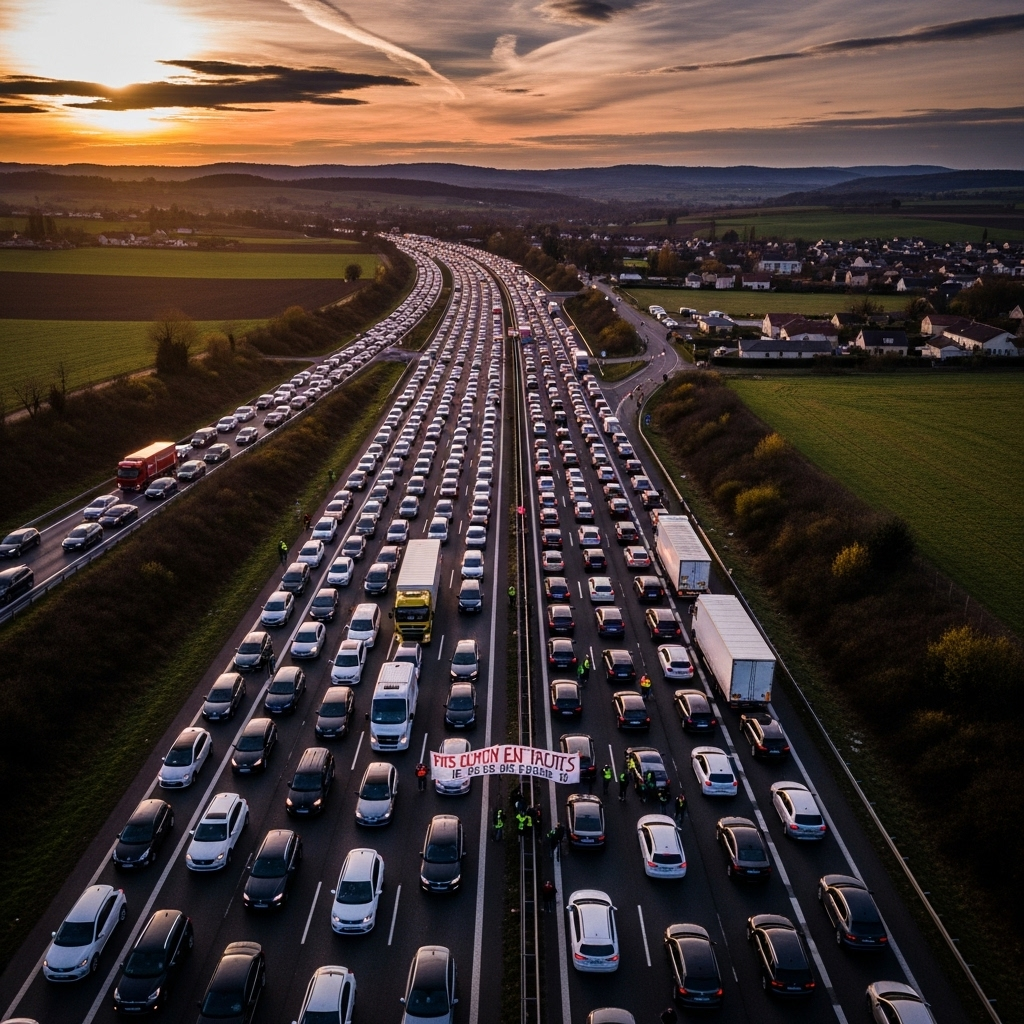
The scale of the blockades is extensive. Major highways, including the vital A1 motorway connecting Paris to the north and the A7 which runs down to Marseille, were rendered impassable. In the west, access to the port of Nantes-Saint Nazaire was severely restricted, while in the south, demonstrators blocked access to the Fos-sur-Mer oil terminal, a critical fuel hub.
Reports from across the country paint a picture of logistical chaos. Commuters were trapped in traffic for hours, supply chains for supermarkets were severed, and many non-emergency services were unable to operate. Protestors used tractors, hay bales, and burning tires to enforce their blockades, creating imposing barriers that authorities struggled to clear.
The protests were not limited to transport routes. In cities like Toulouse and Strasbourg, demonstrators gathered in front of government buildings, demanding a complete reversal of the new tax. The movement’s decentralized nature has made it particularly challenging for law enforcement to manage, with new blockades appearing as quickly as others are dismantled.
The Government’s Response and Mass Arrests
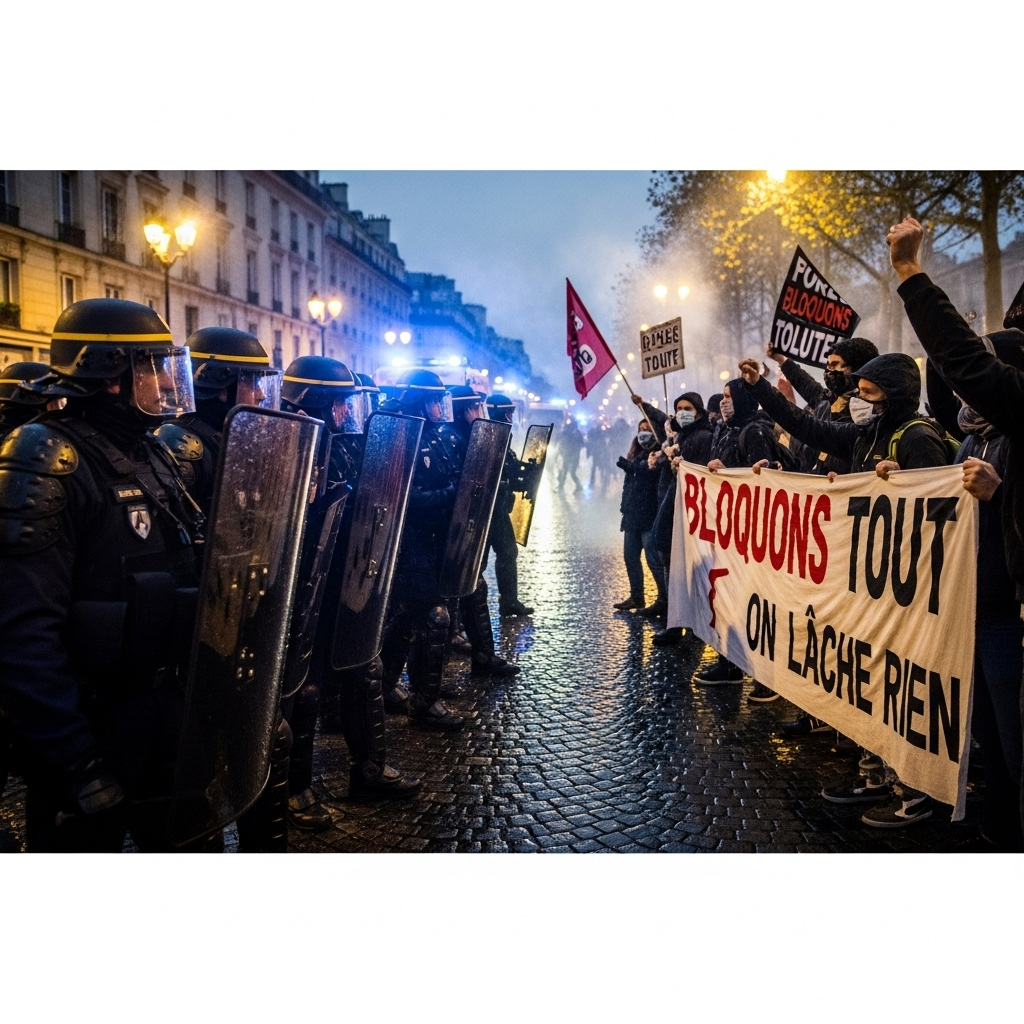
The French government has taken a hard line against the demonstrations. Interior Minister Gérard Darmanin condemned the actions, stating, “The right to protest does not include the right to paralyze the country, endanger citizens, and throttle our economy.” He authorized a major police operation to restore order.
Thousands of riot police and gendarmes were deployed to key locations. Clashes were reported in several areas as officers used tear gas and water cannons to disperse crowds and remove barricades. In response, some protestors threw projectiles, leading to a rapid escalation of tensions.
As of Thursday evening, the Interior Ministry confirmed that 318 individuals had been arrested nationwide on charges including obstructing traffic, destruction of public property, and violence against law enforcement. The government has vowed to prosecute those involved to the “fullest extent of the law,” signaling little room for immediate negotiation while the blockades are active.
The Core Demands of the Movement
While the “Eco-Solidarity Levy” was the immediate trigger, the protestors’ demands go deeper. Organizers have published a manifesto with several key points, reflecting widespread economic anxiety. Their primary demands include:
- Immediate and total repeal of the Eco-Solidarity Levy.
- A two-year freeze on all fuel taxes for professional and agricultural use.
- Emergency financial aid for the agricultural sector to cope with inflation and foreign competition.
- A formal review of all environmental regulations that place a “disproportionate burden” on domestic producers.
The movement’s spokespeople insist they are not against environmental progress but argue that the financial burden is being unfairly placed on the working and middle classes. The ‘block everything’ protests are, in their view, a last resort to force the government to the negotiating table.
Economic Impact and an Uncertain Future
The economic fallout from just one day of protests is already significant. The French National Federation of Road Transport estimates the daily cost of the blockades to the logistics sector alone is in the hundreds of millions of euros. Supermarket chains have warned of potential shortages of fresh produce if the situation is not resolved quickly.
The standoff places President Macron’s government in a difficult position. Capitulating to the protestors’ demands could undermine its entire environmental agenda and fiscal strategy. However, allowing the ‘block everything’ protests to continue risks severe economic damage and further alienating a significant portion of the electorate.
As night falls, the situation remains volatile. While some blockades have been cleared, protestors have vowed to return and continue their actions “for as long as it takes.” The next 48 hours will be critical in determining whether this crisis escalates further or if a path to dialogue can be found. For official updates, the public is directed to sources like the French Ministry of the Interior.
With both sides dug in, the immediate future of France’s highways and economy hangs in the balance, a stark testament to the deep social and economic divisions fueling this powerful protest movement.
“`


