
‘block everything’ protests: Over 300 Arrested in France
A wave of disruptive demonstrations, organized under the banner of the “‘block everything’ protests,” brought major French cities to a standstill on Tuesday, resulting in the arrest of over 300 individuals. Activists, citing a combination of government inaction on climate change and controversial new economic austerity measures, engaged in coordinated acts of civil disobedience, blocking critical infrastructure including highways, major intersections, and public transport hubs.
The protests represent a significant escalation for the environmental and social justice movement in France, moving from symbolic marches to direct action aimed at causing maximum economic disruption. The government has condemned the tactics, promising a firm response to what it calls “unacceptable infringements on public order.”
Table of Contents
What Are the ‘Block Everything’ Protests?
The “‘block everything’ protests” (or “bloquer tout” in French) are a decentralized series of actions organized by a coalition of climate activist groups and anti-austerity organizations. Their stated goal is to force the government to take more radical steps to combat the climate crisis and reverse recently passed budget cuts that they argue disproportionately affect low-income citizens.
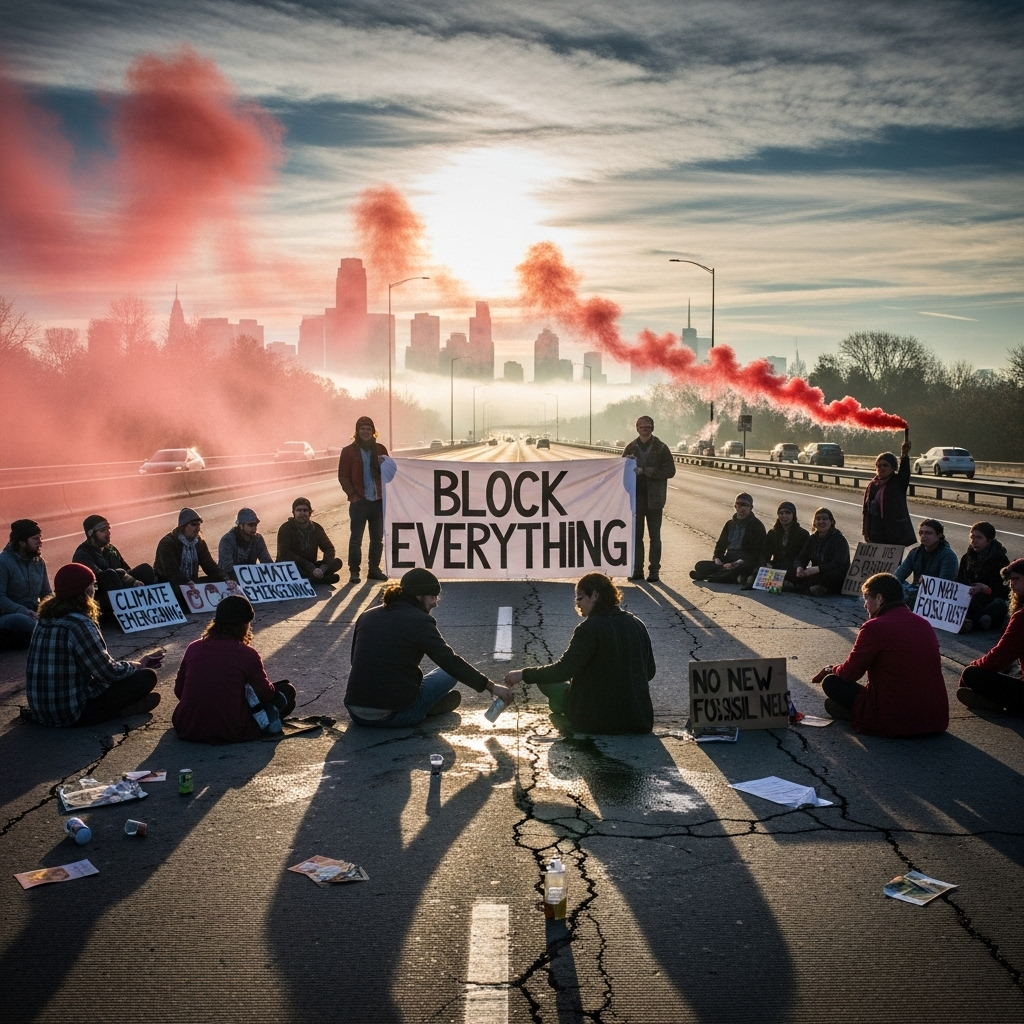
Unlike traditional protests, the movement’s core tactic is non-violent but highly disruptive. Participants use their bodies, reinforced banners, and sometimes vehicles to create blockades on key economic arteries. The philosophy is that by disrupting the flow of commerce and daily life, they can make the cost of inaction higher than the cost of implementing their demands.
“We have marched, we have signed petitions, we have voted. Nothing changes,” said a protestor who identified herself as Chloé in Lyon. “The system only listens when its profits are threatened. So, we are threatening its profits. It’s a last resort.” This sentiment has been echoed by many participants who feel that conventional methods of political engagement have failed. For more background on these groups, you can read our analysis on the rise of climate activism in Europe.
Escalation in Major Cities Leads to Mass Arrests
Tuesday’s actions were the most significant since the movement began earlier this year. Coordinated blockades appeared at dawn in Paris, Marseille, Lyon, and Bordeaux. In Paris, activists chained themselves together on the Périphérique ring road, causing miles of traffic jams that lasted for hours. In Marseille, the entrance to the city’s main commercial port was blockaded, preventing trucks from entering or leaving.
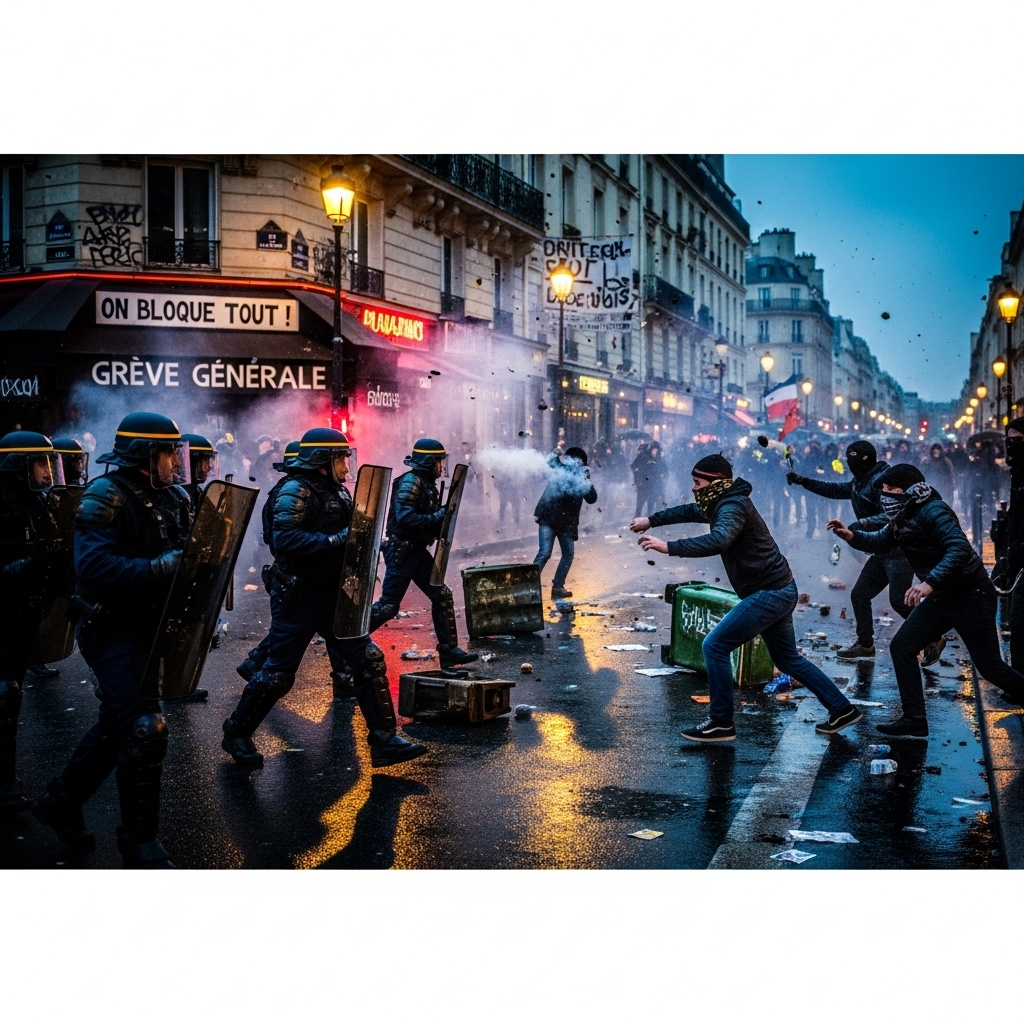
Police response was swift and forceful. In many locations, riot police were deployed to clear the blockades. Eyewitnesses reported the use of tear gas and forceful removal of protestors. The Interior Ministry confirmed that 312 arrests had been made nationwide by Tuesday afternoon. The charges range from obstructing traffic to resisting arrest and destruction of public property.
Interior Minister Gérald Darmanin stated in a press conference, “While the right to protest is a fundamental freedom in France, the right to paralyze the country and endanger citizens is not. We will show zero tolerance for these illegal and dangerous actions.” His firm stance has been praised by some and condemned by human rights organizations, who call for restraint. For international context, similar protest tactics have been seen globally, as reported by outlets like Reuters.
Government Response and Public Reaction
The French government, led by President Emmanuel Macron, is walking a tightrope. On one hand, it needs to maintain public order and project an image of strength. On the other, the underlying issues fueling the protests—climate anxiety and economic hardship—resonate with a significant portion of the population.
A spokesperson for the President’s office stated that “the government is fully committed to the ecological transition” but insisted that it must be done “in an orderly and just manner, without penalizing our economy.” Critics argue that this approach is too slow and prioritizes corporate interests over planetary health and social equity.
Public opinion is sharply divided. Polls conducted in the last 24 hours show a near-even split. While many commuters and business owners expressed frustration with the disruptions, a substantial number of people expressed sympathy for the protestors’ goals, even if they disagreed with their methods. This division highlights the deep societal rifts in France over how to tackle the twin crises of climate and economy. The government’s challenge will be to bridge this gap without appearing to give in to tactics it has labeled as radical and illegal.

What’s Next for the Movement and France?
Despite the mass arrests, organizers of the “‘block everything’ protests” have vowed to continue their campaign. In online statements, they called the arrests an attempt to intimidate them but insisted that their resolve is stronger than ever. They are calling for another day of action next week and have hinted at targeting airports and train stations next.
The government now faces a critical decision. A continued crackdown risks creating martyrs and potentially swelling the ranks of the protestors, echoing dynamics seen in past French social movements like the Yellow Vests. However, inaction could be perceived as weakness and embolden the activists to escalate their tactics further, leading to even greater economic and social chaos.
For now, France braces for more disruption. The legal process for the over 300 arrested individuals will be closely watched, as will the government’s next political move. The “‘block everything’ protests” have successfully forced their agenda into the national spotlight; the question that remains is whether their strategy of total disruption will lead to meaningful change or a protracted and bitter conflict with the state. The coming weeks will be a crucial test for the resilience of both the movement and the French government. For further reading on French domestic policy, see our related article on the current state of French politics.
“`


